We use cookies to ensure you get the best experience on our website. By continuing
to use our site, you accept our use of cookies, privacy policy and terms of service.
ESC
What are you looking for?
Subscribe to our Newsletter
Join 10k+ people to get notified about new posts, news and updates.
Terms of use dolor sit amet consectetur, adipisicing elit. Recusandae provident ullam
aperiam quo ad non corrupti sit vel quam repellat ipsa quod sed, repellendus
adipisci, ducimus ea modi odio assumenda.
Disclaimers
Lorem ipsum dolor sit amet consectetur adipisicing elit. Sequi, cum esse possimus
officiis amet ea voluptatibus libero! Dolorum assumenda esse, deserunt ipsum ad
iusto! Praesentium error nobis tenetur at, quis nostrum facere excepturi architecto
totam.
Lorem ipsum dolor sit amet consectetur adipisicing elit. Inventore, soluta alias
eaque modi ipsum sint iusto fugiat vero velit rerum.
Limitation on Liability
Sequi, cum esse possimus officiis amet ea voluptatibus libero! Dolorum assumenda
esse, deserunt ipsum ad iusto! Praesentium error nobis tenetur at, quis nostrum
facere excepturi architecto totam.
Lorem ipsum dolor sit amet consectetur adipisicing elit. Inventore, soluta alias
eaque modi ipsum sint iusto fugiat vero velit rerum.
Copyright Policy
Dolor sit amet consectetur adipisicing elit. Sequi, cum esse possimus officiis amet
ea voluptatibus libero! Dolorum assumenda esse, deserunt ipsum ad iusto! Praesentium
error nobis tenetur at, quis nostrum facere excepturi architecto totam.
Lorem ipsum dolor sit amet consectetur adipisicing elit. Inventore, soluta alias
eaque modi ipsum sint iusto fugiat vero velit rerum.
General
Sit amet consectetur adipisicing elit. Sequi, cum esse possimus officiis amet ea
voluptatibus libero! Dolorum assumenda esse, deserunt ipsum ad iusto! Praesentium
error nobis tenetur at, quis nostrum facere excepturi architecto totam.
Lorem ipsum dolor sit amet consectetur adipisicing elit. Inventore, soluta alias
eaque modi ipsum sint iusto fugiat vero velit rerum.
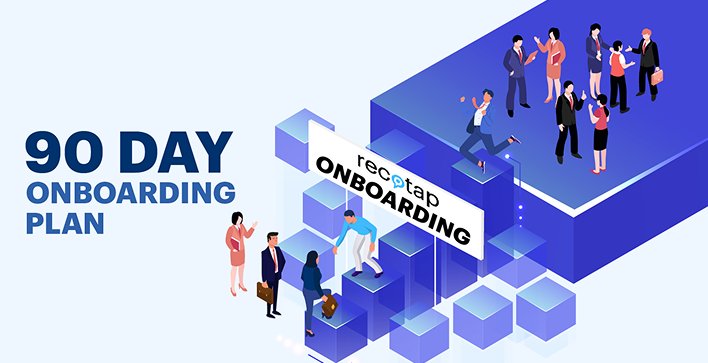
Recotap onboarding comes with a dedicated team of 25+ ABM practitioners and a structured 30/60/90 roadmap, not just a login link and a knowledge base.
With Recotap, most teams go live within 4 to 6 weeks on the supported path, and see TAL coverage move from below 20% to above 80% within the first 60 days.
Engagement signals appear in weeks 2 to 4. Pipeline signals follow at 60 to 90 days. Revenue attribution is a Q2 to Q3 metric, not a 90-day target.
Your team approves the list, provides CRM access, and attends weekly check-ins. Recotap's team handles the rest.
The most common thing we hear after a demo is some version of: this looks powerful, but also like a lot of work. A new platform, data integrations to configure, a target account list to import, intent signals to connect, and campaigns to build, all while running your current ABM program and answering to your sales team who want meetings on the calendar.
That concern is legitimate. Most ABM platforms hand you a login and a knowledge base. Figuring out how to make it really work is left to you.
This guide explains exactly what getting started with ABM on Recotap looks like in practice. By the end, you will understand the two onboarding paths, what happens at each 30-day milestone, who handles what on both sides, and which account-based marketing best practices and metrics tell you whether the program is working. No vague promises. Just the structure.
Which Onboarding Path Is Right for You?
Recotap offers two onboarding paths. Which one fits depends on your team's existing ABM experience and how quickly you need to move.
Path
Best for
What it means in practice
Time to first campaign
Self-Serve
Teams with existing ABM experience and a clean CRM setup
You connect the CRM, import the TAL, bring in Bombora and G2 intent data, and configure campaigns without dedicated CS involvement
Under 2 weeks
Recotap-as-a-Service(Recommended)
Teams building ABM from scratch or scaling from a pilot to a full program
Recotap’s team of 25+ ABM practitioners configures orchestration logic, sets up segmentation, integrates intent data, and identifies the metrics that matter for your specific setup
2–4 weeks
If you are unsure which path fits, default to supported. You can always move to self-serve as your team's ABM muscle grows. Most mid-market teams started supporting and are glad they did.
Days 1–30: Building the Foundation
The first 30 days are setup and calibration. Nothing is automated yet. The goal is to get the right data into the platform so the orchestration layer has something real to work with.
What Gets Set Up in This Window
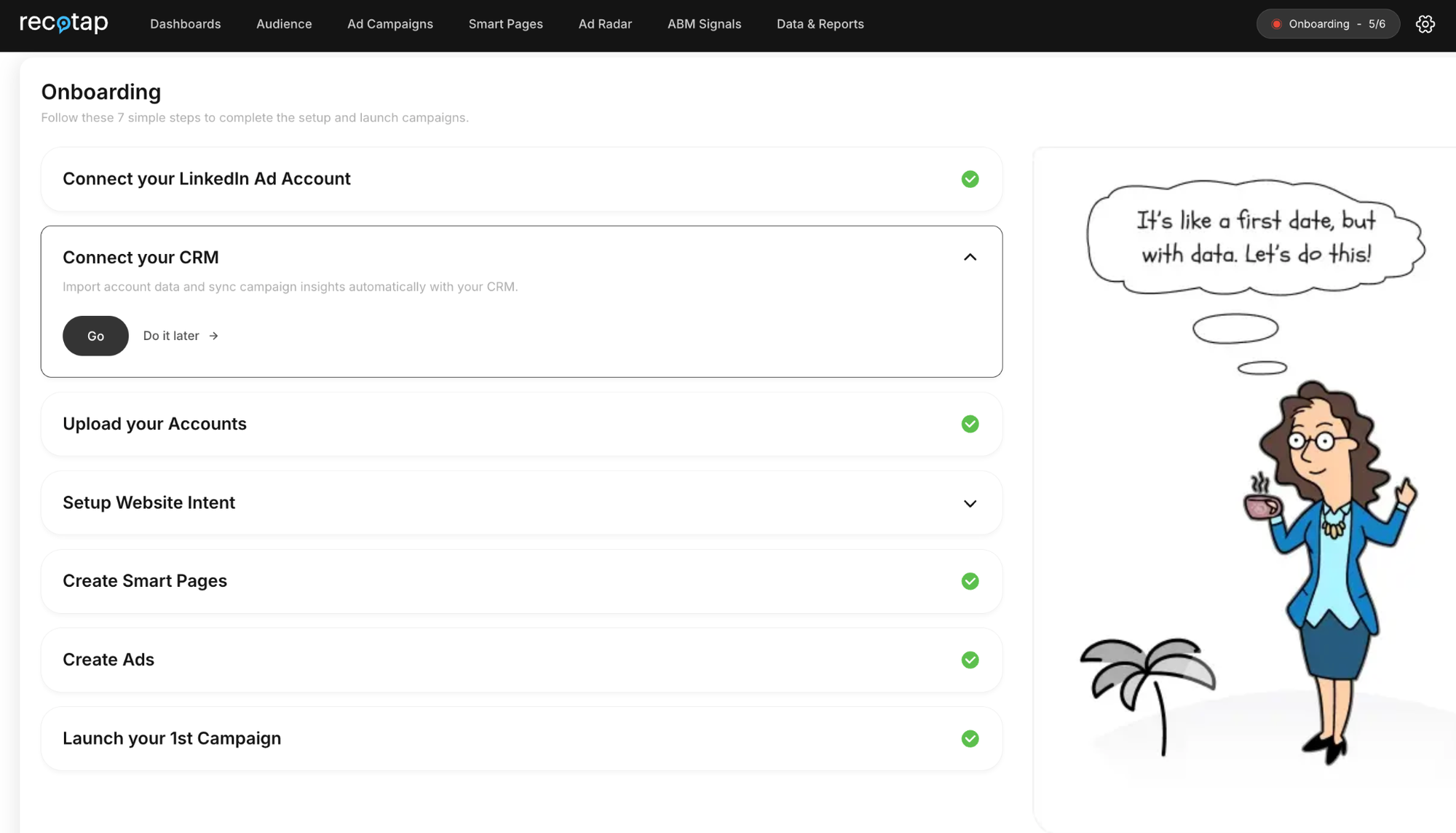
Connect your CRM (HubSpot or Salesforce; optional if not currently in use)
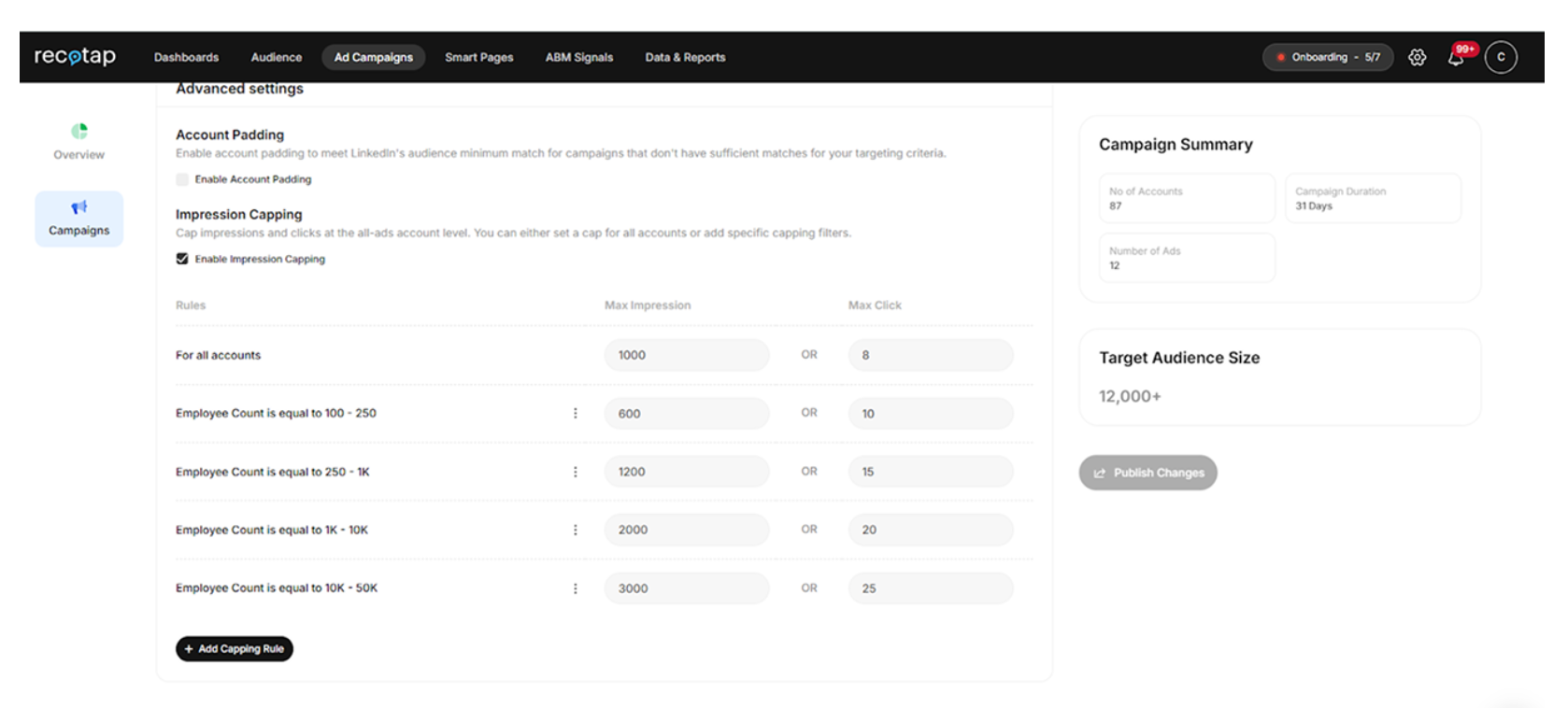
Configureimpression capping rules by account tier to redistribute spend across the full TAL
Establish baseline metrics: deal size, sales velocity, and starting TAL penetration rate
Define journey stage rules: what signal combinations move an account from Unaware to Aware, from Aware to Consideration, from Consideration to Intent
What You Will Discover in Week One - Impression Capping
For most teams, the first meaningful insight arrives almost immediately. LinkedIn's native algorithm concentrates the majority of impressions on a small subset of your target account list, typically the accounts that have already engaged. Impression capping corrects this.
Within days of setting it up, teams see their spend redistributing to accounts that have been receiving almost no coverage. If you have been running LinkedIn campaigns for six months and wondering why certain strategic accounts seem unreachable, this is usually why.
First Signals: What to Expect and What Not to Expect
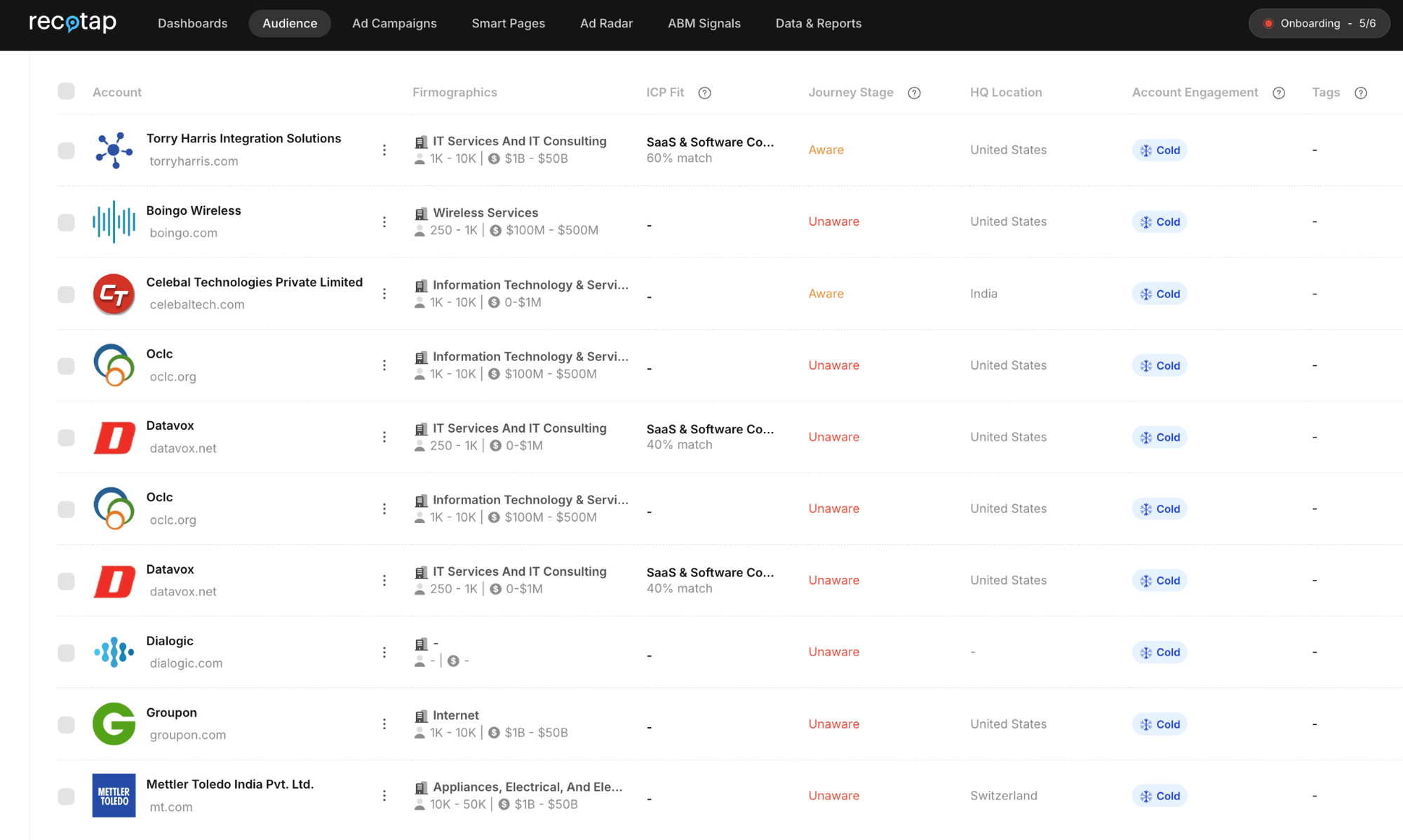
Within 2 to 4 weeks, you get something most teams have never had: a scored, staged view of your entire TAL. Every account is placed on the journey stage model, Unaware through Intent, based on actual signal data. Your sales team can see, without a manual export, exactly how the pipeline really looks.
Accounts that seemed equally targetable now have clearly different signals behind them. Some are cold. Some are already showing early Consideration signals. That visibility changes how your team prioritizes outreach in the coming weeks.
Do not expect meetings booked or demos yet. That comes once orchestration is live and accounts start moving through stages. The first 30 days are about signal clarity. By day 30, you have a data-backed baseline the system can act on.
Days 30–60: Orchestration Comes Alive
This is where the platform starts doing what it was designed to do. The data infrastructure you built in the first 30 days becomes an active system.
Accounts begin moving betweenbuyer journey stages automatically, Unaware to Aware, Aware to Consideration, Consideration to Intent, without anyone touching a spreadsheet. Smart segments refresh in real time as buyer behavior changes. The CRM sync starts writing journey stage data and account scores back to HubSpot or Salesforce every 24 hours. BDRs begin receiving alerts when a target account crosses a stage threshold, which means outreach starts the same day a signal appears rather than days later after a manual export.
The 60-Day Milestone That Matters Most
Teams integrating with HubSpot or Salesforce typically see TAL coverage move from below 20% to above 80% within the first 60 days. This is the most concrete early proof point of an ABM implementation working. It means your strategic accounts, the ones with the right firmographic fit and the right deal potential, are now receiving consistent, capped impressions rather than being crowded out by the algorithm.
One customer, after seeing the journey stage mapping, list refresh, CRM sync, and BDR workflow sequence in action for the first time, described it this way: "After seeing the Stage to List to CRM sync to BDR workflow in action, the logic of the whole platform clicked." That sequence is the core orchestration loop. Days 30 to 60 are where it becomes real.
What the Recotap Team Is Doing During This Phase
The CS team is reviewing early performance data, refining segment definitions based on what the signals are actually showing, adjusting targeting rules, and identifying which accounts are engaging and which are not responding. Weekly check-ins in this period are substantive. The conversation shifts from "how does this work" to "here is what we are seeing and here is what we are adjusting."
Days 60–90: Measurement and Refinement
By day 60, you have enough data to move from setup questions to performance questions. The focus shifts to which accounts are progressing and what to do about the ones that are not.
The ABM Metrics That Matter at This Stage
These are the fiveABM metrics that become measurable and meaningful by this point:
Meetings booked per week with target accounts: the leading indicator sales teams care most about in the early phase, and the clearest signal that the program is generating pipeline activity
Account engagement score trends : are scores rising, flat, or falling across your TAL tiers?
Journey stage progression: how many accounts moved from Unaware to Aware, and from Aware to Intent, in the past 30 days?
Pipeline creation signals: depends on your sales cycle length; meaningful for teams with cycles under 90 days, directional for longer cycles
TAL penetration rate: the percentage of accounts on your target list that received impressions in the measurement period
Important expectation to set with leadership: Revenue attribution becomes measurable in Q2 to Q3, not in the first 90 days. The first 90 days are for engagement and pipeline signals. Presenting closed-won attribution as a 90-day metric will set up your program for failure on an impossible timeline.
Meetings booked per week is the most cited single metric across Recotap customers in the early phase. If that number is rising week over week, the program is working.
What Does Recotap Actually Set Up for You?
Recotap's team handles:
Orchestration logic configuration
Smart segment setup and refresh rules
Impression capping rule building by firmographic tier
Intent data integration (Bombora, G2, TrustRadius)
CRM integration and sync configuration
Weekly performance reviews and optimization
Translating your sales requirements into campaign structure
Identifying the KPIs that map to your specific pipeline goals
Your team's responsibilities:
Approving the target account list
Providing CRM access
Signing off on creative direction and messaging
Attending weekly check-ins
Routing BDR signals internally to sales
What do you stop doing?
Nobody uploads manual list updates every week.
Nobody tracks account movement in spreadsheets.
Nobody rebuilds LinkedIn audiences every time a prospect changes stages.
That is the point of the orchestration layer, and it is what Recotap's team builds during onboarding so that your team does not have to maintain it manually after go-live.
Key Takeaways
Most teams choose the supported onboarding path and go live within 4 to 6 weeks of signing.
TAL coverage typically moves from below 20% to above 80% within the first 60 days of implementation.
Engagement signals appear in weeks 2 to 4. Pipeline signals emerge at the 60 to 90 day mark. Revenue attribution becomes measurable in Q2 to Q3.
Meetings booked per week with target accounts is the single most reliable early indicator of ABM program health.
Recotap's CS team handles orchestration setup, impression capping configuration, intent data integration, and weekly optimization. Your team approves the list, provides CRM access, and signs off on creative.
ABM is not set-and-forget. The first 90 days are where the program gets calibrated to your actual account base, signal mix, and sales cycle.
Frequently Asked Questions
How long does it take to go live on Recotap after signing?
Supported onboarding teams typically go live within 4 to 6 weeks. During that window, Recotap's CS team handles orchestration setup, TAL import, CRM integration, and intent data connections (Bombora, G2). Self-serve teams with existing ABM experience can move faster, sometimes under two weeks. Recotap provides a step-by-step onboarding checklist so nothing falls through on your side.
Do I need HubSpot or Salesforce to use Recotap?
No. CRM integration is recommended but not mandatory. Without it, you still get impression data, engagement scoring, and journey stage visibility. With it, you get two-way sync writing stage data back to your CRM every 24 hours, BDR alerts when accounts cross thresholds, and pipeline attribution in Q2 to Q3. Connecting the CRM later is straightforward and handled by the CS team.
What is the difference between self-serve and supported onboarding on Recotap?
Self-serve is for teams with existing ABM experience who want to move fast. You configure everything independently. Supported onboarding (Recotap-as-a-Service) means Recotap's team of 25+ ABM practitioners configures orchestration logic, smart segments, and impression capping rules alongside you from day one. Most mid-market teams start with support and shift to self-serve as internal ABM capabilities grow.
What ABM KPIs should I track in the first 90 days?
The six that matter: (1) meetings booked per week with target accounts; (2) account engagement score trends; (3) buying committee coverage rate (80%+ on Tier 1); (4) journey stage progression; (5) pipeline creation signals (depends on sales cycle length); (6) TAL penetration rate. Revenue attribution is a Q2 to Q3 metric. Set that expectation with leadership from the start.
What if my team has no previous ABM experience?
The supported path is built for this. Recotap's CS team brings ABM strategy, orchestration configuration, and playbook structure. Your team brings customer knowledge and sales process context. Recotap carries a 4.7/5 rating on G2, where customer success is the most cited reason people recommend it. You do not need an ABM operations hire to get started.
How is Recotap different from tools like 6sense or Demandbase for onboarding?
Enterprise ABM platforms typically require a dedicated ABM ops hire and 3 to 6 months of configuration before the first campaign goes live, which makes sense for $500K+ budgets with large channel ops teams. Recotap's mid-market focus means the CS team handles what a platform admin would handle elsewhere. Most teams are live in 4 to 6 weeks. Not sure if Recotap fits your setup?Here's how to evaluate it against your current stack.