We use cookies to ensure you get the best experience on our website. By continuing
to use our site, you accept our use of cookies, privacy policy and terms of service.
ESC
What are you looking for?
Subscribe to our Newsletter
Join 10k+ people to get notified about new posts, news and updates.
Terms of use dolor sit amet consectetur, adipisicing elit. Recusandae provident ullam
aperiam quo ad non corrupti sit vel quam repellat ipsa quod sed, repellendus
adipisci, ducimus ea modi odio assumenda.
Disclaimers
Lorem ipsum dolor sit amet consectetur adipisicing elit. Sequi, cum esse possimus
officiis amet ea voluptatibus libero! Dolorum assumenda esse, deserunt ipsum ad
iusto! Praesentium error nobis tenetur at, quis nostrum facere excepturi architecto
totam.
Lorem ipsum dolor sit amet consectetur adipisicing elit. Inventore, soluta alias
eaque modi ipsum sint iusto fugiat vero velit rerum.
Limitation on Liability
Sequi, cum esse possimus officiis amet ea voluptatibus libero! Dolorum assumenda
esse, deserunt ipsum ad iusto! Praesentium error nobis tenetur at, quis nostrum
facere excepturi architecto totam.
Lorem ipsum dolor sit amet consectetur adipisicing elit. Inventore, soluta alias
eaque modi ipsum sint iusto fugiat vero velit rerum.
Copyright Policy
Dolor sit amet consectetur adipisicing elit. Sequi, cum esse possimus officiis amet
ea voluptatibus libero! Dolorum assumenda esse, deserunt ipsum ad iusto! Praesentium
error nobis tenetur at, quis nostrum facere excepturi architecto totam.
Lorem ipsum dolor sit amet consectetur adipisicing elit. Inventore, soluta alias
eaque modi ipsum sint iusto fugiat vero velit rerum.
General
Sit amet consectetur adipisicing elit. Sequi, cum esse possimus officiis amet ea
voluptatibus libero! Dolorum assumenda esse, deserunt ipsum ad iusto! Praesentium
error nobis tenetur at, quis nostrum facere excepturi architecto totam.
Lorem ipsum dolor sit amet consectetur adipisicing elit. Inventore, soluta alias
eaque modi ipsum sint iusto fugiat vero velit rerum.
How to Identify Anonymous Website Visitors for ABM: What Actually Works
TLDR
Account-level de-anonymization resolves 60-70% of traffic in North America. Europe sits lower because GDPR restricts the data sources providers can draw from, with EU-specialised tools like Leadinfo reporting around 35-40%. Southeast Asia and India are materially lower again, driven by heavy mobile data usage and fewer dedicated corporate IP blocks. Global average lands at 30-40%. That is the realistic ceiling.
Person-level identification runs at 5-15% accuracy and is US-only. Every major provider limits or geofences person-level data outside the US because of GDPR and regional data coverage gaps. Not a foundation for ABM in Europe, Southeast Asia, or India.
De-anonymised data becomes actionable only when it feeds a scoring system combined with third-party intent, CRM activity, and LinkedIn engagement.
Installing a pixel is not an ABM strategy. Connecting it to a signal orchestration system is.
De-anonymization reveals who visited your site. An integrated signal system like Recotap’s tells you what to do about it. Most B2B teams just handover the de-anonymised data to their sales team and expect deals to convert.
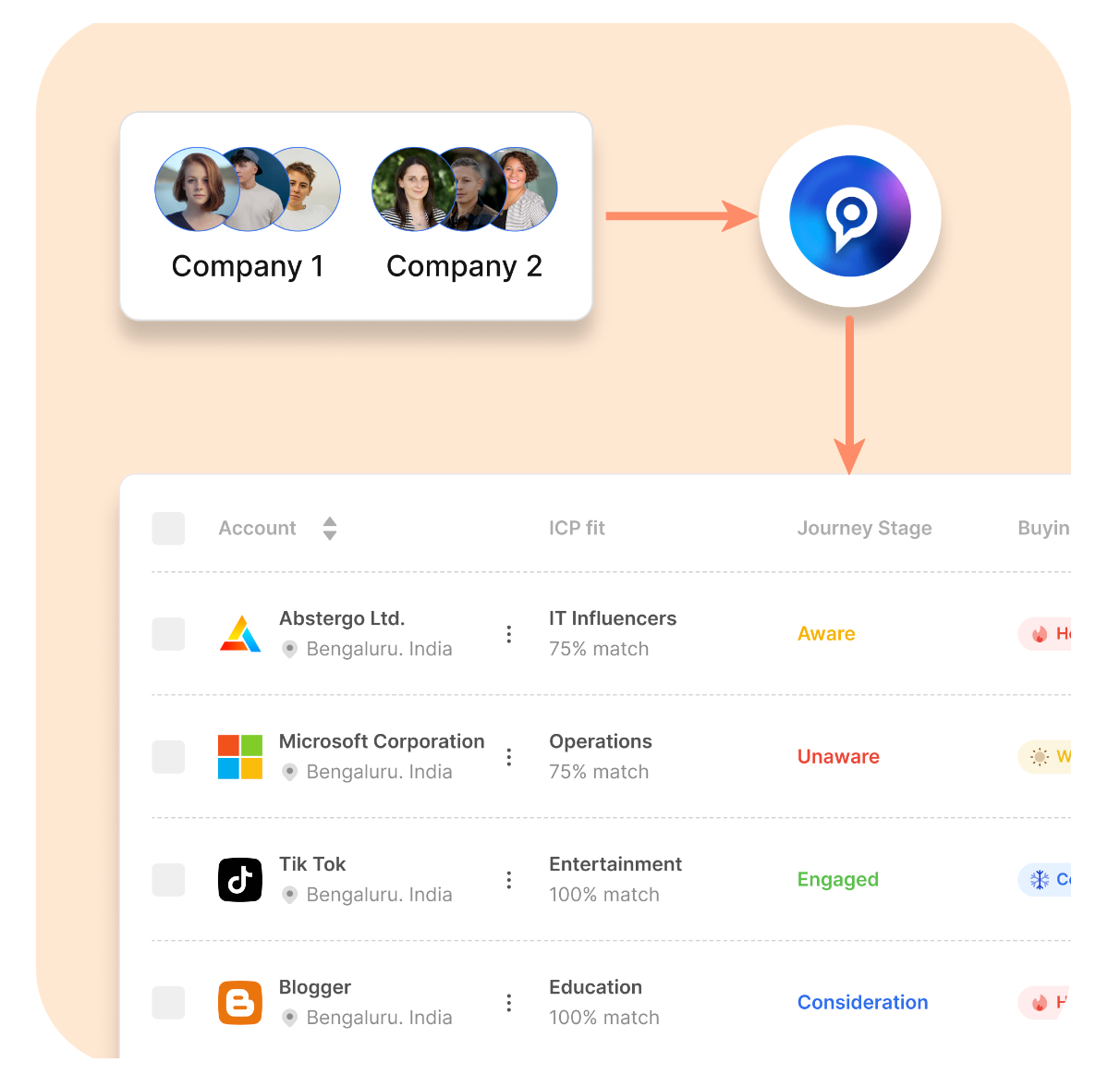
Recotap's website de-anonymisation is built into the platform's Signal Based Audiences, which scores every identified visitor by page behaviour, combines it with Bombora intent and CRM activity, and maps each account to a buying stage automatically. De-anonymization is not a standalone product inside Recotap. It is one signal source among several, and that distinction matters more than the technology itself.
Here is what the technology actually delivers, where the ceiling is, and how to connect it to the pipeline.
Why Most De-Anonymisation Tools Disappoint
There are two reasons demand gen teams open their visitor identification dashboard a week after install and feel let down. Most articles conflate them. They are separate problems.
Problem 1: Tools surface ISP and telecom names as company matches.
This is a data quality failure, not a match rate limit. A well-built tool should filter out matches that resolve to broadband providers, residential ISPs, or telecom carriers because those are not the visiting company. Single-provider tools and cheaper solutions often skip this filter and surface the ISP name as if Reliance Jio or Comcast walked onto your pricing page. That is what buyers are complaining about when they say the dashboard is full of telecom names.
The fix is waterfall matching across multiple providers combined with active suppression of known ISP ranges. Recotap uses a multi-provider waterfall and filters out non-corporate IP matches before surfacing them, which is why the dashboard shows companies and not broadband carriers. Tools relying on a single data provider cannot do this reliably.
Problem 2: The real match rate ceiling is remote work, not the tool.
More than 60% of B2B traffic now comes from non-office IPs: home networks, mobile data, co-working spaces, and VPNs. A buyer reading your pricing page from a coffee shop resolves to the coffee shop's ISP, not their employer. No provider on the planet can reverse that connection back to a company because the underlying signal is not there.
This is why the industry ceiling for account-level identification sits at 30-40% globally and up to 60-70% in North America, where corporate IP infrastructure is more developed. Europe drops below that. GDPR restricts the data sources providers can draw from, and EU-specialised tools like Leadinfo report coverage around 35-40%. Southeast Asia and India fall lower still.
The structural reasons are the same everywhere: mobile-heavy traffic, shared office infrastructure, and fewer companies with dedicated corporate IP ranges.
Understanding which of these two problems you are facing matters. If the tool is surfacing ISP names, that is a vendor problem you can fix by switching providers. If the tool is missing accounts entirely, that is a structural ceiling you have to work around with signal layering.
What De-Anonymization Can Actually Deliver (And Where It Stops)
Account-level identification using a waterfall model across multiple data providers resolves approximately 30-40% of global traffic. In North America, that rises to 60-70%. In India and the GDPR markets, it is materially lower.
The waterfall method matters. No single data provider has complete coverage. A reliable approach runs the IP against multiple partner databases in sequence. Recotap uses this approach, partnering with multiple providers and matching based on geography so that coverage improves across regions. The ceiling does not disappear, but the floor rises compared to single-provider tools.
Person-level identification is a separate category. Tools promising to identify the exact individual operate at 5-15% accuracy, US traffic only, dependent on third-party cookie infrastructure that is actively shrinking.
Recotap offered person-level identification in an earlier product version and retired it because the accuracy was misleading sales teams more than helping them. That was a product decision driven by observed data quality degradation as Apple's cookie restrictions, GDPR, and CCPA eroded the signal. For Indian B2B teams, person-level tools are functionally irrelevant since the data coverage does not extend to India.
Account-Level vs. Person-Level De-Anonymization : Why the Distinction Matters
ABM as a practice is account-level by design. The relevant questions are: which company visited, which pages did they hit, and how often they returned?
Recotap treats visitor data as the sum total of engagement from all contacts within an account, combined with anonymous website visits. Some activities might not reveal which person visited, but they can reveal which account visited based on IP addresses and other identifiers. That combined engagement score, not individual identity, drives journey stage progression and campaign decisions.
Most person-level tools source from a small number of US-based data providers. Running two or three in parallel may not proportionally improve coverage since the underlying data pool overlaps significantly.
What Makes De-Anonymised Data Actually Useful?
Most teams stop at raw data identification. Three levels of use exist.
Level 1: Raw Data Identification. You know Company X visited. You see pages, duration, and source. This is a list which is not enough to reveal intent, not yet actionable.
Level 2: Page-Weighted Scoring. A pricing page visit scores differently from a blog visit. A case study page signals consideration. Building a deliberate scoring hierarchy converts the visitor list into a prioritised signal.
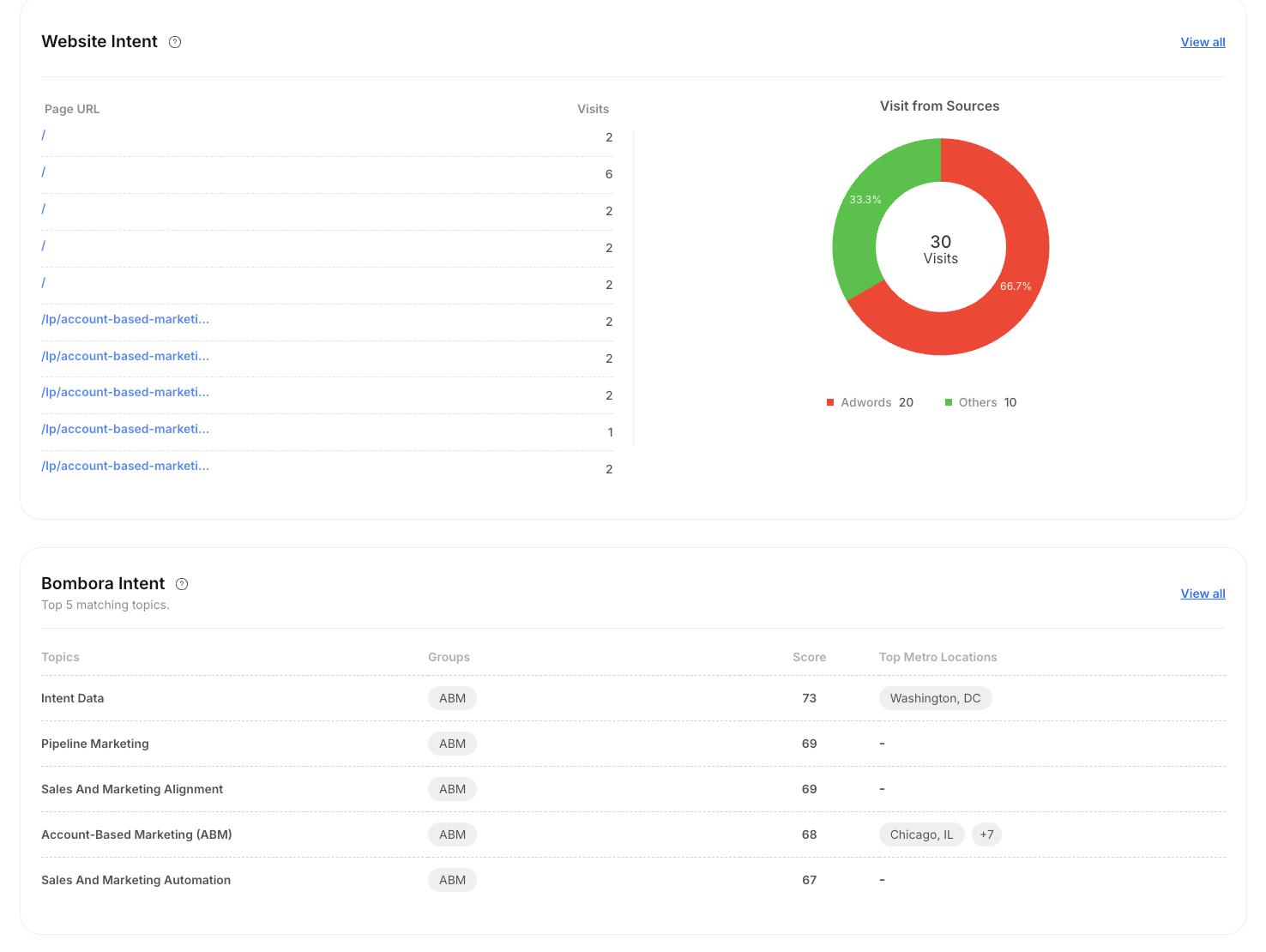
Level 3: Signal Integration. This is where de-anonymization stops being a standalone feature and starts driving the pipeline. Inside Recotap's Signal Hub, website visits are combined with Bombora intent, HubSpot or Salesforce CRM activity, and LinkedIn ad engagement. The composite score classifies accounts into buying stages. When an account crosses a threshold, it moves from a broad awareness campaign into a targeted sequence automatically. Sales gets a Slack notification. 1-1 Personalized landing pages activate when accounts move into high intent for purchase. The system does not wait for someone to check a dashboard.
Alt text: Personalised landing pages by Recotap
One additional point: de-anonymization captures all resolvable visitors, not only accounts on your target list. An unknown account visiting your pricing page repeatedly is a signal worth acting on. Connecting new visitors to your TAL dynamically through engagement thresholds makes de-anonymization a list expansion tool, not just a list confirmation tool.
Why Traditional Approaches Are Breaking Down
Apple banned third-party cookies. GDPR, CCPA, and India's DPDP legislation restrict third-party data collection. IP masking through VPNs continues to reduce the addressable pool. Any targeting strategy built on cookies is narrowing every quarter.
LinkedIn remains the only channel where B2B buyers can be reached at the account level with consistent precision. The targeting uses first-party professional profile data, not cookies or IP inference. De-anonymization output should feed LinkedIn campaign logic, determining which accounts to move into which journey stage and which creative to serve, rather than retargeting pixels on display networks that can no longer identify who they reach. Recotap's architecture is built around this reality.
What "Actually Works" in Practice
De-anonymization is worth doing. Account-level coverage at 30-70% is a real signal from accounts engaging with your content.
But the teams turning it into a pipeline defined a page scoring hierarchy, combined the website signal with Bombora and CRM data, set stage-based thresholds, and connected the output to LinkedIn targeting so that the system moves accounts through buying stages automatically.
Account-level de-anonymization resolves 60-70% of traffic in North America. Europe sits lower due to GDPR, with EU-specialised tools reporting around 35-40%. Southeast Asia and India fall further because of mobile-heavy traffic and limited corporate IP infrastructure. Global average is 30-40%. Understanding the ceiling and where it applies matters more than ignoring it.
The waterfall method across multiple data providers improves coverage but does not close the gap entirely.
Person-level tools run at 5-10% accuracy, US only, and are structurally degrading. They do not extend to India.
Page-weighted scoring converts a visitor list into a prioritised intent signal. Without it, a pricing page visit and a blog visit look identical.
De-anonymization connected to Bombora, CRM, and LinkedIn signals, with automated stage-based triggers, is what moves accounts to the pipeline.
Frequently Asked Questions
Q: Can you identify anonymous website visitors without a form fill?
Yes. Website de-anonymization matches visitor IPs against databases of known corporate IP ranges without any form submission. Coverage is 30-40% globally, up to 60-70% in North America. In India, the rate is lower because fewer companies have static, publicly registered IP blocks. Visitors on residential or mobile connections resolve to their ISP.
Q: Why am I seeing ISP names instead of real companies?
This is a tool quality problem, not a limitation of de-anonymisation itself. A well-built visitor identification tool suppresses matches that resolve to ISPs, broadband providers, or telecom carriers, because those are not the visiting company. Single-provider tools and cheap solutions often skip this filter and surface the ISP name as if it were a real visitor. If your dashboard is full of broadband and telecom names, your tool is not doing the basic job of filtering non-corporate IP matches.
A separate issue is that remote workers on home networks or mobile data genuinely cannot be resolved to their employer, because the IP does not connect back to the company. Those visitors get dropped from the match entirely in a properly built tool, not surfaced as ISP names. Recotap uses a multi-provider waterfall and filters non-corporate matches before they reach the dashboard.
Q: What is the accuracy of B2B website visitor identification?
Account-level tools using a waterfall method identify 30-40% of global traffic and 60-70% in North America. Indian and European markets perform lower. Person-level identification runs at 5-10% accuracy, US only. ABM workflows should be built on account-level data.
Q: Is person-level de-anonymization worth using for ABM in India?
No. Person-level tools run at 5-15% accuracy, US traffic only, and depend on shrinking cookie infrastructure. The data coverage does not extend to India. Account-level identification is more durable and better aligned with how ABM works.
Q: How does de-anonymization accuracy differ in India vs. other regions?
North America delivers 60-70% because corporate IP infrastructure is more developed. India sits below the global 30-40% average due to higher mobile data usage, shared office infrastructure, and fewer dedicated corporate IP blocks. Indian teams should treat de-anonymization as one signal among several.
Q: Does visitor identification only work for accounts on my target list?
No. De-anonymization captures all resolvable visitors. Accounts outside your TAL can surface through browsing behaviour. Connecting new visitors dynamically based on engagement thresholds makes it a list-expansion mechanism. For Indian teams with a TAL of 500-1,000 accounts, this is how you discover accounts you should be targeting but are not.
Q: How do I make website visitor data actionable?
Three layers: first, define page scoring where pricing and case study pages score higher than blogs. Second, combine that with Bombora intent, CRM activity, and LinkedIn engagement. Third, set stage-based thresholds so that when an account crosses a score, campaigns shift and sales notifications trigger automatically.
Q: Is IP-based tracking still reliable given Apple's privacy changes and DPDP?
Account-level IP resolution is more durable than cookie-based tracking. Apple's restrictions primarily target third-party cookies, most directly impacting display advertising and person-level tools. India's DPDP Act may further constrain third-party data collection. The accuracy ranges cited here reflect the current environment.