

B2B buyers aren’t discovering vendors the way they used to.
Instead of starting with search engines, paid ads, or outbound outreach, they’re increasingly turning to AI engines—ChatGPT, Gemini, Perplexity, and Copilot for instant recommendations, vendor comparisons, and strategic insights.
At the same time, buyers are moving deeper into their evaluation journey without showing intent signals. They research anonymously, validate independently, and narrow down options long before they speak to a sales team.
This shift is transforming B2B acquisition.
In 2026, two channels will define who gets discovered, who earns trust, and who converts pipeline:
Together, they will become the dominant B2B acquisition engine.
Over the past few years, the most commonly used acquisition channels have started to show diminishing returns:
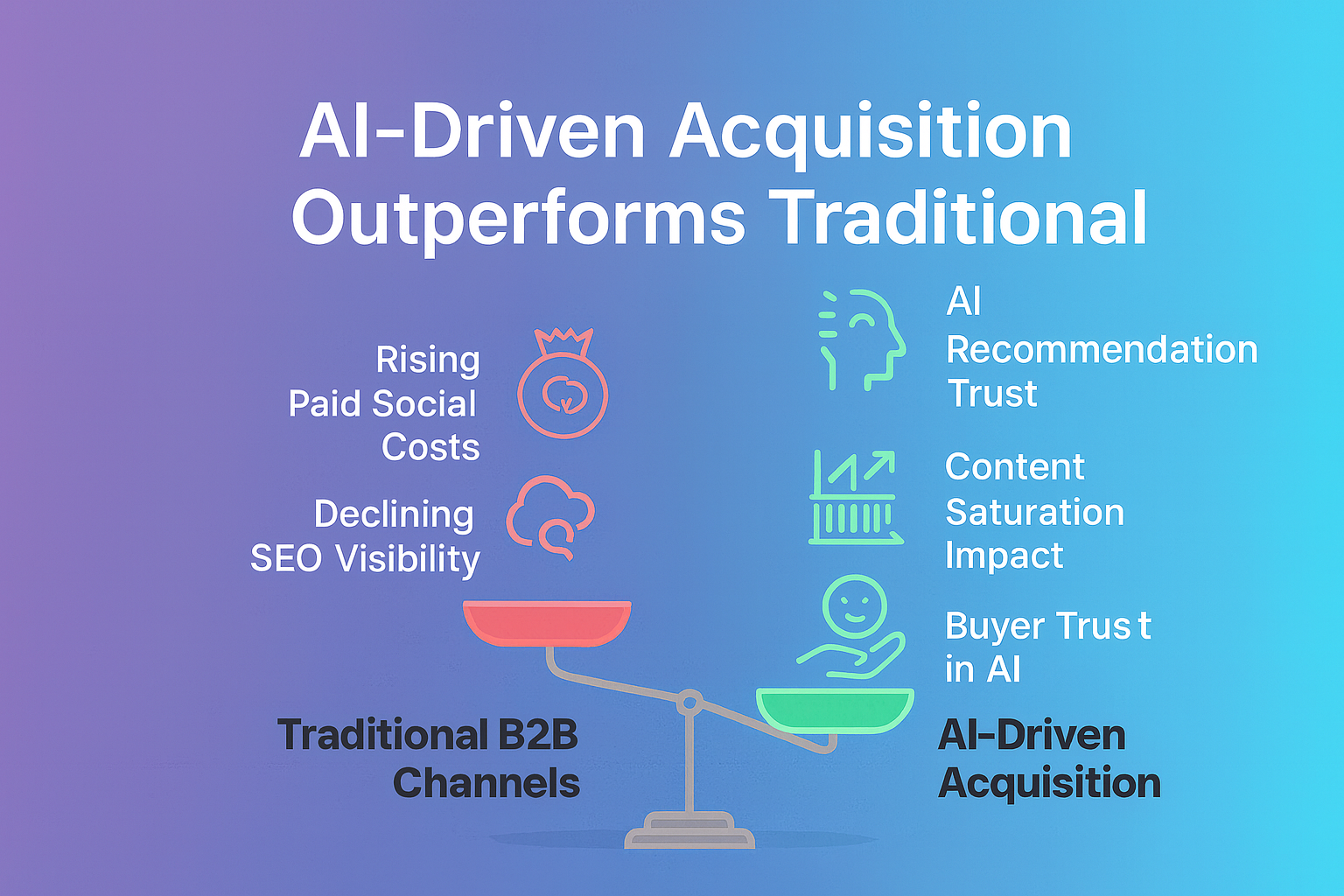
Cold outbound email, once a reliable growth lever, is becoming increasingly fragile.
Major providers like Google Workspace have tightened spam filters and sender requirements, making bulk outbound riskier and less predictable. Source: https://support.google.com/a/answer/81126
In 2024–2025, Google also introduced stricter authentication and spam protection rules, which disproportionately impact cold emailing and high-volume outreach. Source: https://blog.google/products/gmail/gmail-security-authentication-spam-protection/
As a result:
Industry deliverability experts confirm that cold email via Workspace is declining in reliability, not eliminated, but far riskier than before. Source: https://www.mailreach.co/blog/google-workspace-email-going-to-spam
This reinforces one prediction: Identity-based and AI-driven channels will replace broad outbound as the primary TOFU acquisition.
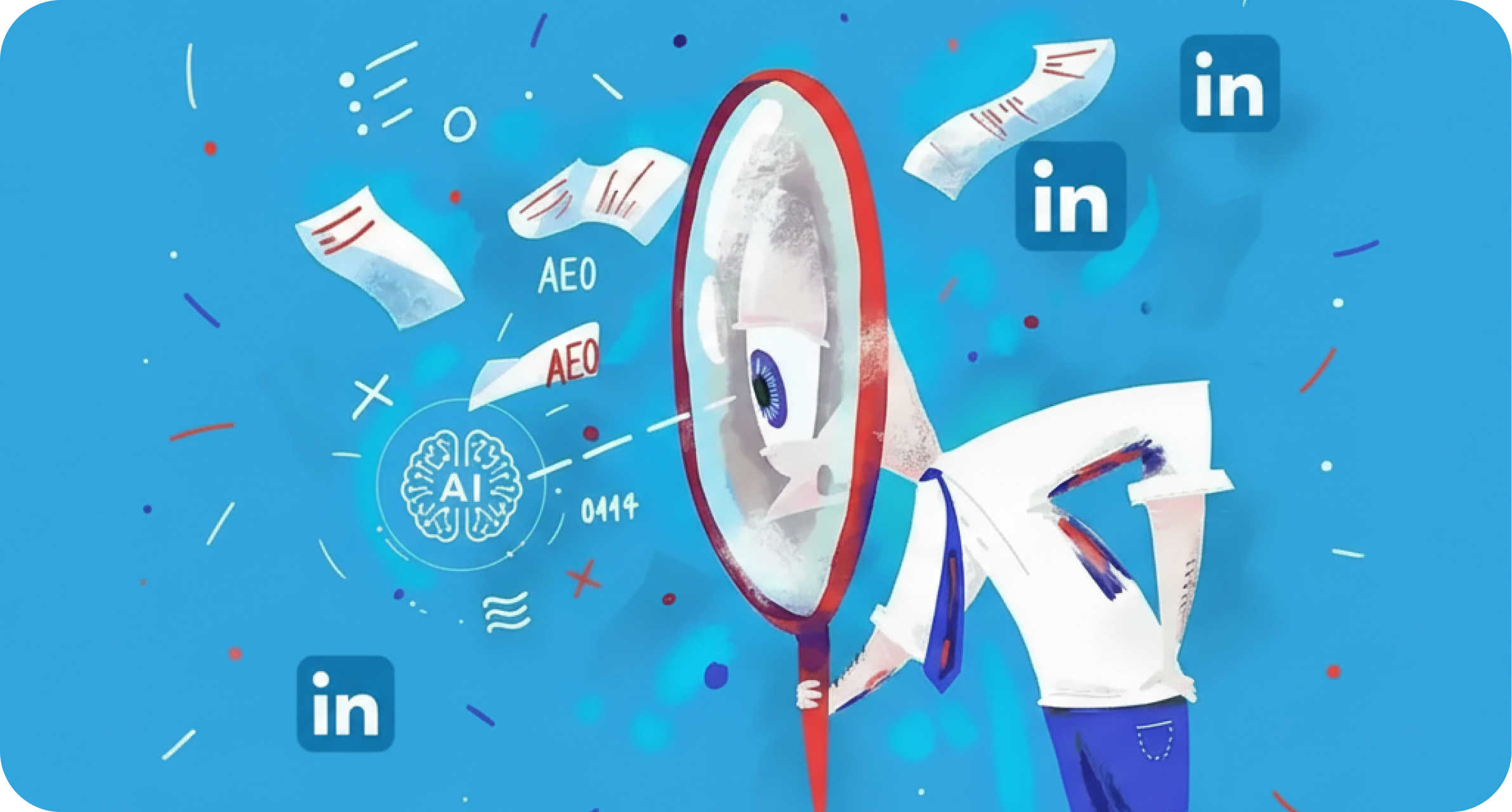
AEO or AI Engine Optimization refers to building expertise, content, and structured insights that AI engines can recognize, trust, and surface in conversations or queries.
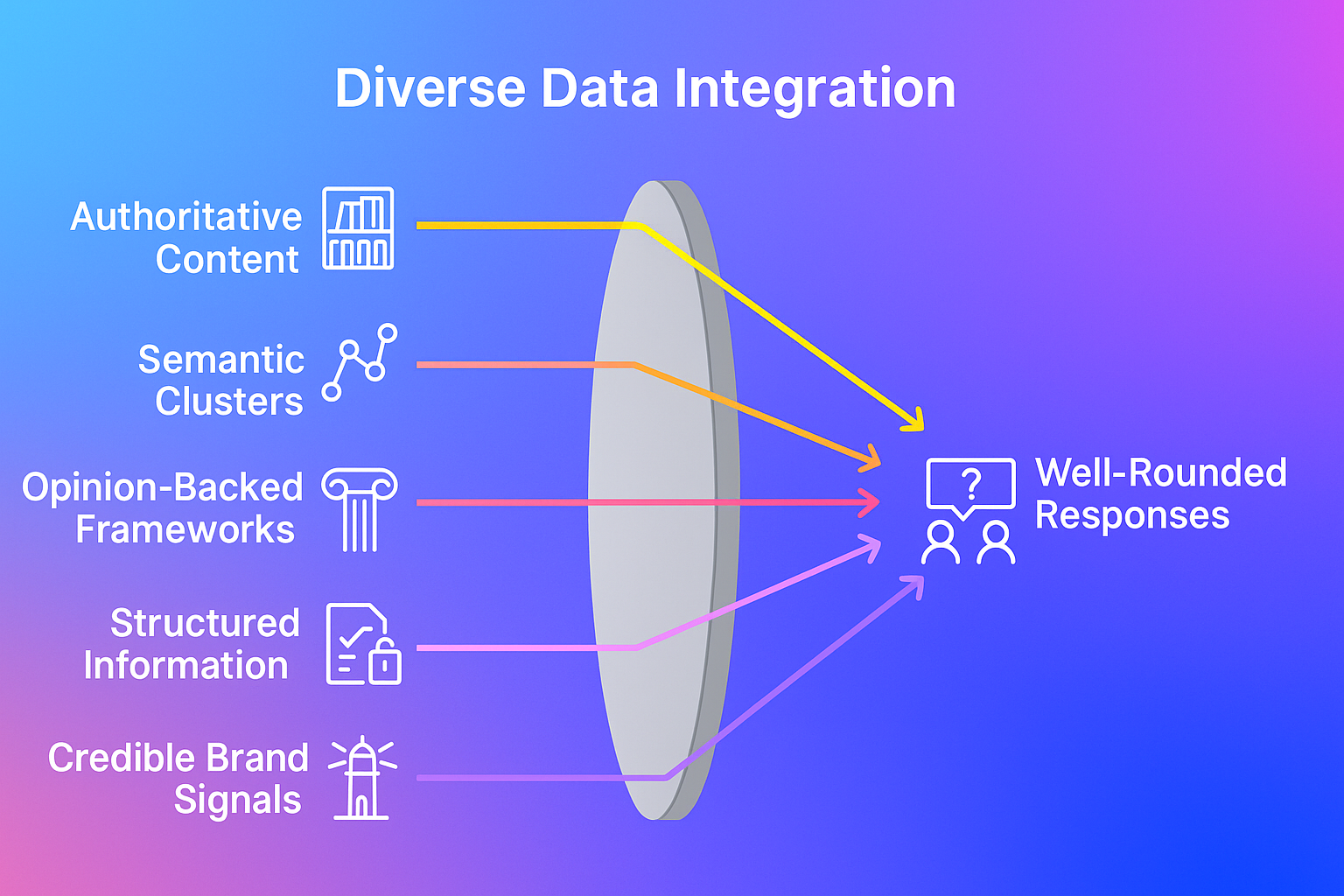
AI assistants aggregate information from:
So when a buyer asks:
AI systems decide who gets visibility.
This represents an entirely new acquisition surface; one that brings high-intent buyers into your ecosystem without the friction of traditional channels.
AEO becomes a passive yet powerful top-of-funnel engine.
ABM has traditionally been viewed as a mid-funnel strategy. But in 2026, ABM becomes one of the most efficient top-funnel acquisition channels because it allows teams to:
Modern ABM platforms support this with:
Among all ABM activation channels, LinkedIn consistently outperforms for B2B teams due to:
Source: https://business.linkedin.com/marketing-solutions/b2b-marketing
This combination makes LinkedIn uniquely effective for early-stage ABM. For deeper ABM strategy frameworks, LinkedIn’s own ABM guide reinforces this. Source: https://business.linkedin.com/marketing-solutions/abm
Forrester’s B2B marketing predictions also support the shift toward identity-based social ABM. Source: https://www.forrester.com/report/Predictions-2024-B2B-Marketing/RES178572
While LinkedIn allows account targeting, it does not reveal account-level engagement data:
LinkedIn’s official documentation shows reporting is campaign-level only. Source: https://www.linkedin.com/help/lms/answer/a426987
Matched Audiences expands targeting, but still does not provide account-level visibility. Source: https://business.linkedin.com/marketing-solutions/matched-audiences
This creates a critical measurement gap.
ABM platforms fill this gap by providing:
LinkedIn provides the reach. ABM platforms provide the intelligence.
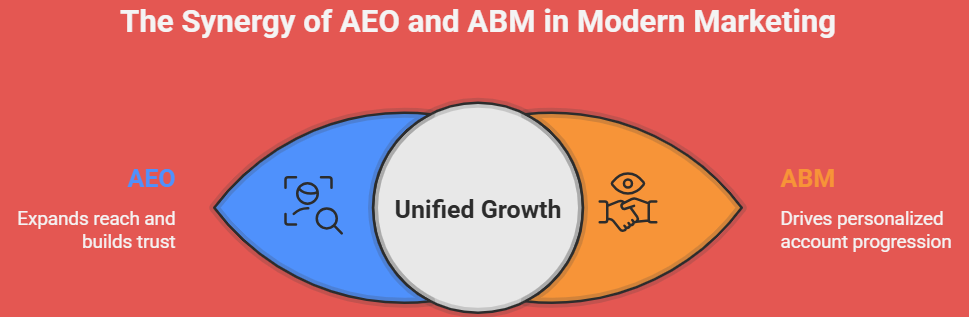
AEO and ABM complement each other in powerful ways:
by positioning your expertise inside the platforms where buyers start their research.
by guiding ICP accounts through personalized, structured engagement.
Together:
This combination mirrors the modern buying journey better than any legacy channel.
Not every team has the resources to operationalize both AEO and ABM. Agencies combining these capabilities are becoming vital partners for forward-thinking B2B organizations.
Here are the leading agencies shaping the space:
RevvGrowth is one of the few agencies focusing deeply on AEO and modern ABM execution.
Where they excel:
Their combined AEO + ABM approach aligns strongly with 2026 buyer trends.
A global ABM-first agency known for enterprise-grade 1:1 and 1:few programs.
Strengths:
A performance-driven ABM agency specializing in LinkedIn Ads and account progression.
Strengths:
A CX and research-focused agency contributing to AEO through structured content and digital experience.
Strengths:
A long-standing B2B search and content agency, evolving naturally toward AEO.
Strengths:
A demand-generation agency specializing in ABM strategy and RevOps alignment.
Strengths:
A content-led digital growth agency supporting multi-touch B2B acquisition.
Strengths:
Here’s a practical framework for teams preparing for next year’s shift:
Develop depth around topics, not keywords.
Focus energy and budget where it creates pipeline.
Awareness → Problem → Solution → Differentiation.
Paid, organic, email, social, and more.
Optimize content for AI models, not just search.
Evaluate impact through account movement and pipeline creation.
The B2B acquisition landscape is shifting fast. AI engines are becoming the new discovery layer, and targeted engagement is becoming the new differentiator.
This makes AEO + ABM the most important combination for acquisition in 2026:
Leaders who invest in these capabilities now—content, strategy, measurement, and orchestration—will define the next wave of high-growth companies.
The companies that evolve with this shift won’t just capture pipeline—they’ll shape the markets they operate in.
Table of Contents