We use cookies to ensure you get the best experience on our website. By continuing
to use our site, you accept our use of cookies, privacy policy and terms of service.
ESC
What are you looking for?
Subscribe to our Newsletter
Join 10k+ people to get notified about new posts, news and updates.
Terms of use dolor sit amet consectetur, adipisicing elit. Recusandae provident ullam
aperiam quo ad non corrupti sit vel quam repellat ipsa quod sed, repellendus
adipisci, ducimus ea modi odio assumenda.
Disclaimers
Lorem ipsum dolor sit amet consectetur adipisicing elit. Sequi, cum esse possimus
officiis amet ea voluptatibus libero! Dolorum assumenda esse, deserunt ipsum ad
iusto! Praesentium error nobis tenetur at, quis nostrum facere excepturi architecto
totam.
Lorem ipsum dolor sit amet consectetur adipisicing elit. Inventore, soluta alias
eaque modi ipsum sint iusto fugiat vero velit rerum.
Limitation on Liability
Sequi, cum esse possimus officiis amet ea voluptatibus libero! Dolorum assumenda
esse, deserunt ipsum ad iusto! Praesentium error nobis tenetur at, quis nostrum
facere excepturi architecto totam.
Lorem ipsum dolor sit amet consectetur adipisicing elit. Inventore, soluta alias
eaque modi ipsum sint iusto fugiat vero velit rerum.
Copyright Policy
Dolor sit amet consectetur adipisicing elit. Sequi, cum esse possimus officiis amet
ea voluptatibus libero! Dolorum assumenda esse, deserunt ipsum ad iusto! Praesentium
error nobis tenetur at, quis nostrum facere excepturi architecto totam.
Lorem ipsum dolor sit amet consectetur adipisicing elit. Inventore, soluta alias
eaque modi ipsum sint iusto fugiat vero velit rerum.
General
Sit amet consectetur adipisicing elit. Sequi, cum esse possimus officiis amet ea
voluptatibus libero! Dolorum assumenda esse, deserunt ipsum ad iusto! Praesentium
error nobis tenetur at, quis nostrum facere excepturi architecto totam.
Lorem ipsum dolor sit amet consectetur adipisicing elit. Inventore, soluta alias
eaque modi ipsum sint iusto fugiat vero velit rerum.
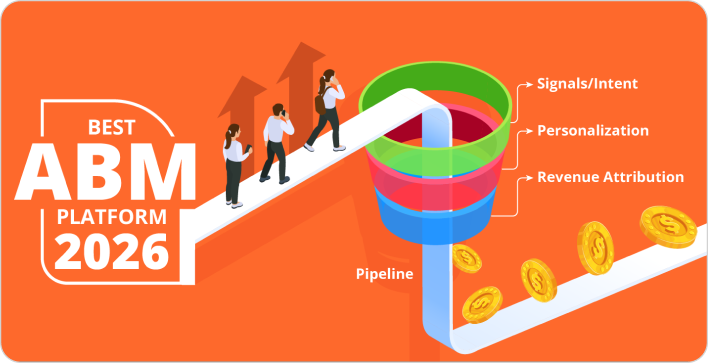
Most ABM programs fail because they engage accounts too late and deliver generic messaging that gets ignored. The best ABM platforms for 2026 solve these challenges through signal orchestration and AI-powered personalization at scale.
This comprehensive guide evaluates eight leading platforms on signal intelligence, personalization capabilities, LinkedIn ABM features, and proven results. Each platform receives detailed scoring across key criteria to help you choose the right solution based on your company size, budget, and specific needs.
Executive Summary
Quick Answer: The best ABM platform depends on your company size and needs. Mid-market B2B SaaS companies (50-500 employees) benefit most from platforms offering signal orchestration and automated personalization. Enterprise companies with $500K+ budgets can leverage comprehensive suites, while smaller teams need accessible, easy-to-implement solutions.
Key Findings:
Signal orchestration outperforms signal collection - Platforms integrating company-specific first-party data deliver better timing than those relying on commoditized third-party intent data
LinkedIn ABM needs specialized tools - Native LinkedIn lacks account-level reporting and advanced personalization that dedicated platforms provide
Company size determines fit - Small teams need simple tools, mid-market needs balanced platforms, enterprises can justify complex systems
Demandbase & 6Sense are for enterprise-only - Requires $500K+ budgets and dedicated teams; mid-market companies get better ROI from specialized platforms
Proven results matter more than features - Look for platforms demonstrating 3-4x CTR improvements and pipeline impact, not just feature lists
Critical Insight: The market has shifted from signal collection to signal orchestration. Success in 2026 depends on integrating unique first-party data sources rather than relying on the same third-party data every competitor accesses.
Bottom Line: Evaluate platforms based on how they solve your specific timing and personalization challenges. Mid-market companies should prioritize signal orchestration and LinkedIn ABM capabilities. Small teams should start with accessible and easy to use tools that are heavy on analytics. Only enterprises with substantial budgets should consider comprehensive platforms like Demandbase & 6Sense.
What Makes Account-Based Marketing Effective?
Account-Based Marketing (ABM) is a B2B strategy that treats individual high-value accounts as markets of one. Marketing and sales teams collaborate to create personalized campaigns for specific companies, focusing resources on accounts most likely to generate significant revenue. Companies using ABM generate 50% more revenue from their top accounts compared to those using traditional marketing approaches.
The Three Pillars of Successful ABM Programs
PILLAR 1: Precision Targeting and ICP Definition
The foundation of effective ABM starts with identifying your Ideal Customer Profile (ICP) and selecting best-fit accounts. This involves analyzing your most profitable customers across criteria like industry, company size, revenue, and technology stack. Accounts are typically tiered into three categories: Tier A accounts that perfectly match your ICP, Tier B accounts that meet most criteria, and Tier C accounts that show intent but rank lower on fit.
PILLAR 2: Signal-Based Timing
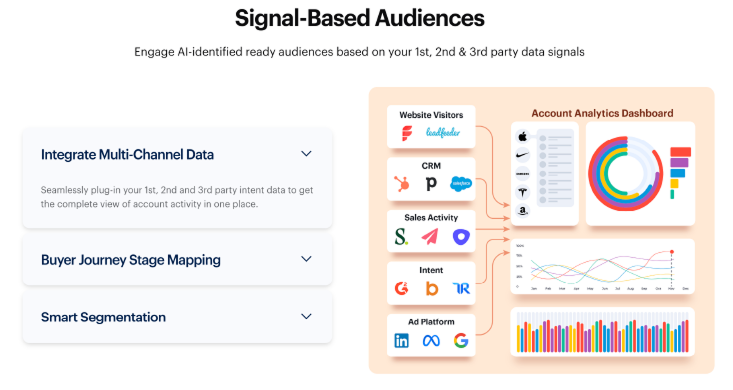
Most ABM fails because it engages accounts too late in their buying journey. The best programs identify when accounts are in-market through signal orchestration i.e., integrating first-party data (website behavior, content engagement), second-party data (partner ecosystem activity), and third-party data (job changes, funding, technology installations). This approach focuses on signal orchestration rather than just signal collection, enabling teams to engage accounts before they come to market and before competitors enter the conversation.
PILLAR 3: Personalized Engagement at Scale
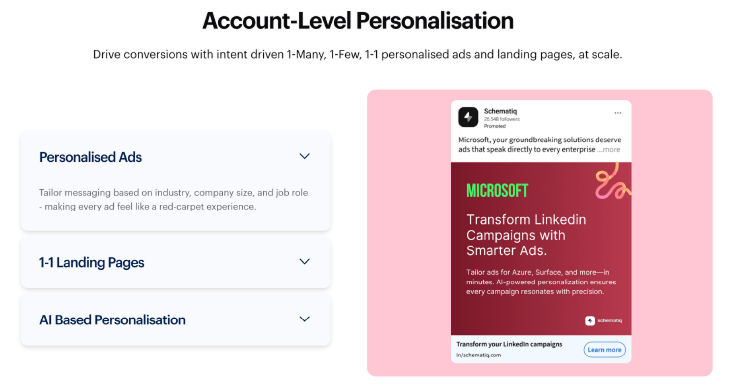
Modern ABM requires delivering personalized content across three approaches: 1:1 ABM for top-tier accounts with fully customized campaigns, 1:Few ABM for account clusters sharing similar characteristics, and 1:Many ABM for broader segments with tailored messaging. Traditional personalization creates resource drain and manual content creation for each account becomes impossible to scale. The solution lies in AI-powered automation that generates personalized ads and landing pages dynamically based on account attributes, industry, and buyer stage.
Who Uses ABM and What Challenges Do They Face?
Digital marketers, ABM managers, and demand generation leaders at B2B SaaS companies primarily use ABM platforms to drive pipeline and accelerate sales cycles. These teams face several critical challenges:
Manual work creates bottlenecks: Design teams become overwhelmed creating variations for hundreds of accounts, slowing campaign execution
Generic messaging gets ignored: Generic AI-generated outreach lacks account context, resulting in low CTRs and poor engagement
Budget waste on wrong accounts: Without proper signal intelligence, teams spend on accounts that aren't ready to buy
No account progression visibility: Inability to track which accounts move through the buyer journey prevents optimization
Choosing the right ABM platform requires evaluating capabilities against your specific challenges and company profile. The platforms that win in 2026 solve the core timing and personalization problems rather than simply collecting more data.
Key Capabilities for B2B SaaS in 2026
Signal Orchestration and Intent Scoring
Platforms must integrate multiple data sources
first-party (your website and CRM),
second-party (partner ecosystem), and
third-party (external intent data)
into a unified view. Account-level intent scoring should map accounts to buyer journey stages automatically, enabling teams to engage at precisely the right moment.
Personalization at Scale
Look for automated creative generation that produces personalized ads and landing pages without manual design work. The platform should support 1:1, 1:Few, and 1:Many personalization approaches simultaneously, maintaining brand consistency while enabling account-specific messaging.
LinkedIn ABM Capabilities
LinkedIn remains the primary channel for B2B marketing. Essential features include account-level targeting, dynamic creative personalization, and visibility into which accounts engage with your ads, something LinkedIn's native platform doesn't provide.
Budget Optimization
Smart platforms prevent budget waste by automatically pausing campaigns to disengaged accounts and reallocating spend to high-intent prospects. Real-time performance analysis should shift resources toward best-performing segments
Sales-Marketing Alignment
Tools must facilitate seamless handoffs between marketing and sales, providing shared visibility into account activity, engagement history, and buying signals.
Pipeline Visibility and Analytics
Platforms should connect activities to pipeline progression, showing which campaigns influence deals. Account-level reporting proves ABM impact beyond vanity metrics.
Platform Evaluation Scorecard
Each platform in this comparison receives ratings across six dimensions:
Signal Intelligence: How well does it orchestrate and score intent signals?
Personalization at Scale: Can it automate personalized content creation?
LinkedIn ABM: Does it provide account-level LinkedIn campaign capabilities?
Budget Optimization: Does it prevent waste and optimize spend allocation?
Ease of Use: How quickly can teams implement and operate it?
Best For: Which company types benefit most?
What Are the Best ABM Platforms for 2026
After evaluating eight platforms based on their ability to solve timing and personalization challenges for B2B SaaS companies, Recotap emerges as the clear winner. Each platform below includes a detailed scorecard, pros and cons, and specific use case recommendations.
1. Recotap - Best Overall for Mid-Market B2B SaaS (Winner) 🏆
Overall Score: 4.8/5
Platform Scorecard:
Signal Intelligence: ⭐⭐⭐⭐⭐ (5/5)
Personalization at Scale: ⭐⭐⭐⭐⭐ (5/5)
LinkedIn ABM: ⭐⭐⭐⭐⭐ (5/5)
Budget Optimization: ⭐⭐⭐⭐⭐ (5/5)
Ease of Use: ⭐⭐⭐⭐ (4/5)
Best For: Mid-market to enterprise B2B SaaS companies (50-500 employees)
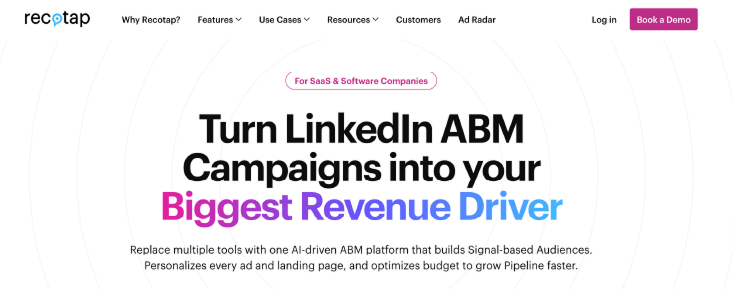
Recotap is an AI-powered LinkedIn ABM platform that solves both the timing and personalization challenges through comprehensive signal orchestration. The platform integrates first-party, second-party, and third-party intent data to identify in-market accounts and automates personalized ad and landing page creation at scale.
Pros:
Unmatched signal orchestration: Unlike competitors relying on commoditized third-party data, Recotap orchestrates company-specific first-party data sources unique to each business
Native LinkedIn ABM with account-level insights: Provides visibility into which specific accounts engage with ads—data LinkedIn doesn't expose through its native platform
Proven results: Customers consistently achieve 3-4x CTR improvement, reach 90%+ of their Total Addressable List, and reduce CPM to an average of $138
Smart budget allocation: Automatically pauses campaigns to disengaged accounts and reallocates spend to high-intent prospects
Human-in-the-loop AI: Maintains brand control while automating personalization
Cons:
Primarily focused on LinkedIn channel (multi-channel requires integrations with other tools)
May require initial onboarding investment to maximize platform capabilities
Key Differentiator: Recotap is the only platform that orchestrates company-specific first-party data sources rather than relying on commoditized third-party data, solving the signal quality degradation problem plaguing other platforms.
Then it uses that intent data to automate personalized ads and landing pages for LinkedIn ABM campaigns.
Pricing: Recotap’s analytics dashboard AdRadar is available for free usage for the first 60 days. Book a demo with the team to figure out the best pricing for your business.
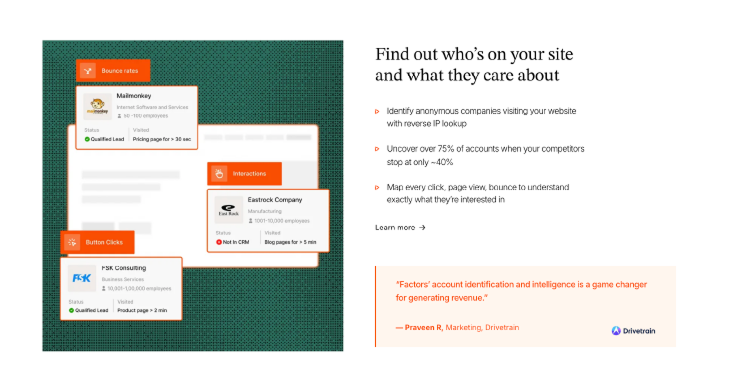
2. Factors.ai - Best for Account Analytics and Attribution
Overall Score: 4.2/5
Platform Scorecard:
Signal Intelligence: ⭐⭐⭐⭐⭐ (5/5)
Personalization at Scale: ⭐⭐⭐ (3/5)
LinkedIn ABM: ⭐⭐⭐ (3/5)
Budget Optimization: ⭐⭐⭐⭐ (4/5)
Ease of Use: ⭐⭐⭐⭐ (4/5)
Best For: Mid-market B2B SaaS companies with strong analytics focus
Factors.ai is an account intelligence and attribution platform with excellent analytics capabilities. The platform focuses on identifying in-market accounts through multi-touch attribution and behavioral signals, helping teams understand which marketing activities influence the pipeline.
Pros:
Excellent account-level analytics and attribution modeling that proves ABM ROI
Strong integration with existing marketing stack (CRM, MAP, analytics tools)
Effective at identifying intent from website behavior and engagement patterns
User-friendly dashboards and reporting interfaces
Competitive pricing positioned for mid-market budgets
Cons:
Limited native personalization capabilities, requiring external tools for campaign execution
Weaker LinkedIn ABM functionality compared to specialized platforms
Heavy reliance on third-party intent data rather than first-party orchestration
Manual campaign execution required—platform identifies accounts but doesn't automate engagement
Key Differentiator: Strong attribution modeling helps marketing teams demonstrate the ROI contribution of specific ABM campaigns to closed deals.
Pricing: They have a free tier and then 3 more as per business need.
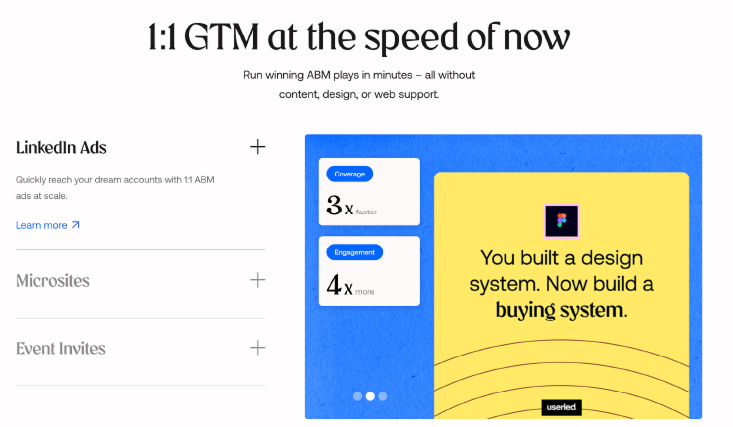
3. Userled - Best for PLG Companies Adding ABM
Overall Score: 3.8/5
Platform Scorecard:
Signal Intelligence: ⭐⭐⭐⭐ (4/5)
Personalization at Scale: ⭐⭐⭐⭐ (4/5)
LinkedIn ABM: ⭐⭐ (2/5)
Budget Optimization: ⭐⭐⭐ (3/5)
Ease of Use: ⭐⭐⭐⭐⭐ (5/5)
Best For: Product-led growth companies transitioning to sales-assisted models
Userled is an account identification and personalization platform designed specifically for product-led growth companies. The platform focuses on website personalization and in-product experiences, helping PLG companies layer ABM onto existing motion.
Pros:
Excellent website visitor identification with high accuracy rates
Strong website personalization capabilities that adapt content dynamically
Extremely easy to implement and use, minimal technical overhead
Purpose-built for PLG to sales-led transition scenarios
Affordable pricing structure suitable for smaller teams
Cons:
Limited paid media capabilities with no native LinkedIn ABM
Smaller feature set compared to comprehensive enterprise platforms
Less sophisticated signal orchestration than competitors
Best suited exclusively for product-led motions, less effective for traditional sales models
Key Differentiator: Purpose-built for PLG companies needing to add account-based sales layer without disrupting existing product-led motion.
Pricing: Available at request for demo.
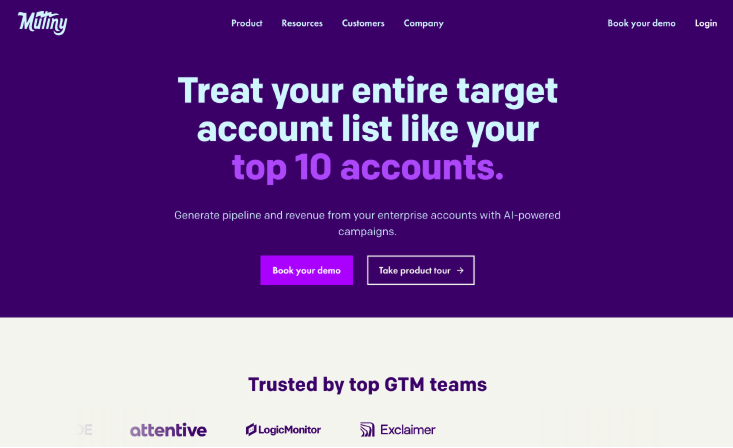
4. MutinyHQ - Best for Website Personalization
Overall Score: 4.0/5
Platform Scorecard:
Signal Intelligence: ⭐⭐⭐⭐ (4/5)
Personalization at Scale: ⭐⭐⭐⭐⭐ (5/5)
LinkedIn ABM: ⭐⭐ (2/5)
Budget Optimization: ⭐⭐⭐ (3/5)
Ease of Use: ⭐⭐⭐⭐ (4/5)
Best For: B2B companies focused on website conversion optimization
MutinyHQ is an AI-powered website personalization platform that adapts content based on account attributes and behavior. The platform excels at converting website visitors by delivering personalized experiences that resonate with specific industries, company sizes, and use cases.
Pros:
Industry-leading website personalization engine with sophisticated targeting
AI-powered content recommendations that optimize automatically
Excellent A/B testing capabilities for continuous improvement
Strong integrations with CRM and marketing automation platforms
No-code implementation allows marketers to launch without engineering resources
Cons:
Lacks paid media and LinkedIn ABM capabilities entirely
Limited signal orchestration beyond website data
Expensive for smaller organizations with limited website traffic
Best for traffic generation teams, not suitable for full-funnel ABM programs
Key Differentiator: Most sophisticated website personalization engine on the market, unmatched for converting known accounts visiting your site.
Pricing: Available at request for demo.
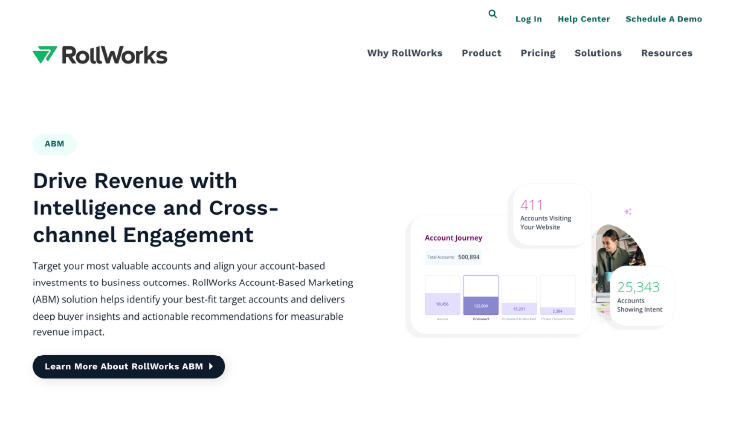
5. RollWorks - Best for Multi-Channel ABM at Scale
Overall Score: 3.9/5
Platform Scorecard:
Signal Intelligence: ⭐⭐⭐⭐ (4/5)
Personalization at Scale: ⭐⭐⭐ (3/5)
LinkedIn ABM: ⭐⭐⭐ (3/5)
Budget Optimization: ⭐⭐⭐⭐ (4/5)
Ease of Use: ⭐⭐⭐⭐ (4/5)
Best For: Small to mid-market B2B companies seeking multi-channel reach
RollWorks is a multi-channel ABM platform offering display advertising, LinkedIn ads, and account identification. As part of NextRoll (AdRoll's parent company), the platform brings programmatic advertising expertise to account-based marketing.
Pros:
Good multi-channel reach across display, social media, and email
Account identification and visitor tracking capabilities
Integrated advertising and analytics in single platform
Suitable for smaller budgets and teams new to ABM
Easy onboarding process with quick time-to-value
Cons:
Generic personalization compared to specialized platforms
Relies primarily on third-party intent data rather than first-party orchestration
Limited advanced features for sophisticated enterprise needs
Account-level insights less granular than competitors like Recotap
Key Differentiator: Accessible entry point for companies new to ABM, providing multi-channel capabilities without overwhelming complexity.
Pricing: Available at request for demo.
6. Influ2 - Best for Person-Based Advertising
Overall Score: 3.7/5
Platform Scorecard:
Signal Intelligence: ⭐⭐⭐ (3/5)
Personalization at Scale: ⭐⭐⭐ (3/5)
LinkedIn ABM: ⭐⭐ (2/5)
Budget Optimization: ⭐⭐⭐ (3/5)
Ease of Use: ⭐⭐⭐ (3/5)
Best For: Enterprise companies focused on person-based ABM within accounts
Influ2 takes a unique person-based advertising approach, targeting specific decision-makers within accounts through display advertising. The platform tracks individual engagement, providing visibility into which people within target accounts interact with your ads.
Pros:
Unique person-level targeting approach for multi-stakeholder buying committees
Effective for enterprise sales cycles requiring multiple decision-maker engagement
Tracks individual engagement within accounts for granular insights
Works well complementing broader account-based strategies
Useful for complex B2B purchases with 5+ stakeholders
Cons:
Limited exclusively to display advertising channel
No native LinkedIn ABM capabilities
Requires significant display ad budget to achieve meaningful reach
Personalization limited to display creative formats
Steeper learning curve compared to more intuitive platforms
Key Differentiator: Person-level targeting within target accounts enables precise engagement with specific decision-makers in buying committees.
Pricing: Available at request for demo.
7. 6sense - Best for Enterprise-only
Overall Score: 4.0/5
Platform Scorecard:
Signal Intelligence: ⭐⭐⭐⭐⭐ (5/5)
Personalization at Scale: ⭐⭐⭐ (3/5)
LinkedIn ABM: ⭐⭐⭐ (3/5)
Budget Optimization: ⭐⭐⭐⭐ (4/5)
Ease of Use: ⭐⭐⭐ (3/5)
Best For: Enterprise and mid-market companies prioritizing predictive analytics and revenue intelligence
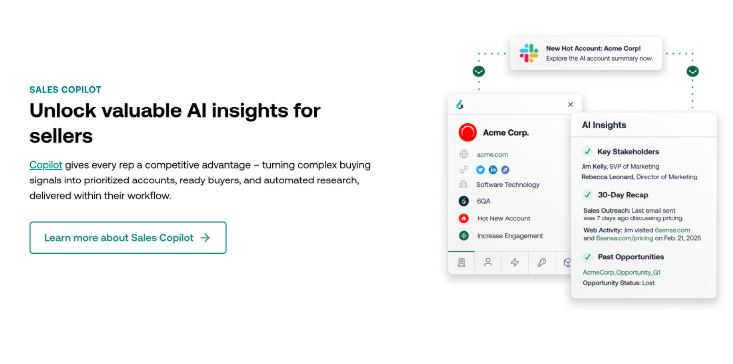
6sense is an AI-powered revenue intelligence platform that combines intent data, predictive analytics, and account engagement insights. The platform excels at identifying accounts showing buying signals across multiple channels and predicting which accounts are most likely to convert.
Pros:
Industry-leading AI and predictive analytics for account scoring and prioritization
Comprehensive intent data aggregation from multiple third-party sources
Strong revenue intelligence features connecting marketing to pipeline outcomes
Conversational email capabilities for personalized outreach at scale
Extensive integration ecosystem with CRM, MAP, and sales tools
Good multi-channel orchestration across display, email, and web
Cons:
Complex platform requiring significant training and onboarding time
Expensive for mid-market companies (better suited for larger budgets)
Heavy reliance on third-party intent data rather than first-party orchestration
Limited native LinkedIn ABM capabilities compared to specialized platforms
Personalization features less sophisticated than dedicated tools like Recotap
Implementation can take 3-6 months for full value realization
Key Differentiator: Most advanced predictive analytics and AI-driven account scoring in the market, helping teams prioritize accounts most likely to convert based on buying signals across the entire customer journey.
Note on Fit: While 6sense offers powerful revenue intelligence, mid-market companies often find better ROI with platforms like Recotap that focus on signal orchestration and automated personalization without the complexity. 6sense works best for organizations with dedicated revenue operations teams who can fully leverage its predictive capabilities.
Pricing: Available at request for demo.
8. Demandbase - Best for Large Enterprises Only
Overall Score: 4.1/5 Important Note: Only suitable for enterprises with $500K+ annual ABM budgets
Platform Scorecard:
Signal Intelligence: ⭐⭐⭐⭐⭐ (5/5)
Personalization at Scale: ⭐⭐⭐⭐ (4/5)
LinkedIn ABM: ⭐⭐⭐⭐ (4/5)
Budget Optimization: ⭐⭐⭐ (3/5)
Ease of Use: ⭐⭐ (2/5)
Best For: Large enterprises with complex ABM programs and substantial budgets
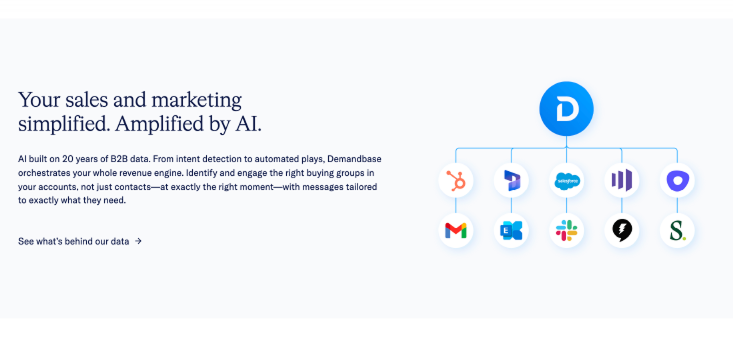
Demandbase offers a comprehensive ABM platform suite with account intelligence, advertising, and sales intelligence. The platform provides industry-leading features but requires significant investment and dedicated resources to implement effectively.
Pros:
Most comprehensive feature set available in the ABM market
Excellent account intelligence and intent data aggregation
Strong multi-channel advertising capabilities across display, social, and web
Robust analytics and reporting with extensive customization
Significant overkill for small to mid-market companies
Requires multiple full-time resources to manage effectively
Many features go unused by smaller teams, wasting investment
Key Differentiator: Enterprise-grade ABM suite with every possible feature, suitable only for large organizations with substantial budgets and dedicated ABM teams.
Critical Note: Demandbase makes sense only for large enterprises with marketing budgets exceeding $500K annually and dedicated ABM teams of 5+ people. Mid-market companies consistently find better ROI with specialized platforms like Recotap that deliver core ABM capabilities without the complexity, cost, and lengthy implementation cycles.
Pricing: Available at request for meeting.
How to Choose the Right ABM Platform for Your Business
Selecting the right ABM platform depends on your company size, budget, and specific challenges. Most companies overestimate their need for features and underestimate the importance of solving core timing and personalization problems.
Decision Framework by Company Size
Small Teams (Under 50 Employees)
Choose Userled or RollWorks for simplicity and quick implementation. These platforms provide essential ABM capabilities without overwhelming smaller teams with unnecessary complexity. Focus on platforms with minimal onboarding requirements and intuitive interfaces.
Mid-Market B2B SaaS (50-500 Employees)
Recotap or Factors.ai offer the best balance of capabilities and complexity. Recotap wins for companies prioritizing LinkedIn ABM and personalization at scale, while Factors.ai suits teams needing strong analytics and attribution. Both platforms scale with growing teams without requiring enterprise-level investment.
Large Enterprises ($500K+ ABM Budgets)
Demandbase provides comprehensive capabilities for complex, multi-team operations. Only consider this option if you have a substantial budget, dedicated ABM team members, and patience for lengthy implementation. Most enterprises find Recotap delivers better ROI by focusing on core capabilities that actually drive pipeline.
PLG Companies Adding ABM
Userled is purpose-built for this transition, enabling website personalization and account identification without disrupting product-led motion.
Website Conversion Focus
MutinyHQ excels at converting known accounts visiting your site through sophisticated personalization.
Person-Based Targeting Needs
Influ2 enables targeting specific decision-makers within accounts through display advertising.
Revenue Intelligence and Predictive Analytics
6sense provides AI-driven account scoring and predictive analytics for companies with dedicated RevOps teams who can leverage advanced intelligence features.
Key Questions to Ask During Evaluation
Does it solve our timing problem?
Evaluate how the platform identifies when accounts enter the market. Does it orchestrate your unique first-party data sources, or rely on commoditized third-party data everyone else accesses?
Can we personalize without massive resource drain?
Assess whether the platform automates creative generation or requires manual design work for each account variation. Recotap's AI-powered approach eliminates design bottlenecks entirely.
Do we need LinkedIn ABM capabilities?
For B2B SaaS companies, LinkedIn remains the primary channel. Ensure the platform provides account-level targeting and visibility that LinkedIn's native tools don't offer.
What's our realistic budget?
Factor in platform cost, implementation expenses, and team time required. Cheaper platforms requiring extensive manual work often cost more in hidden labor than premium automated solutions.
Common Mistake to Avoid: Choosing based on features rather than solving your specific timing and personalization challenges. Most companies use only 20% of features in comprehensive platforms like Demandbase, wasting substantial investment on unused capabilities.
Why Recotap Wins for Mid-Market B2B SaaS Companies
Recotap emerges as the clear winner for mid-market B2B SaaS companies because it solves both core ABM challenges—timing and personalization at scale—without the complexity and cost of enterprise platforms.
Signal Orchestration Solves Timing
Recotap's unique approach orchestrates company-specific first-party data sources alongside second-party and third-party signals. This enables teams to identify in-market accounts before competitors while avoiding the data quality degradation plaguing platforms relying solely on commoditized third-party data.
AI-Powered Automation Enables Scale
The platform's AI agent automatically generates personalized ads and landing pages for 1:1, 1:Few, and 1:Many campaigns without manual design work. Teams create unlimited account-specific variations instantly, eliminating the resource drain that makes traditional personalization impossible to scale.
Proven Results Drive ROI
Recotap customers consistently achieve 3-4x CTR improvement, reach 90%+ of their Total Addressable List, and reduce CPM to an average of $138. These results demonstrate real pipeline impact rather than vanity metrics.
Right-Sized for Mid-Market
Unlike Demandbase's 6-12 month implementations requiring dedicated teams, Recotap delivers value quickly without overwhelming smaller marketing teams. The platform provides enterprise-grade capabilities at mid-market pricing and complexity levels.
For B2B SaaS companies between 50-500 employees prioritizing LinkedIn ABM and personalization at scale, Recotap offers the optimal combination of capabilities, ease of use, and proven results. See Recotap's signal orchestration in action by booking a personalized demo today.
FAQs ABOUT ABM PLATFORMS
Q: What is the best ABM platform for small B2B companies?
A: For small B2B companies with under 50 employees, Userled and RollWorks offer the best combination of simplicity and core ABM capabilities. Userled excels for product-led growth companies adding sales-assisted motion, while RollWorks provides accessible multi-channel ABM without overwhelming smaller teams. Both platforms feature intuitive interfaces, quick implementation, and pricing suitable for limited budgets. Avoid enterprise platforms like Demandbase that require dedicated teams and substantial investment.
Q: How much does ABM software typically cost?
A: ABM software costs vary significantly by platform and company size. Entry-level platforms like RollWorks and Userled start around $1,000-$2,000 monthly for small teams. Mid-market solutions like Recotap and Factors.ai typically range $3,000-$8,000 monthly depending on features and account volume. Enterprise platforms like Demandbase require $500K+ annual investments including platform fees, implementation costs, and dedicated team resources. Choose based on your realistic budget and required capabilities rather than feature count.
Q: What is signal orchestration in ABM?
A: Signal orchestration in ABM refers to integrating multiple data sources from first-party (your website and CRM), second-party (partner ecosystem), and third-party (external intent data like G2 and Bombora) into a unified view of account behavior. Unlike simple signal collection that aggregates generic data, orchestration creates company-specific intelligence by combining data sources unique to your business. This approach identifies when accounts enter the market more accurately than relying solely on commoditized third-party data, enabling teams to engage before competitors.
Q: Do I need a separate tool for LinkedIn ABM?
A: LinkedIn's native advertising platform lacks account-level reporting and sophisticated personalization capabilities that ABM requires. Specialized platforms like Recotap provide account-level visibility showing which specific companies engage with your ads, data LinkedIn doesn't expose. These platforms also automate personalized creative generation at scale and optimize budget allocation across accounts. For serious LinkedIn ABM, dedicated platforms deliver substantially better results than native LinkedIn tools alone.
Q: What's the difference between Demandbase and Recotap?
A: Demandbase offers comprehensive enterprise ABM features but requires $500K+ budgets, 6-12 month implementations, and dedicated teams to manage complexity. Recotap focuses on core capabilities signal orchestration, LinkedIn ABM, and personalization at scale—delivering faster time-to-value at mid-market pricing. Most mid-market companies find Recotap provides better ROI by solving actual timing and personalization challenges without unused features. Choose Demandbase only if you have a substantial budget and dedicated ABM team of 5+ people. See a direct comparison here
Q: How do ABM platforms integrate with existing marketing tools?
A: Most ABM platforms integrate with common marketing tools through native connectors or APIs. Key integrations include CRM systems (Salesforce, HubSpot), marketing automation platforms (Marketo, Pardot), analytics tools (Google Analytics, Segment), and data warehouses. Recotap integrates first-party data sources unique to each company, enabling signal orchestration beyond generic third-party data. Evaluate integration capabilities during platform selection to ensure seamless data flow across your existing tech stack.
Q: What results can I expect from ABM software?
A: Results vary by platform and implementation quality, but companies using effective ABM software typically see 50-100% increase in revenue from target accounts, 3-4x improvement in click-through rates, and 30-50% reduction in customer acquisition costs. Recotap customers consistently achieve 3-4x CTR improvement and reach 90%+ of their Total Addressable List. The best platforms demonstrate pipeline impact through clear attribution showing which campaigns influence closed deals, not just vanity metrics like impressions.
Q: Can ABM platforms work for companies outside B2B SaaS?
A: Yes, ABM platforms work for any B2B industry with high-value accounts and complex sales cycles. While this guide focuses on B2B SaaS companies, platforms like Recotap serve professional services, manufacturing, financial services, and healthcare technology companies. ABM is most effective when selling to organizations rather than individuals, with deal sizes justifying personalized engagement investment, and sales cycles long enough to nurture accounts through multiple touchpoints.
Q: How long does ABM platform implementation take?
A: Implementation timelines vary dramatically by platform complexity. Simple platforms like Userled and RollWorks launch in 2-4 weeks with minimal technical setup. Mid-market solutions like Recotap typically require 4-6 weeks including onboarding, integration, and initial campaign setup. Enterprise platforms like Demandbase average 6-12 months for full implementation across complex organizations. Choose platforms matching your team's capacity for change management and technical implementation requirements.
Q: What's the ROI of investing in ABM software?
A: Companies implementing effective ABM software typically see 2-5x ROI through improved win rates, shorter sales cycles, and higher average deal sizes. The ROI calculation should include platform costs, implementation expenses, team time, and measurable improvements in pipeline value and closed deals. Recotap customers report average pipeline value increases of 40-60% within the first six months. Focus on platforms demonstrating clear pipeline attribution rather than activity metrics when evaluating ROI potential.
SUMMARY
Key Takeaways:
Recotap emerges as the winner for mid-market B2B SaaS companies (50-500 employees), scoring 4.8/5 overall with unmatched signal orchestration and personalization capabilities
Signal orchestration beats signal collection - platforms integrating company-specific first-party data outperform those relying on commoditized third-party intent data
Timing and personalization solve ABM failure - most programs fail by engaging accounts too late with generic messaging that gets ignored
Platform selection depends on company profile - small teams need simple tools (Userled, RollWorks), mid-market needs balanced platforms (Recotap, Factors.ai), enterprises can justify complex systems (Demandbase, 6sense)
Demandbase and 6sense for large budgets - require substantial annual investment and dedicated teams, provide overkill features for mid-market companies
6sense excels in predictive analytics - best for companies with dedicated RevOps teams who can leverage AI-driven account scoring and revenue intelligence
LinkedIn ABM requires specialized tools - native LinkedIn lacks account-level reporting and personalization that dedicated platforms provide
Proven results matter more than features - Recotap customers achieve 3-4x CTR improvement and 90%+ TAL reach versus platforms with more features but less impact
AI-powered personalization enables scale - automation eliminates resource drain that makes traditional 1:1 ABM impossible to execute
Implementation timelines vary dramatically - simple platforms launch in 2-4 weeks while enterprise systems require 6-12 months
ROI comes from solving core problems - choose platforms addressing your specific timing and personalization challenges rather than collecting features