We use cookies to ensure you get the best experience on our website. By continuing
to use our site, you accept our use of cookies, privacy policy and terms of service.
ESC
What are you looking for?
Subscribe to our Newsletter
Join 10k+ people to get notified about new posts, news and updates.
Terms of use dolor sit amet consectetur, adipisicing elit. Recusandae provident ullam
aperiam quo ad non corrupti sit vel quam repellat ipsa quod sed, repellendus
adipisci, ducimus ea modi odio assumenda.
Disclaimers
Lorem ipsum dolor sit amet consectetur adipisicing elit. Sequi, cum esse possimus
officiis amet ea voluptatibus libero! Dolorum assumenda esse, deserunt ipsum ad
iusto! Praesentium error nobis tenetur at, quis nostrum facere excepturi architecto
totam.
Lorem ipsum dolor sit amet consectetur adipisicing elit. Inventore, soluta alias
eaque modi ipsum sint iusto fugiat vero velit rerum.
Limitation on Liability
Sequi, cum esse possimus officiis amet ea voluptatibus libero! Dolorum assumenda
esse, deserunt ipsum ad iusto! Praesentium error nobis tenetur at, quis nostrum
facere excepturi architecto totam.
Lorem ipsum dolor sit amet consectetur adipisicing elit. Inventore, soluta alias
eaque modi ipsum sint iusto fugiat vero velit rerum.
Copyright Policy
Dolor sit amet consectetur adipisicing elit. Sequi, cum esse possimus officiis amet
ea voluptatibus libero! Dolorum assumenda esse, deserunt ipsum ad iusto! Praesentium
error nobis tenetur at, quis nostrum facere excepturi architecto totam.
Lorem ipsum dolor sit amet consectetur adipisicing elit. Inventore, soluta alias
eaque modi ipsum sint iusto fugiat vero velit rerum.
General
Sit amet consectetur adipisicing elit. Sequi, cum esse possimus officiis amet ea
voluptatibus libero! Dolorum assumenda esse, deserunt ipsum ad iusto! Praesentium
error nobis tenetur at, quis nostrum facere excepturi architecto totam.
Lorem ipsum dolor sit amet consectetur adipisicing elit. Inventore, soluta alias
eaque modi ipsum sint iusto fugiat vero velit rerum.
You Don't Need a Big ABM Team. You Need the Right Platform.
ABM does not require a large marketing team. It requires the right economics and the right platform. If your company sells solutions with an ACV above $30,000 and spends $5,000 or more per month on LinkedIn ads, a lean team of two or three marketers can run enterprise-grade ABM that outperforms bloated programs. Recotap is built specifically for that operating model.
Let me say something directly.
ABM is not limited to large teams with hefty budgets. But it is also not for every small company. The distinction matters.
When we say ABM works for lean teams, we do not mean bootstrapped startups with a $500/month ad budget. We mean marketing teams of two or three people at B2B companies doing business of around $30,000-plus deal sizes, or $5,000-plus monthly LinkedIn spend, long sales cycles, and high-value target account lists where precision matters.
Recotap co-founder Ganesh Chithambalam puts it plainly: "Even as a lean team, you have the power to run the full ABM motion and make a lasting impact, if the platform is doing the heavy lifting."
We have proven it with pipeline numbers in the millions.
What Does "Small ABM Team" Actually Mean?
A small ABM team is not a resource-poor company. It is a resource-concentrated one.
It can be a B2B SaaS company or an IT/ITes company with a $60,000 above LinkedIn ads marketing budget, having only three people in the marketing function. It can also be a services firm targeting US and EU banks with a full-time demand gen lead, one digital marketer, and an SDR team, but no dedicated ABM operations manager. It can also be an InsurTech platform spending $12,000 per month across LinkedIn and Google, running 44 campaigns, but without the internal bandwidth to manually optimize audience lists every week.
These companies are not small. Their deals are not small. Their LinkedIn budgets are not small. What is lean is the headcount executing the ABM motion.
The Real ABM Team Profile: Lean Execution, Serious Business
The lean ABM teams Recotap works with typically share these characteristics:
One to three people own the ABM function end-to-end
Deal sizes of $30,000 ACV or higher, often reaching $100,000 and above
LinkedIn ad budgets of $5,000 per month or more ($60,000+ annually)
Target account lists of 50 to 10,000 named companies
Sales cycles of three to twelve months with multiple buying committee stakeholders
Existing CRM infrastructure (HubSpot, Salesforce, or Zoho) and intent data subscriptions (Bombora, G2)
If this describes your team, you are not too small for ABM. You are exactly the right profile for it.
Does ABM Make Financial Sense for Your Team?
ABM is a strategic investment. The question is not whether it is affordable. The question is whether one closed deal justifies the cost.
The One-Deal Break-Even Test
Here is the math that matters.
Recotap's platform cost plus your LinkedIn ad budget represents your total ABM investment. If your average deal size is $30,000 and one deal closed in a quarter directly attributable to ABM activity, you have already broken even on both the platform and the media spend.
At $50,000 ACV, the case becomes even clearer. At $100,000 ACV, the math is obvious.
This is why deal size is the most important qualification factor for ABM, not team size.
What Does a Qualifying ABM Profile Look Like?
Metrics
Minimum Threshold
Ideal Profile
Annual Contract Value (ACV)
$30,000
$50,000–$150,000+
LinkedIn Ad Budget
$5,000/month
$8,000–$15,000/month
Target Account List Size
50 accounts
200–10000 accounts
Sales Cycle Length
3 months
6–12 months
Buying Committee Size
3 stakeholders
5–10 stakeholders
Marketing Team Size
1 person
2–4 people
If your deal sizes are below $15,000 ACV or your LinkedIn budget is below $3,000 per month, ABM is likely not the right investment at this stage. The math simply does not work yet.
Why Lean ABM Teams Struggle Without Automation
Most lean teams do not fail at ABM strategy. They fail at ABM execution. The overhead of running a precision marketing program without automation consumes the very bandwidth that makes the strategy possible.
Manual List Management Kills Momentum
Without dynamic segmentation, a lean team spends hours every week pulling CRM data, filtering accounts by stage, exporting CSVs, and re-uploading them to LinkedIn. By the time the list is updated, the signal that triggered the update is three days old. Accounts that moved into buying intent have already been contacted by a competitor.
LinkedIn's algorithm is built for engagement, not ABM precision. It concentrates impressions on the accounts that interact most with your ads, which means 70 percent of your budget goes to 10 to 15 percent of your target list.
For a lean team, this creates a double problem. You are burning budget on overexposed accounts while your strategically important accounts get zero visibility. And without the headcount to manually monitor and adjust, the waste compounds week over week.
No Signal-to-Campaign Automation Means Constant Catch-Up
When a target account visits your pricing page three times in two weeks, that is a buying signal that should immediately trigger a shift in your campaign messaging from awareness to consideration. Without automation, the workflow looks like this: marketing notices the signal, manually updates the account record, exports a new list, uploads to LinkedIn, and creates a new campaign. That process takes three to five days. By then, the intent window has often passed.
Lean teams cannot afford that lag. The platform has to close it automatically.
What to Set Up Before You Run ABM
The foundation matters. A lean team that skips preparation wastes months. These are the steps that determine whether your ABM program builds a pipeline or creates noise.
Define Your Target Account List Based on ICP Fit
Start with your best-fit accounts, not your longest wishlist. For a lean team,
A focused list of 300 to 500 high-fit accounts outperforms a sprawling list of 2,000 average-fit accounts every time.
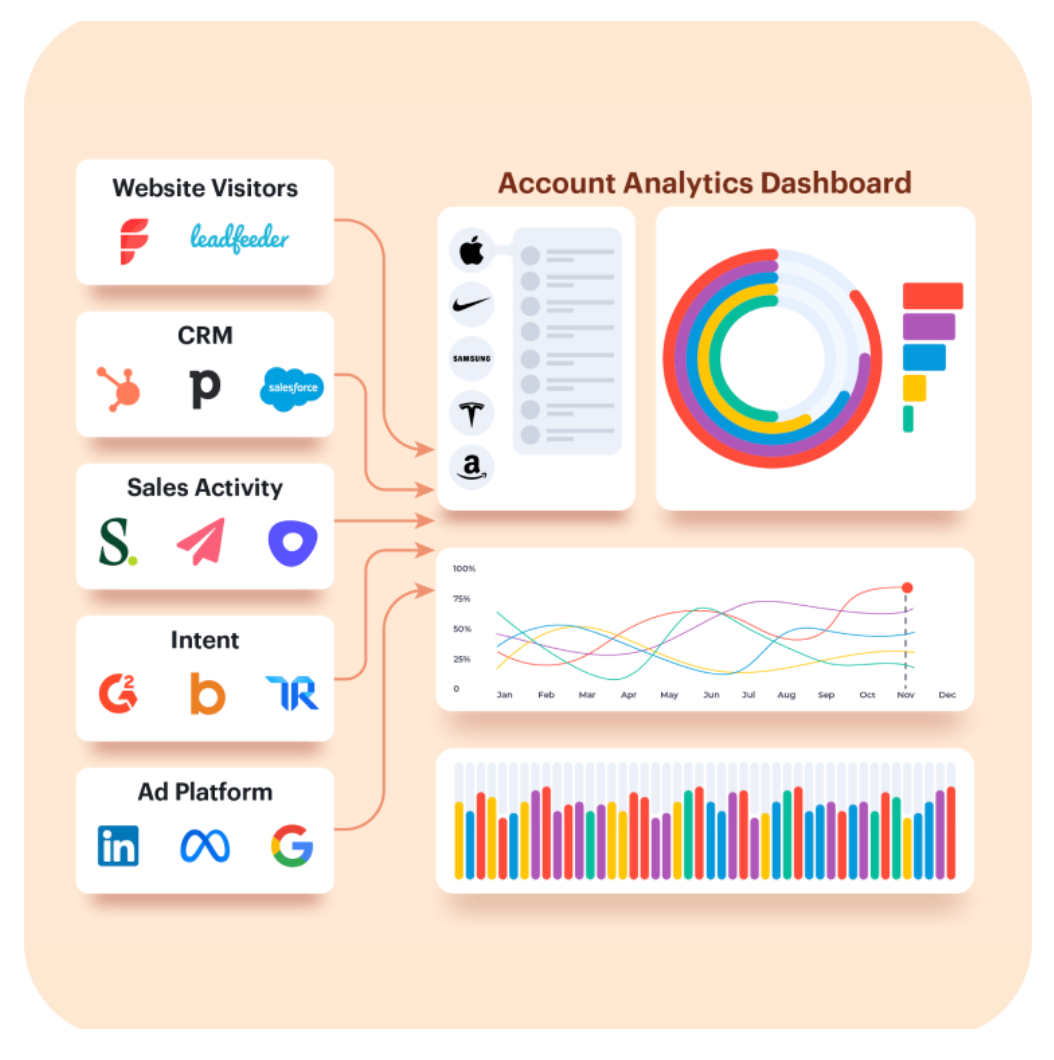
Use your CRM, website visitor data, and firmographic filters to identify companies that match your ICP across industry, revenue, employee count, technology stack, and buying behavior.
Pull input from sales on active opportunities and named accounts, from customer success on expansion targets, and from leadership on strategic priorities.
Your Target Account List (TAL) is a cross-functional asset, not a marketing spreadsheet. In Recotap, we call it signal-based audience creation.
Map Your Buyer Journey Stages
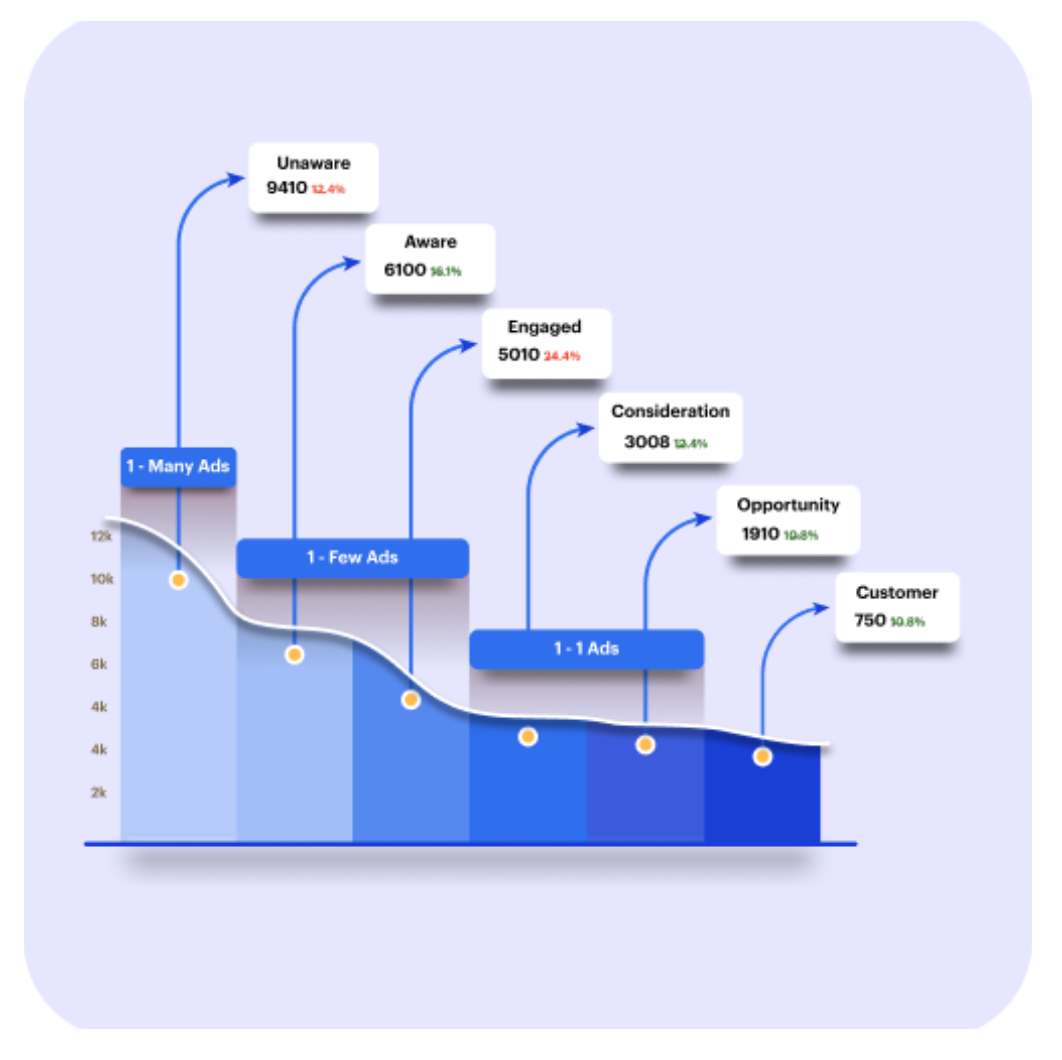
Before you write a single ad, define what each journey stage looks like for your buyers. Awareness accounts have never engaged with your brand. Engagement accounts have started interacting with content or ads. Consideration accounts are actively evaluating solutions. Intent accounts are showing strong buying signals like repeated pricing page visits, competitor comparisons, or demo requests.
Each stage requires different messaging, different ad formats, and different sales responses. Without this map, all your accounts get the same ad, and ABM becomes indistinguishable from generic LinkedIn advertising.
Establish Your LinkedIn Ad Budget by Account Tier
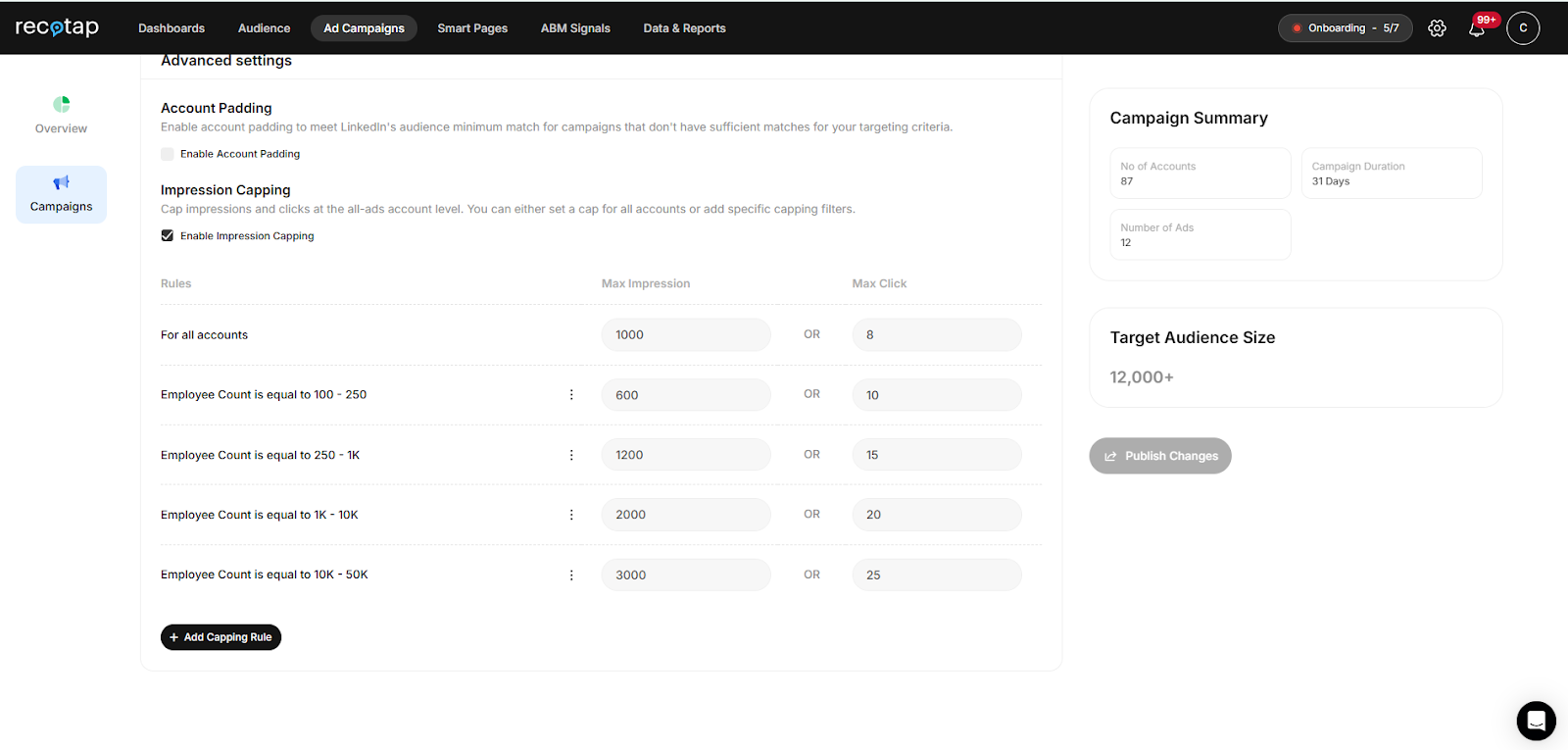
Not all accounts deserve equal spend. Enterprise accounts with large buying committees and multi-million dollar deal potential justify higher impression budgets than mid-market accounts. Set firmographic-based impression caps before you launch so that your $5,000 monthly budget is distributed strategically across your full target list, not algorithmically concentrated on the most engaged companies.
A practical starting framework: enterprise accounts (5,000+ employees) get higher monthly impression allocations, mid-market accounts (500–5,000 employees) get a standard allocation, and SMB accounts on the list get a lighter awareness budget.
Align Sales and Marketing on Intent Thresholds
Define exactly what signals qualify as buying intent before the program starts. What combination of behaviors should trigger a sales outreach? Five website visits in 30 days plus a pricing page view? A G2 competitor comparison plus LinkedIn ad engagement above a certain frequency? Document the thresholds. Wire them to your CRM. This is what turns ABM from a marketing activity into a revenue operation.
Recotap does all of that in a single dashboard for better viewing and decision-making.
How Recotap Removes Execution Overhead for Lean Teams
A lean team running ABM on Recotap is not doing less ABM. They are doing more of it, faster, with fewer manual tasks between signal and action.
Dynamic Segments That Update Without Manual Work
Recotap's AI-driven segmentation refreshes continuously. As accounts show new intent signals, website behavior, or CRM activity, they move into and out of segments automatically. A lean team no longer uploads weekly CSVs or manually monitors which accounts have crossed from awareness into consideration. The platform handles list hygiene in real time.
Journey-Stage Automation That Adapts Campaigns in Real Time
Recotap maps every account to a buyer journey stage (Awareness, Engagement, Consideration, or Intent) based on first-party website signals, third-party intent data from Bombora and G2, CRM activity, and LinkedIn ad engagement. When an account moves stages, campaigns update automatically. The messaging shifts. The ad creative changes. The sales team gets an alert. All of this happens without the lean team manually orchestrating each transition.
Impression Capping That Spreads Budget Across All Target Accounts
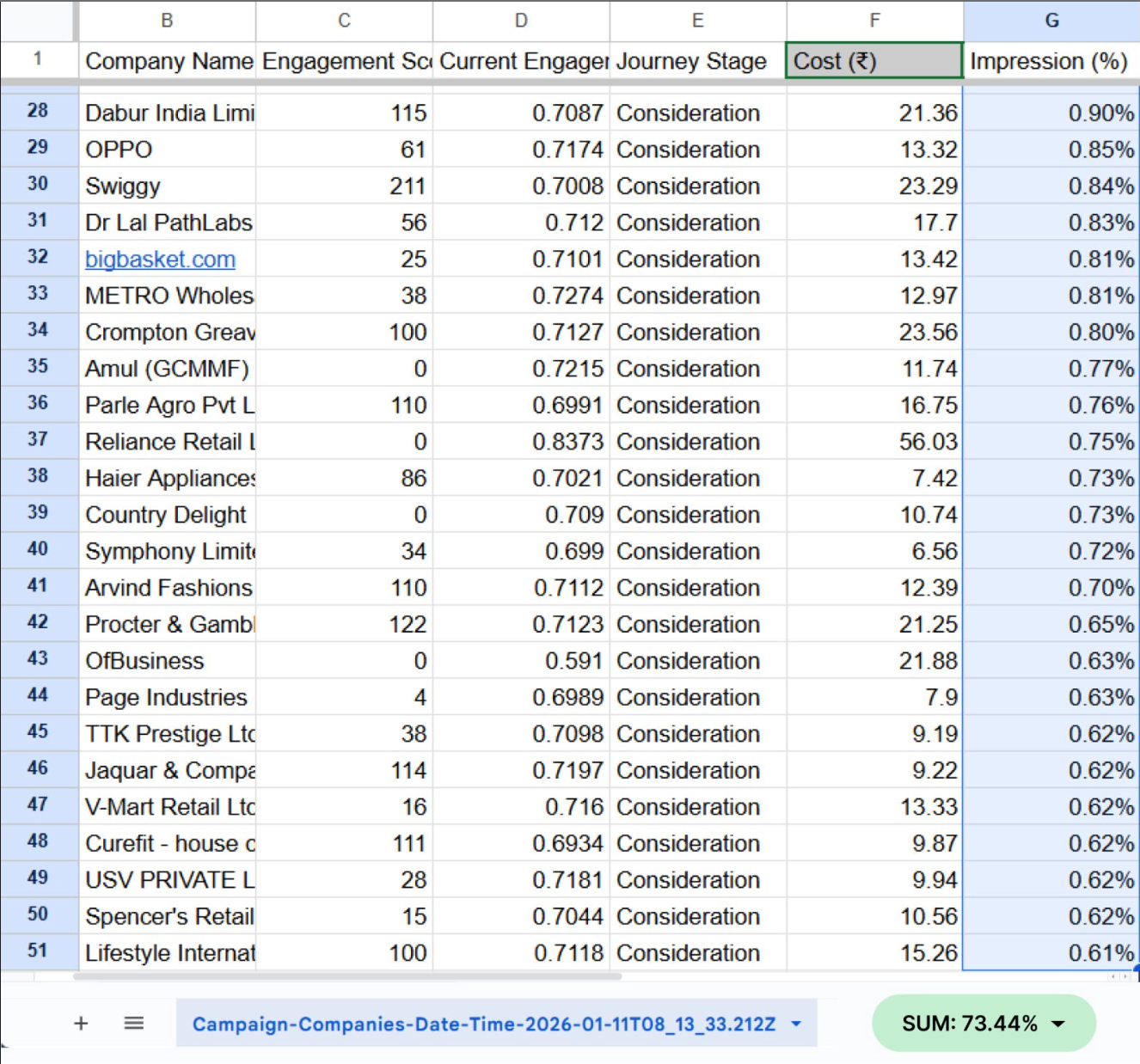
Recotap's firmographic impression capping prevents LinkedIn's algorithm from concentrating your budget on the same handful of companies that are active or large in size every month. Set different impressions or click caps by company size, industry, ICP tier, or revenue band. When an account hits its monthly limit, Recotap pauses delivery and reallocates spend to under-reached accounts with active intent signals.
The result is account penetration of 80 to 90 percent across the target list, compared to the 15 to 25 percent that most LinkedIn ABM campaigns achieve without these controls.
CRM Sync Without Manual Exports
Journey stage classifications and engagement scores sync to HubSpot, Salesforce, or Zoho daily. Sales teams see which accounts moved stages directly in their CRM workflow. BDRs can filter by "accounts that moved to Buying Intent in the last 7 days" and prioritize outreach without waiting for a marketing handoff. Closed deals sync back to Recotap in real time, automatically excluding existing customers from acquisition campaigns and triggering expansion sequences instead.
When ABM Is Not the Right Fit
ABM will not work for your team if any of the following are true.
Your deal sizes are below $15,000 ACV. At this price point, the investment in platform, media spend, and execution time cannot be justified by the revenue upside of individual closed deals. High-volume inbound or outbound motions will generate better returns.
Your LinkedIn ad budget is below $3,000 per month. Effective ABM on LinkedIn requires enough budget to build meaningful frequency across a qualified account list. Below this threshold, you will not have enough impressions to move accounts through awareness into consideration.
Your target market is too broad for named account targeting. If your addressable market is 50,000 companies and you cannot identify a focused list of 200 to 2,000 high-fit accounts, ABM is premature. Build your ICP definition first.
You have no CRM or intent data infrastructure. ABM requires signals to be useful. If you are not tracking website visitors, CRM engagement, or third-party intent at the account level, you are running personalized advertising, not account-based marketing.
What One Deal Means for Your ABM ROI
ABM is not a campaign. It is a compounding system.
The first quarter establishes your target account list, warms accounts from unaware to aware, and begins building frequency with the buying committee. The second quarter starts moving accounts into consideration as engagement signals deepen. By the third quarter, intent signals from well-nurtured accounts start driving a qualified pipeline.
One deal closed from ABM activity at $50,000 ACV in the first six months creates a positive ROI on both platform and media spend. Every deal after that is pure leverage.
The lean teams that see the strongest results from Recotap are not the ones with the largest budgets. They are the ones who started with the right economics, built a focused target account list, and let the platform handle the execution overhead so that the team could stay focused on strategy, content, and sales alignment.
ABM has always worked for lean teams. It just needed a platform like Recotap built for the operating reality of running it with two or three people instead of twenty.
Summary
ABM works for lean teams when the economics are right. The key points:
A lean ABM team is not a small company. It is a company with medium to large deal sizes and atleast $5000/month LinkedIn ad budgets operated by a small ABM team with low headcount
The break-even test is simple: does one closed deal cover your total ABM investment? At $30,000 ACV and above, the answer is almost always yes.
The biggest execution challenge for lean teams is not strategy. It is operational overhead: manual list updates, LinkedIn's budget concentration problem, and the lag between intent signals and campaign action.
Recotap removes that overhead through dynamic segmentation, journey-stage automation, firmographic impression capping, and daily CRM sync.
ABM is not the right fit when deal sizes are below $15,000 ACV or LinkedIn spend is below $3,000 per month.
For companies with the right economics, a lean team running Recotap can build millions in the pipeline without adding headcount.
Frequently Asked Questions
Q: Can a small marketing team of two or three people run effective ABM?
A: Yes, provided the company's economics support it. A lean team of two to three marketers can run enterprise-grade ABM if the average deal size is $30,000 or above and LinkedIn ad spend is $5,000 or more per month. The key is using a platform like Recotap that automates list management, journey-stage classification, impression capping, and CRM sync. Without automation, manual overhead consumes the bandwidth needed to run ABM well.
Q: How much LinkedIn budget do I need for ABM to work?
A: A practical minimum is $5,000 per month ($60,000 annually). Below this threshold, you typically cannot build enough frequency across a qualified target account list to move accounts through the buyer journey. Effective ABM on LinkedIn requires consistent exposure to buying committee stakeholders at each target account over multiple months, and that requires a sufficient media budget distributed intelligently across the full list.
Q: What is the difference between ABM for small teams and ABM for enterprise teams?
A: The strategy is the same. The execution model differs. Enterprise teams have dedicated ABM operations managers, data analysts, and creative teams handling different layers of the program. Lean teams rely on platform automation to handle those layers. When the platform is doing the heavy lifting on list management, journey-stage updates, impression distribution, and CRM sync, a lean team can execute the same strategic motion at a fraction of the headcount cost.
Q: Does ABM work for Indian B2B companies targeting the US or EU markets?
A: Yes. Many of Recotap's customers are Indian IT services, SaaS, and analytics companies targeting North America, the UK, and Europe via LinkedIn. The platform's signal orchestration, journey-stage mapping, and impression capping work the same regardless of the target geography. The key advantage for India-based teams running global ABM is that Recotap removes the manual operational overhead that would otherwise require hiring additional headcount in the target market timezone.
Q: How long does it take to see pipeline results from ABM?
A: Most B2B companies with 3- to 6-month sales cycles start seeing meaningful account engagement signals within the first 60 days. A qualified pipeline typically begins forming between 90 and 120 days as accounts move from awareness into consideration and intent stages. Revenue attribution follows the sales cycle length of the accounts influenced. ABM is not a sprint. The teams that treat it as a compounding program over two to four quarters see the strongest returns.
Q: What ABM metrics should a lean team focus on?
A: Lean teams should prioritize seven account-level metrics: media spend per account, accounts influenced, pipeline influenced, pipeline progression, revenue influenced, spend efficiency per account, and time to impact. The most important leading indicator is account penetration: what percentage of your target account list is receiving 3 or more impressions per month. A penetration below 50 percent indicates budget concentration problems. Above 80 percent signals that your distribution is working and that the program is building genuine coverage across the buying committee.
Q: Is Recotap suitable for companies just starting their first ABM program?
A: Yes, with the right qualifications. If your deal size is above $30,000 ACV and your LinkedIn budget is $5,000 per month or higher, Recotap is designed to be a practical starting point for first-time ABM programs. The platform provides journey-stage playbooks, dynamic segmentation, and execution guidance that reduces the learning curve significantly. Companies that have tried and failed with larger, more complex ABM platforms like Demandbase or 6sense consistently find that Recotap delivers faster time to value without the 6- to 12-month implementation overhead.
Q: Do I need a dedicated ABM specialist to run Recotap?
A: No. Recotap is built for marketing generalists who own ABM as part of a broader demand generation role. The platform automates the tasks that typically require a dedicated ABM operations specialist, including list refresh, journey-stage classification, impression pacing, and CRM synchronization. Most Recotap customers dedicate two to four hours per week to platform management after the initial setup, with Recotap's customer success team providing ongoing strategic support.
Table of Contents
Share:
Unlock exclusive Recotap content
Subscribe now for best practices, research reports, and more.