We use cookies to ensure you get the best experience on our website. By continuing
to use our site, you accept our use of cookies, privacy policy and terms of service.
ESC
What are you looking for?
Subscribe to our Newsletter
Join 10k+ people to get notified about new posts, news and updates.
Terms of use dolor sit amet consectetur, adipisicing elit. Recusandae provident ullam
aperiam quo ad non corrupti sit vel quam repellat ipsa quod sed, repellendus
adipisci, ducimus ea modi odio assumenda.
Disclaimers
Lorem ipsum dolor sit amet consectetur adipisicing elit. Sequi, cum esse possimus
officiis amet ea voluptatibus libero! Dolorum assumenda esse, deserunt ipsum ad
iusto! Praesentium error nobis tenetur at, quis nostrum facere excepturi architecto
totam.
Lorem ipsum dolor sit amet consectetur adipisicing elit. Inventore, soluta alias
eaque modi ipsum sint iusto fugiat vero velit rerum.
Limitation on Liability
Sequi, cum esse possimus officiis amet ea voluptatibus libero! Dolorum assumenda
esse, deserunt ipsum ad iusto! Praesentium error nobis tenetur at, quis nostrum
facere excepturi architecto totam.
Lorem ipsum dolor sit amet consectetur adipisicing elit. Inventore, soluta alias
eaque modi ipsum sint iusto fugiat vero velit rerum.
Copyright Policy
Dolor sit amet consectetur adipisicing elit. Sequi, cum esse possimus officiis amet
ea voluptatibus libero! Dolorum assumenda esse, deserunt ipsum ad iusto! Praesentium
error nobis tenetur at, quis nostrum facere excepturi architecto totam.
Lorem ipsum dolor sit amet consectetur adipisicing elit. Inventore, soluta alias
eaque modi ipsum sint iusto fugiat vero velit rerum.
General
Sit amet consectetur adipisicing elit. Sequi, cum esse possimus officiis amet ea
voluptatibus libero! Dolorum assumenda esse, deserunt ipsum ad iusto! Praesentium
error nobis tenetur at, quis nostrum facere excepturi architecto totam.
Lorem ipsum dolor sit amet consectetur adipisicing elit. Inventore, soluta alias
eaque modi ipsum sint iusto fugiat vero velit rerum.
Tania Saez is a B2B marketing and ABM growth specialist helping companies with long and complex sales cycles drive scalable demand.She focuses on aligning marketing, sales and operations around target accounts to build measurable pipeline and revenue. Known for her realistic, actionable approach, Tania emphasises building trust-based account-programs rather than one-off campaigns. With practical frameworks and a proven track record, she empowers teams to move from tactics to repeatable account-centric growth.
Show Notes-
Tanya breaks down what needs to be in place before launching ABM — alignment, clarity on ICP and buying committees, and a shared long-term view of revenue. A practical conversation on starting ABM realistically, especially with small teams and budgets.
You’ll learn: -How to secure leadership + sales alignment early. -What “ABM readiness” actually means. -How to run ABM lean using existing tools. -Why ICP and customer insight matter more than tech.
Demand Capture, Demand Gen and ABM - A clear breakdown of how demand gen and ABM complement each other to create a predictable revenue engine.
00:00:01
Introduction and Guest Background
The podcast opens with Arun welcoming Pooja Sharma, a marketing specialist at Crisil, a global credit rating company. Pooja shares her decade-long marketing experience spanning multiple industries including technology, telecom, BFSI (Banking, Financial Services, and Insurance), fintech, and startups. She emphasizes her consistent focus on Account Based Marketing (ABM) throughout her journey and expresses her passion for how ABM enables targeted and account-specific marketing strategies.
00:01:23
Industry Variations in ABM Approach
Pooja discusses the differences and commonalities in applying ABM across diverse industries. She highlights that not all ABM types (one-to-one, one-to-few, and one-to-many) suit every company or industry. Factors such as company size, readiness to invest, and expected ROI dictate which ABM model to adopt. She cautions against adopting all ABM types simultaneously without prior research, especially in regions like India where ABM is still emerging.
00:04:04
Marketing Culture and Sales Cycle Impact
This section explores how marketing culture and sales cycles differ between large enterprises, mid-scale companies, and startups. Pooja explains that sales cycles heavily influence ABM strategies; longer cycles allow for extended campaigns (up to 1.5 years), while shorter sales cycles require condensed programs (3-6 months). The marketing objectives vary accordingly, ranging from awareness and engagement to driving decision-making and closing deals. She stresses the need to tailor ABM strategies to fit the company’s sales cycle and culture.
00:07:20
ABM Program Planning and Cross-Functional Alignment
Pooja details the deep, multi-month planning process of launching ABM programs. She highlights the importance of understanding the business structure, key objectives, and involving cross-functional teams such as sales, product, content, and strategy. Achieving organizational buy-in, especially shifting mindsets across teams and leadership, is critical. She applies the concept of “contact-based marketing” internally to align stakeholders by addressing their individual needs and expectations, making the internal ABM adoption process akin to external ABM campaigns.
00:12:48
Overcoming Resistance and Internal Buy-In
Addressing common resistance to ABM within organizations, Pooja shares her approach of educating teams through workshops and personalized engagement. She uses ABM principles internally to “market” the ABM concept to various stakeholders, presenting clear benefits and aligning efforts around shared objectives. For startups or smaller companies, she recommends condensed educational sessions and prioritizing objectives based on team size and resource availability. She also suggests a checklist to assess ABM readiness and advises focusing on realistic ABM objectives like engagement, relationship building, or awareness.
00:16:50
Sustaining Engagement and Reporting
In long-duration ABM programs, maintaining team motivation and alignment is challenging. Pooja emphasizes transparency and regular reporting (preferably bi-weekly) tailored to each team’s objectives. Reports should include detailed account and contact-level engagement data, sales interactions, and progress toward goals. During periods with little activity (“lulls”), she recommends light-touch content such as industry facts or branding messages to maintain brand recall without overwhelming contacts. This adaptive content strategy helps sustain engagement despite fluctuating interest.
00:24:43
Measuring and Proving ROI
Pooja explains that ABM ROI measurement is a blend of quantitative and qualitative indicators. Account and contact scoring models track engagement levels, sales feedback, and movement through the funnel over time. She stresses the importance of educating management on the long-term nature of ABM and the value of personalized, relevant content for high-value accounts. Feedback loops with sales and event teams are critical to validating success and identifying replicable strategies.
00:28:00
Feedback and CRM Integration
Feedback collection from sales and events is a structured process documented meticulously in CRM systems to maintain continuity despite personnel changes. Pooja highlights the necessity of capturing detailed account histories and campaign impacts to enable predictive and comparative analytics. This data-driven approach supports decision-making on which accounts to prioritize and how to optimize ABM efforts across one-to-one and one-to-few models.
00:33:37
Roles in Data Capture and Maintenance
The responsibility for entering feedback and engagement data into CRM can be shared between marketing and sales teams. Pooja notes that salespeople often contribute when they see the value in tracking outcomes, which helps sustain data quality. Marketing typically initiates data capture, especially in the early stages, to demonstrate ROI and guide resource allocation.
00:35:23
Integrating ABM with Demand Generation
For companies starting ABM alongside existing demand generation programs, Pooja advises running both in parallel initially. She recommends segmenting target accounts by industry, product, or region into clusters for one-to-many ABM, then progressively focusing on one-to-few and one-to-one as accounts advance in the funnel. This staged approach balances resource investment and scales ABM efforts effectively, ensuring alignment with revenue goals.
00:38:55
Progression from One-to-Many to One-to-Few and One-to-One ABM
As accounts mature in their engagement journey, ABM efforts intensify with more personalized touchpoints, deeper content, and increased channel usage. Pooja explains that transitioning accounts from one-to-many to one-to-few involves more targeted messaging and multi-channel outreach tailored to industry-specific preferences and behaviors. One-to-one ABM demands even greater customization and research to meet individual account needs.
00:42:20
Alignment with Sales Funnel Stages
The final segment clarifies that ABM bucket progression aligns with sales funnel stages. Early-stage accounts are suited for one-to-many ABM focused on awareness, while mid-funnel accounts benefit from one-to-few engagement to nurture consideration. Top-funnel accounts ready for decision-making receive one-to-one ABM treatment. This funnel-driven approach ensures efficient resource allocation and maximizes the impact of ABM activities.
Pooja Sharma is a B2B marketing leader specialising in account-based strategies and revenue-driven demand generation. She partners with enterprise marketing teams to build aligned sales-and-marketing programs that target high-value accounts and deliver measurable pipeline. Pooja is recognised for her execution-first mindset—focusing on practical frameworks over theory to enable repeatable account growth. She shares actionable insights that help B2B marketing organisations scale with operational clarity and strong results.
Show Notes -
In this episode, Pooja shares how ABM looks different depending on the company size, sales cycle, and internal culture. We talk about how to plan ABM programs, secure buy-in across teams, and keep momentum alive over longer campaign timelines.
You’ll learn: -How to decide which ABM model fits your business. -Why sales cycle length shapes campaign duration and messaging. -How to align cross-functional teams before execution. -Ways to sustain engagement and show progress over time.
Links & Resources -
ABM and Content Marketing - How to align ABM and content marketing to drive deeper engagement and stronger pipeline outcomes.
A Guide to ABM Audience Building - A practical framework for building hyper-relevant ABM audiences that improve targeting and campaign performance.
00:00:01
Introduction and Guest Background
The podcast opens with Arun welcoming Pooja Sharma, a marketing specialist at Crisil, a global credit rating company. Pooja shares her decade-long marketing experience spanning multiple industries including technology, telecom, BFSI (Banking, Financial Services, and Insurance), fintech, and startups. She emphasizes her consistent
Dec 01, 2023
00:00:07
Introduction and Guest Background
Arun welcomes Amber Bogie and introduces her as an award-winning marketer and senior director at Reach Desk. Amber shares her background, describing herself as a revenue marketer with over 10 years in B2B software marketing. She explains her accidental entry into marketing—originally working in customer success and moving into marketing after providing feedback on the company website, eventually leading a website rebrand. Amber highlights her early preference for marketing over sales roles and her initial work in event planning and program management before moving into software marketing.
00:05:31
Marketing Journey and Strategic Growth
Amber discusses her career progression, emphasizing the value of her early experiences, including working in an insurance company where she learned strategic planning and project management. She highlights how ABM helped her develop strategic thinking by allowing her to slow down and focus on more thoughtful, planned marketing motions compared to fast-moving demand generation. She shares insights on balancing execution and strategy in marketing leadership roles, advocating for a 60% focus on strategy and 40% on execution knowledge to maintain credibility and effectiveness.
00:11:01
Current Role and ABM-Demand Gen Integration at Reach Desk
Amber outlines her priorities at Reach Desk: optimizing the demand generation engine and building an ABM strategy. She explains how she implemented interconnected, segmented campaigns that unify messaging across events, social, content, and sales outreach to provide a cohesive buyer experience. Amber describes the evolution of their ABM approach into a full-funnel model comprising one-to-many, one-to-few, and one-to-one campaigns, emphasizing continuous scaling and optimization.
00:18:01
Understanding “Allbound” Engagement
The concept of “Allbound” engagement is introduced and clarified—it’s not merely a wordplay on inbound and outbound marketing but a holistic approach connecting all GTM (go-to-market) teams and channels. Amber explains how Allbound focuses on collaboration across sales, marketing, customer success, and operations to drive pipeline and revenue more efficiently, with gifting being a key tool to enhance engagement and cut through noise in outreach efforts.
00:22:01
ABM as a Strategy vs. a Channel Misconception
Amber addresses a common misconception where organizations treat ABM as just another marketing channel instead of a comprehensive organizational strategy. She stresses the importance of educating executive teams about ABM’s scope and the need for alignment across departments. Amber shares her experience tailoring messaging about ABM’s value to different stakeholders—from sales reps to CROs—focusing on metrics that matter to each role.
00:26:01
Relationship Between Demand Generation and ABM
The discussion focuses on how demand generation and ABM should coexist rather than be seen as mutually exclusive. Amber advises that companies keep their demand gen engines running while gradually building ABM programs, starting with broader one-to-many campaigns before moving to more targeted one-to-few and one-to-one approaches. She stresses that demand gen warms the market and feeds into ABM, which then nurtures and converts high-value accounts. She also highlights the importance of post-sale ABM activities to support sales and customer success alignment.
00:34:01
Internal Team Alignment and Operational Challenges
Amber discusses the critical need for cross-functional alignment, especially within marketing teams that may include creative, operations, and digital marketing. She emphasizes treating ABM enablement as a collaborative effort, involving clear communication, campaign kickoffs, and creative briefs to ensure everyone understands goals and timelines. Amber highlights the importance of understanding different teams’ working styles and building strong interpersonal relationships, especially with sales teams, to foster trust and cooperation.
00:43:31
Strategic Planning and Advice for ABM Teams
As the year closes, Amber advises marketing teams to plan in six-month sprints, starting well before the fiscal year begins, to reduce stress and be flexible for unplanned events. She recommends maintaining clear priorities aligned with pipeline impact and practicing the discipline of saying no to non-impactful requests. Amber encourages marketers to push forward despite challenges and stresses the value of community and peer support, highlighting ABM communities like Forge X as valuable resources for learning and collaboration.
00:48:31
Closing Remarks
Arun thanks Amber for sharing her insights. Amber invites listeners to connect with her on LinkedIn and encourages engagement within the ABM community. She closes by wishing the audience success in their ABM and marketing journeys.
Amber Bogie is the Sr Director of GTM & ABM Innovation at GoTo, where she drives strategy for high-value account-based marketing and demand generation. With over 15 years of experience in growth marketing, Amber helps B2B SaaS teams break down silos and align sales, marketing and operations around revenue-focused execution. She is known for her pragmatic, hands-on frameworks that turn ABM theory into measurable pipeline and expansion outcomes. A recognized speaker and thought leader, Amber regularly shares insights on GTM strategy, ABM innovation and modern demand-gen tactics.
Show Notes -
In this episode, Amber shares how to build marketing programs that connect across teams instead of running disconnected campaigns. We talk about strategic thinking, full-funnel execution, and how demand gen and account-focused plays can support each other instead of competing for attention.
What you’ll learn: -How to think strategically while still staying close to execution -Why “Allbound” engagement matters across the GTM org -How demand gen and account-specific motions support each other -The importance of alignment, prioritization, and saying “no” when needed
Links & Resources -
Account-Based Marketing, A Primer - A simple, foundational breakdown of ABM—what it is, why it matters, and how modern teams implement it.
00:00:07
Introduction and Guest Background
Arun welcomes Amber Bogie and introduces her as an award-winning marketer and senior director at Reach Desk. Amber shares her background, describing herself as a revenue marketer with over 10 years in B2B software marketing. She explains her accidental entry into marketing—originally
Nov 18, 2023
00:00:01
Introduction and Guest Background
The episode opens with host Arun Gopalaswami welcoming Mark Ogne, a seasoned marketing leader and founder of the ABM Consortium. Mark shares his career journey, beginning as a sales rep and manager closing large deals before transitioning into marketing during the digital economy shift. He highlights his evolution into a broad, T-shaped marketer with expertise spanning product marketing, demand generation, and operations.
00:02:17
ABM Consortium’s Research and Framework
Mark explains the core work of the ABM Consortium, which involves primary research into ABM performance through a six-step framework developed in 2015. The research shows a strong correlation between ABM maturity and revenue impact. He discusses how ABM pilots help two-thirds of companies—those either hesitant or who have failed ABM—to systematically segment audiences, create ideal customer profiles (ICPs), and design experiments to measure effectiveness.
00:05:31
The Concept of ABM Orchestration
Mark introduces ABM orchestration, defined as the integration of understanding audience needs, delivering relevant content, and executing targeted activation. He situates orchestration within the six-step ABM framework—a continuous cycle of account selection, segmentation, content creation, orchestration, and measurement—emphasizing that success depends on continuous refinement.
00:07:27
Audience Segmentation and the Engagement Matrix
A key insight is the importance of segmenting heterogeneous target account lists to avoid misleading aggregated results. Mark introduces the “Engagement Matrix,” a two-dimensional model crossing audience segments (rows) with engagement stages (columns). This approach allows marketers to track and move specific cohorts through buyer journey stages asynchronously, enabling precise targeting and measurement of ABM effectiveness.
00:11:24
Pilot Programs and the Role of Failure
Mark discusses how pilots typically focus on a few segments and engagement stages to prove what works and identify failures early. He advocates embracing failure as a learning tool to fine-tune targeting and messaging, warning against settling for incremental improvements instead of seeking transformative gains.
00:13:02
Intent Data—Value and Limitations
Mark offers a nuanced view of intent data, explaining it as a backward-looking, incomplete signal that requires pairing with first-party behavioral data and geographic/language overlays for actionable insight. He warns against over-reliance on third-party intent data alone, illustrating cases where signals lack sufficient context (e.g., geographic ambiguity) and stressing the need to incorporate intent into the broader ICP and engagement framework.
00:18:51
Customer Portfolio Analysis and ICP Refinement
Mark explains the importance of analyzing customer profitability to refine ICPs, noting that not all paying customers contribute positively to profit. He advocates excluding accounts that drain resources and cause losses, emphasizing the value of focusing on customers who pay well, renew, and expand. This discipline helps avoid chasing unprofitable deals and aligns sales and marketing efforts with strategic business outcomes.
00:26:51
Building an ABM Playbook and Pilot Strategy
Mark outlines a practical approach to creating an ABM playbook, using a real example of segmenting a large target list by product integration, company size, and buying roles. He stresses the importance of aligning content and channels with audience segments and stages of engagement. The pilot approach involves testing specific segments, measuring success, iterating, and expanding into new segments—avoiding the ineffective “spray and pray” tactics.
00:31:20
Challenges and Reasons for ABM Failure
Mark candidly addresses why many ABM programs fail, citing lack of measurement, poor strategic thinking, and blind adoption of platform-driven “best practices.” He stresses ABM is complex and requires a combination of strategic insight, execution excellence, and cross-disciplinary collaboration rather than just technology or simplistic campaigns.
00:34:00
Role and Timing of ABM Technology
Drawing from experience as both a CMO and agency leader, Mark clarifies that technology should be introduced only after a firm understanding of the ICP, audience needs, and content fit. He warns that technology without strategy only scales bad ideas. For midmarket and SMBs, he recommends starting with manual or semi-automated tactics, proving the business case through pilots before investing in ABM platforms.
00:38:16
Advice for Aspiring ABM Marketers
Mark’s final advice focuses on developing financial acumen to speak the language of the C-suite, especially CFOs and CEOs, by understanding business models and communicating marketing impact in financial terms. He encourages marketers to broaden their skills beyond their comfort zones, becoming versatile T-shaped professionals who can diagnose and solve complex organizational challenges.
00:42:06
Conclusion
The episode concludes with host Darun thanking Mark for his insights, highlighting the depth and practicality of the discussion for marketers looking to succeed in ABM.
Mark OgneChief Marketing and AI Officer at KompetentlyLinkedIn
Mark Ogne is Chief Marketing and AI Officer at Kompetently, focused on scaling SaaS platforms and high-growth teams. He specialises in building GTM systems that convert technology and insights into revenue-driven outcomes. Mark is known for turning ambitious product-led visions into execution-oriented strategies, especially in fast-moving B2B environments. He shares forward-looking perspectives on how AI, context engineering and operations must evolve to deliver measurable growth.
Show Notes -
In this conversation, Mark breaks down how to choose the accounts that are actually worth your time and why many companies burn pipeline and budget by treating every account the same. We talk about segmentation, experimentation, learning from failed plays, and building a practical process for selecting and engaging the right accounts.
What you’ll learn: -How to segment accounts properly instead of treating your list like one big bucket -Why pilot programs are necessary to learn (not just to prove success) -How to combine intent data with first-party insight for real context -Why focusing on profitable customers changes how you prioritize pipeline
00:00:01
Introduction and Guest Background
The episode opens with host Arun Gopalaswami welcoming Mark Ogne, a seasoned marketing leader and founder of the ABM Consortium. Mark shares his career journey, beginning as a sales rep and manager closing large deals before transitioning into marketing during the digital economy
Oct 13, 2023
00:00:00
Introduction and Guest Background
Arun introduces Adam Trinas, highlighting his role as CEO of Health Launchpad, a marketing consulting firm specializing in ABM (Account-Based Marketing) for healthtech companies. Adam shares his background as a “recovering health tech entrepreneur,” describing his 20+ years in marketing mostly in B2B tech agencies before transitioning into healthcare around 2012. He explains how he co-developed a communication app to improve doctor-hospital relationships, which sparked a seven-year journey building a healthcare software company called UniFi Health. He recounts the steep learning curve entering healthcare, raising capital, and eventually selling the company due to the need for a large investment to compete. Adam emphasizes his preference for running a services company now, avoiding investor pressures, and focusing on marketing, particularly ABM, to help healthtech firms navigate the complex healthcare sales landscape.
00:05:20
Healthcare Market Dynamics and ABM Focus
Adam explains the friction between physicians and hospitals due to shifts from a physician-centric to patient-centric healthcare model, driven by changes like the Affordable Care Act. Hospitals began acquiring physician practices, creating tension and complex buying groups. He clarifies that Health Launchpad implements ABM for healthcare technology companies selling to hospitals, not for hospitals themselves. The firm identifies in-market hospitals (from over 6,000 US hospitals) relevant to clients’ products, maps the buyer collective (key decision-makers and influencers), and builds targeted campaigns based on understanding their needs and the buying journey. The approach includes demand and lead generation via social selling and content marketing. Arun notes the advantage of vertical focus and Adam confirms that deep healthcare expertise differentiates Health Launchpad from generalist agencies.
00:11:20
Vertical Specialization and Agency Differentiation
Adam discusses why he chose healthcare as a vertical: it leveraged his unique experience and filled a gap in the market for specialized ABM services. He acknowledges some large agencies have healthcare practices but often lack deep domain understanding, which caused frustration when he previously worked as a fractional CMO. Health Launchpad’s specialization means clients don’t have to educate the agency on healthcare nuances. The agency also launched a broader brand, Total Customer Growth, to expand beyond healthcare without diluting their core expertise. Adam stresses that healthcare marketing is complex, with longer sales cycles and larger buying groups, and clients value an agency that truly understands this.
00:17:00
Identifying In-Market Accounts Using Intent Data
Adam explains their disciplined approach to account selection, starting with defining an ideal customer profile. To find in-market accounts, they use intent data—signals showing which hospitals are actively researching or buying relevant solutions. They leverage three types of intent data: first-party (website and social engagement), second-party (platforms like G2 and Capterra), and third-party (aggregated external data from providers like Bombora and ZoomInfo). While intent data is not perfect, it significantly improves targeting efficiency. Arun queries about the effectiveness of intent data in healthcare, especially since doctors may not be digitally active; Adam clarifies they target hospital decision-makers like chief nursing officers and CIOs rather than individual physicians, and LinkedIn is a key channel for engagement.
00:21:45
ABM Process and Playbook Overview
Adam outlines the Health Launchpad ABM Playbook, a collaborative, systematic process starting with goal-setting (short to long term), segmentation analysis of the healthcare market, and identification of the buyer collective within target accounts. The buyer collective includes champions, decision-makers, economic buyers, and influencers. They then develop a detailed buyer journey framework aligned with how buyers actually purchase—from problem recognition, solution definition, vendor evaluation, to final decision—rather than traditional marketing funnels. This journey guides content strategy and campaign tactics, including LinkedIn ads, programmatic ads, and equipping SDRs with tailored content for each buying stage.
00:29:00
Engagement Strategies During Long Sales Cycles
Given healthcare sales cycles often last nine months or longer, Adam discusses tactics to maintain prospect engagement. These include content marketing, targeted outreach, event-related programs such as geotargeted ads to encourage booth visits at trade shows, and continuous measurement of account engagement to prioritize outreach. He highlights that ABM tools and platforms provide crucial automation, intent data integration, and pipeline tracking that would be difficult to manage manually, especially over prolonged cycles.
00:33:15
Role of SDRs and Collaboration with Marketing
Adam emphasizes the essential partnership between SDRs and ABM marketing—likening them to “peanut butter and jelly.” SDRs engage identified in-market accounts through social selling, LinkedIn outreach, and nurturing relationships with personalized content. Timing and intuition are key for SDRs to know when to move from passive engagement to active outreach. Weekly meetings between marketing and SDR teams are critical to review intent signals, discuss account progress, tailor nurture sequences, and provide content support. Adam also explains coaching SDRs on social selling skills, which many salespeople lack despite LinkedIn’s importance in healthcare B2B.
00:38:15
Best Practices in Social Selling
Adam shares social selling tips such as optimizing LinkedIn profiles to build trust, avoiding automated and spammy outreach, and focusing on relationship-building through sharing valuable content. He advocates the “give three, then ask” approach—sharing helpful content multiple times before making a sales request or invitation. He warns against aggressive pitching that damages reputation and LinkedIn’s effectiveness, stressing that thoughtful engagement is more productive and sustainable.
00:40:45
Closing Remarks
Arun thanks Adam for the insightful discussion. Adam invites listeners to connect with him on LinkedIn or via Health Launchpad’s website and email. The episode concludes with gratitude and applause.
Adam TurinasCEO & Founder at Health LaunchpadLinkedIn
Adam Turinas is the Founder & CEO of Health Launchpad, specializing in B2B healthcare-tech marketing and account-based growth for high-value enterprise clients. As a “recovering health-tech entrepreneur” turned ABM practitioner, he helps teams in regulated industries translate strategy into scalable pipeline-driving execution. Adam is known for making marketing measurable—focusing on revenue alignment, repeatability and cross‐functional orchestration. He shares frameworks and playbooks that bridge the gap between deep domain knowledge and pragmatic B2B marketing action.
Show Notes -
Adam breaks down why selling into hospitals and health systems works differently from every other B2B market. We talk about identifying the right accounts, navigating large buying groups, and keeping momentum during long sales cycles without burning out your team.
What you’ll learn: -Why healthcare buying is complex and requires a different approach -How to find the hospitals that are actually in research or evaluation mode -How to map the buying group and support SDRs with the right content -How to stay engaged during long sales cycles without feeling repetitive
Links & Resources -
Full-Funnel Account-Based Marketing - A practical guide to building a complete full-funnel ABM engine that aligns awareness, engagement, and pipeline impact.
ABM and Demand Gen: A Love Story - Explains how ABM and Demand Gen work better together—helping teams scale pipeline without wasting ad spend.
00:00:00
Introduction and Guest Background
Arun introduces Adam Trinas, highlighting his role as CEO of Health Launchpad, a marketing consulting firm specializing in ABM (Account-Based Marketing) for healthtech companies. Adam shares his background as a “recovering health tech entrepreneur,” describing his 20+ years in marketing mostly in B2B
Oct 12, 2023
00:00:00
Introduction and Personal Journey
The speaker begins by introducing themselves and sharing their professional background, transitioning from a software engineer to a consultant and eventually into sales and marketing. Initially skeptical about sales due to common misconceptions, they were mentored by a colleague who reframed sales as an empathetic process focused on understanding customer needs and offering genuine advice. This realization led to unexpected success in sales, culminating in closing a major seven-figure deal. Inspired by this experience, they launched their own startup (which failed) but gained valuable marketing insights. They emphasize their passion for B2B marketing, particularly in complex niche markets with high-value contracts, where traditional marketing strategies often fall short.
00:04:30
Engineering Mindset Applied to Marketing
The discussion shifts to how the speaker’s engineering background influences their marketing approach. They highlight the advantage of understanding technical products and audiences, which are often difficult to market to. The engineering mindset drives a systematic, process-oriented approach to marketing, emphasizing repeatability, structure, and optimization—much like coding or process engineering. Their marketing content reflects this, often presented as step-by-step guides or flowcharts, blending the analytical with the creative.
00:07:00
Common Myths and Mistakes in ABM (Account-Based Marketing)
The speaker addresses prevalent misconceptions about ABM, such as treating it like traditional lead generation—focusing on broad, high-level account lists without validating actual needs or readiness to buy. These “wish lists” often include large companies without considering the likelihood of closing deals or the complexity of the sales cycle. They also debunk myths around ABM requiring massive tech stacks or budgets. The emphasis is on quality and intent over volume, urging companies to focus on accounts that show genuine engagement rather than mere size or prestige.
00:11:00
Integrating ABM with Existing Demand Generation
The speaker advises companies with existing demand generation programs on how to dovetail ABM into their processes. They stress the importance of using intent data—such as website visits and engagement metrics—to identify accounts that are actively researching or considering their solutions. ABM should target these “high intent” accounts that fit the Ideal Customer Profile (ICP), rather than cold lists. This integration leverages existing marketing insights and improves targeting precision, making ABM more practical and effective.
00:15:30
Readiness and Team Considerations for ABM
They discuss the prerequisites for starting ABM, including deal size thresholds (typically $30K+ annual contract value), sales cycle complexity, and team structure. A minimum viable team usually consists of at least one dedicated marketer and one sales representative (SDR or AE), who focus predominantly on ABM activities over a quarter or two to allow for learning and process maturation. Technology needs are modest but require good data hygiene and tools for account identification and engagement tracking, rather than large, complex stacks.
00:20:30
ABM Use Cases – Acquisition vs. Expansion vs. Retention
The speaker outlines strategic focus areas for ABM programs, recommending that many companies start with expansion (upselling, cross-selling) and retention rather than purely new customer acquisition. Expanding existing accounts is often more predictable and quicker to yield ROI. They explain how ABM can be applied to contract renewals and churn prevention, emphasizing the critical need for active customer relationships and insights to avoid silent churn. Challenges include overcoming organizational resistance to customer interviews and engagement.
00:26:00
Tactics for Customer Engagement and Relationship Building
Practical tactics to deepen customer relationships are explored, including personalized, thoughtful gestures (e.g., customized gifts aligned with customer interests), peer-to-peer executive engagement, social media interactions, and co-creating content like podcasts or industry reports featuring customers. These approaches humanize the relationship, build trust, and create social proof that benefits both retention and new customer acquisition efforts. The importance of leveraging common connections for introductions is also highlighted.
00:35:30
Ownership and Frequency of ABM Outreach
The conversation focuses on who should own the ABM outreach process—typically marketing initially, with close collaboration or eventual handoff to sales or customer success teams. The frequency of engagement must balance maintaining relationships without overwhelming customers. The speaker stresses a pragmatic approach, acknowledging resource constraints and advocating for smart, meaningful interactions rather than overly frequent, generic communications. Community-building initiatives like think tanks or customer events are effective ways to foster ongoing engagement, especially in niche industries where customers may feel isolated.
00:40:30
Challenges in Marketing’s Respect and Impact within Organizations
The speaker discusses the often limited respect marketers receive within organizations compared to sales, attributing this to marketing’s inability to demonstrate clear, measurable revenue impact. Marketing teams frequently generate leads that don’t convert, leading to skepticism. They stress the importance of pilots and proof-of-concept projects that yield tangible results and build organizational buy-in. Marketing success is measured by contribution to revenue and pipeline acceleration, not just awareness or lead volume.
00:49:30
Closing Thoughts and Resources
In conclusion, the speaker encourages marketers to lead by example, collaborate closely with sales, and focus on creating meaningful engagement rather than superficial metrics. They promote their ongoing content, community, and educational resources (such as newsletters and Slack groups) designed to help marketers improve ABM practices. The conversation wraps up with mutual appreciation and encouragement to continue learning and applying best practices in B2B marketing.
Vladimir BlagojevićCo-founder at Fullfunnel.ioLinkedIn
Vladimir Blagojević is the co-founder at fullfunnel.io. He works with technology and SaaS companies to build aligned programs that connect marketing, sales-ops and revenue outcomes. Known for his pragmatic, execution-first approach, Vladimir helps teams move beyond tactics into predictable account-based growth. He regularly shares insights on measurement, long-term planning and creating scalable pipelines in modern B2B environments.
Show Notes -
Vladimir shares how he went from engineering to marketing, and why complex B2B sales require a different approach than broad lead generation. We talk about focusing on the right accounts, building real customer relationships, and why expansion and retention often create more impact than chasing net-new.
What you’ll learn: -Why “wish list” account lists lead to low conversions -How to use existing demand signals to choose who to engage -When ABM makes sense based on deal size + sales complexity -Why expansion and retention are often the fastest route to revenue
00:00:00
Introduction and Personal Journey
The speaker begins by introducing themselves and sharing their professional background, transitioning from a software engineer to a consultant and eventually into sales and marketing. Initially skeptical about sales due to common misconceptions, they were mentored by a colleague who reframed sales as
Sep 20, 2023
00:00:00
Introduction and Context on GTM Team Upskilling
The conversation opens with a discussion about a recent Gartner study indicating that about 70% of Go-To-Market (GTM) teams feel under-skilled for their roles. The guest explains that this spans marketers, sellers, and customer success teams who often feel unprepared for modern demands. A prime example is that many recent graduates have only experienced remote selling and now struggle with in-person interactions. This gap is not limited to newcomers but also affects experienced professionals adjusting between remote and in-person modalities.
00:02:00
The Impact of Digital Transformation on Sales and Marketing Roles
The guest elaborates that the skills gap affects all experience levels due to the rapid digitalization of sales and marketing. New digital-focused roles, such as content creation and podcast hosting by salespeople, have emerged, reflecting a shift in buyer education and engagement strategies. Conversely, experienced sellers face challenges adapting to remote sales enablement and training. Technology alone cannot solve these skill deficits; meaningful training and skills development are essential.
00:04:30
Sales Assembly’s Role in Skills Development and Community Building
Sales Assembly is introduced as a platform offering role-specific skill development across various GTM roles, supplemented by peer-to-peer community sessions. These monthly sessions facilitate knowledge sharing, especially around new technologies like AI and tools such as ChatGPT, which have quickly become mainstream in sales and marketing but require collective learning due to their novelty.
00:06:30
Guest’s Career Journey and Marketing Experience
The guest shares her career trajectory, starting from selling print ads in a parenting magazine without marketing support, giving her full-funnel experience. She transitioned to fintech marketing, agency work, and eventually to managing ABM (Account Based Marketing) programs. This journey highlights the importance of mentorship, executive buy-in, and evolving marketing skills, culminating in her current demand generation role at Sales Assembly.
00:09:40
Account Based Marketing (ABM) Strategy at Sales Assembly
The guest discusses the foundational elements of ABM: solid messaging, targeted account identification, and efficient demand programs. Sales Assembly focuses on a total relevant market (about 3,000 accounts) rather than a broad total addressable market. Initial programs target pipeline generation and thought leadership, with plans to launch industry-specific ABM efforts, especially toward high-growth sectors like AI.
00:12:50
The Concept of “Scrappy ABM”
“Scrappy ABM” is defined as a mindset and approach that enables launching ABM programs with existing resources and technology without heavy upfront investment. Tactics include using podcasts, newsletters, and webinars to build one-to-one relationships with target accounts. The guest shares a personal example of how a low-cost podcast strategy generated significant revenue over 18 months by building trust and relationships instead of immediate selling.
00:18:00
Additional Scrappy ABM Tactics and Overcoming Hesitations
The conversation addresses hesitations around podcasting and content creation, emphasizing that initial imperfection is normal and improvement comes with practice. The guest encourages embracing learning curves. She also shares how podcasts facilitate genuine relationship-building with target buyers by focusing on career growth conversations rather than direct sales pitches.
00:21:30
Building Relationships with Target Accounts
Two approaches are outlined: interviewing hiring leaders to place talent (thus creating advocates) and inviting target accounts to share success stories on skill development. Both approaches avoid sales pitches and instead build trust and long-term relationships, often leading to referrals within tight-knit B2B tech communities.
00:25:30
Leveraging LinkedIn for ABM and Relationship Building
The guest explains a LinkedIn-focused ABM tactic involving sending many connection requests without messages to increase acceptance rates, engaging consistently with target accounts’ content over months, and eventually initiating personalized direct messages. This long-term engagement builds authentic relationships and increases inbound opportunities from target accounts.
00:29:30
Short-Term ABM Plays and Using CRM Data
For quicker results, the guest recommends prospecting within existing CRM contacts to target brand-aware accounts for faster pipeline generation. She also discusses following up with prospects who engage with content by sending tailored messages and relevant gated/un-gated content to nurture interest over time.
00:33:30
Transition from Scrappy to Scalable ABM
The guest outlines benchmarks for scaling ABM programs, such as generating consistent pipeline ($500K+ per quarter) and maintaining conversion rates. At this stage, investing in technology or additional headcount becomes justified for better channel scaling and reporting, moving beyond scrappy tactics.
00:37:00
Organizational Alignment and Empathy for Sales
A critical challenge is internal alignment, especially empathy for sales teams. Marketers must understand sales dynamics and fears, particularly when ABM programs impact sales reps’ pipelines and compensation. Starting ABM pilots with either top or low performers who are open to collaboration helps build internal case studies and executive buy-in.
00:41:30
Engaging Sales Reps and Scaling ABM Adoption
To gain sales rep buy-in, begin with those open to experimentation and build success stories demonstrating improved performance. These case studies encourage broader adoption and advocacy from sales leadership, making ABM a shared organizational priority rather than a side project.
00:44:45
Measuring ABM Program Success
The guest shares metrics to evaluate ABM effectiveness across stages: early-stage content engagement, mid-stage marketing-sourced pipeline, and late-stage marketing-sourced revenue. She cites Sales Assembly’s recent increase in marketing-sourced pipeline as evidence of program success, emphasizing that ABM extends beyond lead generation to supporting deal closure.
00:47:50
Summary and Closing Remarks
The conversation wraps with appreciation for the practical, tactical advice shared. The guest reiterates the importance of long-term relationship building over quick wins and encourages marketers to focus on authentic engagement strategies tailored to their target accounts.
This chapter-wise summary captures the progression from understanding GTM skill gaps, through practical ABM strategies, to organizational alignment and measurement — offering a comprehensive guide to modern marketing and sales enablement challenges and solutions.
Mason Cosby is the CEO of Scrappy ABM, helping B2B teams run high-impact account-based programs with lean resources. He focuses on aligning sales, marketing, and customer success to drive measurable pipeline and expansion. Mason is known for his “scrappy” execution style—repurposing content and channels instead of over-relying on complex tech stacks. He shares practical frameworks that help companies move quickly from ABM strategy to repeatable, real-world results.
Show Notes -
This episode is about running effective marketing without heavy tech stacks, big budgets, or large teams. Mason shares how to build real relationships, generate pipeline, and support sales even when resources are tight. We talk about long-term trust, content that creates connections, and how to make ABM practical instead of overwhelming.
What you’ll learn: -Why most GTM teams feel under-skilled right now — and what to do about it -How to start ABM using the tools you already have -How podcasts, LinkedIn, and ongoing conversations drive real pipeline -When to scale from scrappy → structured, and what signals to look for
Links & Resources -
Recotap ABM Signal Hub 👉 Centralized intent and engagement insights for smarter account prioritization.
00:00:00
Introduction and Context on GTM Team Upskilling
The conversation opens with a discussion about a recent Gartner study indicating that about 70% of Go-To-Market (GTM) teams feel under-skilled for their roles. The guest explains that this spans marketers, sellers, and customer success teams who often feel unprepared
Sep 11, 2023
00:00:01
Introduction and Guest Background
The podcast opens with an introduction to the host and guest, Sanjay Shah, director of Visionary Digital Studios, a growing video marketing agency in Australia specializing in helping B2B tech companies attract high-value clients via video content and social media marketing. Sanjay shares how his company evolved from a small animation studio into a full-scale B2B marketing agency focusing on impact and results through digital strategy.
00:01:53
The Four-Layer Approach to B2B Marketing
Sanjay explains his agency’s proprietary “four-layer” video marketing funnel tailored for B2B companies:
Layer 1: Show short, engaging videos (about 40 seconds) to a large cold audience (40,000–80,000 people) to identify those who show interest (measured by video watch time).
Layer 2: Move interested viewers to see longer, more detailed videos designed to convert them into qualified leads.
Layer 3: While leads move through a long sales cycle (3–9 months or more), they receive frequent, varied content to educate and nurture them, keeping the brand top of mind and outpacing competitors.
Layer 4: Post-sale, continuous, familiar, and less polished video content is delivered to current customers to maintain engagement, educate them on usage, and foster upselling.
00:06:36
Using Video Effectively Across the Funnel
Sanjay discusses the strategic use of video length and style depending on funnel depth:
Short clips for cold audiences to spark initial interest.
Longer, more comprehensive videos for warmer leads to deepen engagement.
Even longer form content (up to 10 minutes) for prospects deeply involved in the sales process, often featuring salespeople.
Authentic, frequent, and informal content for existing customers to build relationships and drive lifetime value.
He also challenges the myth that B2B buyers have short attention spans, emphasizing that decision-makers investing in high-value deals are willing to watch longer videos to inform their purchasing decisions.
00:12:04
When Video Marketing Works and When It Doesn’t
Sanjay clarifies that the four-layer video marketing approach is not universally applicable. For low-ticket or simple services (e.g., plumbers or e-commerce products), expensive, layered video funnels are overkill. Video marketing is best suited for high-value B2B deals, typically $10,000 and above, preferably $30,000+. He shares early mistakes his agency made by showing long videos to cold audiences, stressing the importance of starting with short videos to build engagement gradually.
00:16:23
Practical Video Lengths and Content Strategy
Advice is given on creating a core 90-second to two-minute video explaining the service and differentiation, which can be cut into shorter 40-second versions for cold audiences. This content becomes the foundation of all marketing and sales efforts. Sanjay also addresses the challenge for many B2B firms to become media companies, suggesting a balanced approach: produce a few core high-quality videos annually supplemented by monthly longer-form content like podcasts or interviews to maintain engagement without overwhelming resources.
00:20:56
Role of Video in Modern B2B GTM Strategies
Video is increasingly vital for B2B companies with high-ticket sales. Sanjay highlights the importance of starting with a couple of key videos that explain the service and differentiation clearly for decision-makers who may not be technical experts. He also stresses the significance of high-quality video production and the ongoing challenge companies face in developing video content due to lack of trusted agencies or internal expertise.
00:28:03
LinkedIn Ads vs. Other Platforms for B2B Marketing
Sanjay compares LinkedIn, Facebook, and Google Ads for B2B lead generation:
LinkedIn leads tend to be higher quality though more expensive.
Facebook leads cost less but often require more sales effort and result in wasted sales time chasing poor prospects.
LinkedIn’s targeting by company size and revenue helps ensure leads can afford the service, justifying higher acquisition costs.
He emphasizes the critical need for marketing and sales teams to collaborate to avoid friction caused by poor lead quality.
00:35:48
Content Marketing in the Age of AI
Discussion on organic content marketing reveals that while organic content is less effective at generating cold leads today, it remains valuable for nurturing existing audiences (layer 3 and 4). Sanjay comments on the rise of AI tools like ChatGPT making content creation easier but warns that much of this content is low quality, repetitive, and lacks original insight. High-value, experienced-based content will become even more important to stand out in a crowded marketplace.
00:43:00
Common Mistakes and Best Practices for GDM Teams
Sanjay identifies critical mistakes marketers make:
Not using video at all or misusing it.
Failing to deeply understand their audience’s specific pain points and language, leading to generic, ineffective messaging.
He stresses the importance of collaboration with sales teams to gain these insights and create highly targeted, resonant video content.
00:46:42
Rapid Fire Insights and Final Recommendations
Sanjay shares quick insights:
Favorite ad platforms: LinkedIn, Facebook, and Google Ads.
A powerful tactic is running video and content ads to existing customers focusing on video views and engagement, not conversions, to keep the brand top-of-mind and drive upsells and renewals.
Emphasizes the importance of producing at least two strong videos—one explaining the service and one differentiating from competitors—ideally distributed via LinkedIn ads for deals over $30k.
Plans to gradually increase ad budgets focused on all funnel layers, especially layer 4 (existing customers).
The podcast closes with gratitude and encouragement to B2B marketers to leverage video strategically across the buyer journey for maximum impact.
Sanjay ShahDirector at Visionary Digital StudiosLinkedIn
Sanjay Shah is a B2B growth strategist and director at Visionary Digital Studios, specializing in high-value account programmes and revenue enablement. He enables enterprise marketing teams to align sales and operations under account-centric GTM strategies that drive pipeline and deal expansion. Known for his practical, data-led frameworks, Sanjay turns strategic intent into scalable execution focused on measurable results. He regularly shares insights on how to embed operational rigour into ABM and build repeatable growth machines.
Show Notes-
If you sell high-value B2B services, video can either be your greatest growth lever or a total time sink. In this episode, Sanjay breaks down a four-layer video funnel built specifically for long sales cycles and high-intent decision makers. We talk about how to use short videos, longer explainers, nurturing content, and customer-stage video to stay top-of-mind, support sales, and drive upsells.
No fluff. Just real strategy for teams selling $10K+ deals.
00:00:01
Introduction and Guest Background
The podcast opens with an introduction to the host and guest, Sanjay Shah, director of Visionary Digital Studios, a growing video marketing agency in Australia specializing in helping B2B tech companies attract high-value clients via video content and social media marketing. Sanjay shares
Aug 29, 2023
00:00:00
Introduction and Overview of Daniel Renyi and His Work
Daniel Rennie introduces himself as the founder of Clear, a consultancy focused on account-based marketing (ABM) and demand generation. He highlights the intertwined nature of ABM and demand generation, emphasizing their role in driving revenue by aligning marketing efforts with buyer needs. Daniel describes a framework called “Revenue Growth Mapping,” designed to launch revenue operations (RevOps) in mid-sized B2B tech companies with minimal complexity, showcasing his focus on revenue alignment across go-to-market teams.
00:01:22
Defining Revenue-Based Marketing and Its Connection to ABM
Daniel explains revenue-based marketing as a mindset where marketing’s primary accountability is contributing to company revenue, rather than just creating appealing content. He stresses the importance of measuring marketing effectiveness in terms of pipeline and revenue generation. Dan connects this mindset to ABM, describing effective ABM as deeply research-driven and closely aligned with sales efforts. He criticizes superficial ABM approaches like merely running targeted ads or passing intent data to sales without deep buyer insights. Instead, he advocates for marketing-led account research, full-funnel marketing involvement, and collaboration with sales to create buyer-centric campaigns that drive real revenue.
00:05:57
Full-Funnel Marketing and Post-Sale Engagement
Daniel underscores that marketing should extend beyond demand generation and lead handoff to sales—it must continue through the entire buyer journey and into post-sale stages such as onboarding, adoption, upselling, and account expansion. He highlights the importance of marketing collaborating with customer success and product teams to maximize recurring revenue and profit in subscription-based businesses. This full-funnel approach reflects a revenue mindset integrating all go-to-market functions.
00:08:04
Starting an ABM Program and Assessing Client Maturity
Daniel details the initial steps Clear takes with new clients, focusing on assessing their go-to-market maturity across marketing, sales, and customer retention. He categorizes companies into four archetypes based on maturity and tailors strategies accordingly. For companies stuck in outdated, sales-led models relying on one-to-one outreach, Dan advocates mindset shifts toward demand generation and buyer-centered marketing. He describes launching quick pilot campaigns (within 26 days) to demonstrate demand generation’s effectiveness, build first-party data, and improve engagement before scaling efforts. Messaging, positioning, and content alignment are also key early focus areas, supported by buyer interviews to refine narratives and assets.
00:14:42
Timeline for Results and Managing Expectations
Daniel explains that setting up a new marketing program from scratch typically takes 2-3 months before launching initial campaigns, which serve as experiments to gather promising signals rather than immediate big wins. He estimates 8-12 months before clients see significant pipeline growth and revenue impact, emphasizing the need for patience and realistic expectations. Early indicators are often leading metrics like engagement and opportunity creation, which precede lagging metrics such as revenue and sales velocity. Daniel stresses the cultural shift required to move from traditional sales-led tactics to progressive, data-driven marketing.
00:18:03
Approaching Category Creation and GTM Strategies for New Products
Addressing companies launching new or niche products (e.g., in generative AI), Daniel advises caution with “category creation,” noting that buyers prefer familiar mental models rather than reinventing categories. He suggests entering existing categories and hyper-positioning to differentiate rather than trying to create entirely new categories, which can confuse buyers. Daniel shares his own experience resisting category creation for his consultancy to avoid complicating buyer understanding. For genuine category creation, he explains the two-stage demand creation process: first creating demand for the category itself (evangelizing buyer problems), then generating demand for specific products or features within that category, citing examples like project management tools versus CRM software.
00:24:42
The State of ABM and New Marketing Skills for the AI Era
Daniel reflects on how AI, especially generative AI, is reshaping marketing. He advises marketers to avoid FOMO and instead strategically observe how AI tools stabilize before full adoption. While AI can expedite content creation up to around 70%, the refinement from draft to polished content still requires significant human effort. Daniel emphasizes that marketers must develop analytical and strategic thinking skills to cut through the noise of new tools and trends, selecting what truly benefits their organization. Beyond AI, he advocates adopting a revenue mindset, holistic thinking, cross-departmental integration, and focusing on seamless data and process flows between marketing, sales, and customer success. Marketers should see themselves as revenue drivers collaborating closely with all go-to-market functions to optimize buying experiences and maximize profit.
Daniel Rényi is the founder of Klear B2B, a revenue-enablement firm specializing in account-based growth strategies. He partners with B2B organizations to integrate marketing, sales and operations into high-impact programs that win and expand target accounts. Daniel is known for transforming ABM from a campaign mindset into a growth engine—focusing on repeatability, alignment and measurable outcomes. He regularly publishes newsletters and insights that help marketing and sales leaders move beyond activity to tangible pipeline and revenue.
Show Notes-
In this conversation, Arun sits down with Daniel Zsolt Renyi, Founder of Klear B2B, to break down what revenue-driven marketing really looks like. No vanity metrics. No fluffy ABM. No “send intent data to sales and hope.” Daniel explains how ABM + Demand Gen + Customer Marketing fit into one unified revenue motion and why marketing must play across the entire funnel (pre-sale → post-sale → expansion).
💡 Key Takeaways : -Marketing is responsible for revenue, not just campaigns -ABM isn’t ads, it’s deep buyer research + sales alignment -Full-funnel means pre-sale → onboarding → adoption → expansion -Expect 8–12 months for meaningful revenue impact -You don’t need to create a category — you need to position better
00:00:00
Introduction and Overview of Daniel Renyi and His Work
Daniel Rennie introduces himself as the founder of Clear, a consultancy focused on account-based marketing (ABM) and demand generation. He highlights the intertwined nature of ABM and demand generation, emphasizing their role in driving revenue by aligning marketing
Aug 21, 2023
00:00:00
Introduction and Background
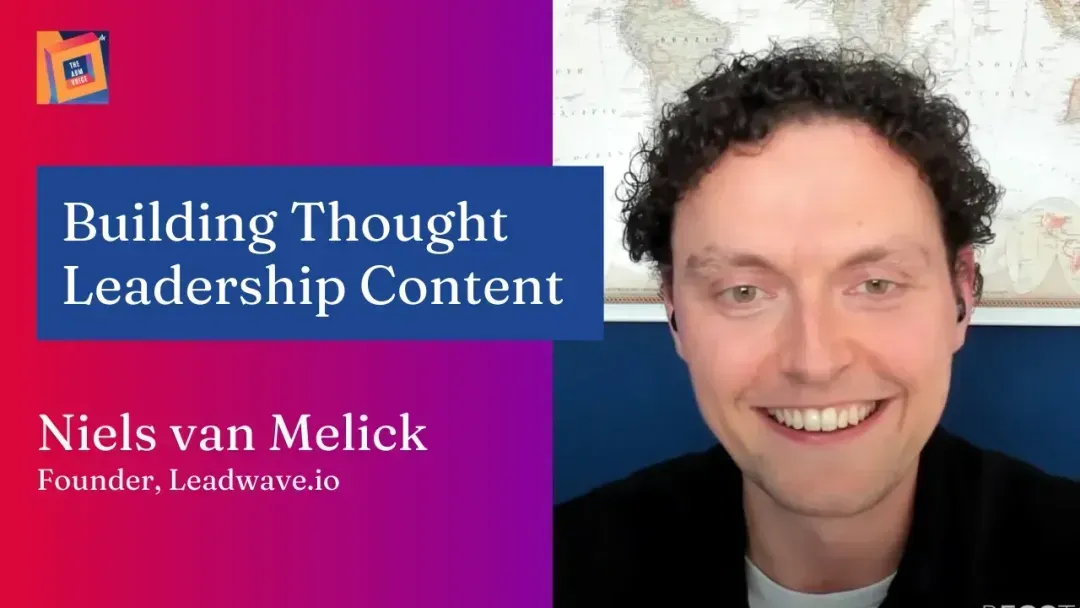
The podcast opens with greetings and a brief introduction of the guest, who runs a content agency named Lead Wave. Despite having no formal marketing education, the guest pivoted from corporate life in the Netherlands to become a freelancer and then agency founder. Lead Wave focuses on thought leadership content primarily for tech and consulting firms, emphasizing the involvement of subject matter experts to create unique, relevant content that builds authority and trust.
02:10
Inspiration and Client Base
The guest shares how storytelling on LinkedIn inspired their marketing approach, favoring relevant, non-salesy content over generic corporate messaging. Their client base is split mainly between the US and UK markets, with most content produced in English by native speakers. They note that content differences are more industry-specific than country-specific, highlighting the importance of understanding vertical markets rather than geographical cultural differences.
05:30
Content Market Fit Framework Introduction
The guest introduces the “Content Market Fit” framework, inspired by the concept of Product Market Fit, tailored for content marketing. The framework addresses the challenge of generic, AI-driven content flooding the market. It consists of three key components:
Unique Point of View: Content must offer original insights from subject matter experts rather than generic or AI-generated summaries.
Customer’s Urgent Pain Points: Content should address high-priority issues that compel readers to engage and act.
Tie-back to Product/Service: Content must connect clearly to the company’s offerings to enable conversion.
They emphasize deep customer research and caution against over-focusing on competitors, advocating for leveraging internal strengths instead.
14:00
Practical Application of the Framework
Implementation begins with embedding the framework into every content brief across channels like websites and social media, especially LinkedIn. The guest stresses continuous application rather than a one-time exercise. Key tactics include listening to sales calls, customer success interactions, and support tickets to gather authentic customer language and pain points. Subject matter experts are engaged through interviews to develop a unique narrative, leveraging their deep domain experience to create authentic, differentiated content.
19:30
Sales and Marketing Overlap & Research Sources
Though primarily a marketing framework, Content Market Fit is also highly applicable to sales messaging, which needs to avoid generic pitches and focus on unique value and urgent pain points. For researching hard-to-reach audiences (e.g., in pharmaceutical or traditional industries), the guest recommends mining internal data (sales calls, support tickets), attending field events, and exploring online communities like LinkedIn and Reddit. These resources help uncover authentic customer language and pain points to inform content creation.
25:30
Perspectives on AI and ChatGPT
The guest views AI tools like ChatGPT as helpful co-pilots rather than threats. AI excels at generating mediocre, generic content by summarizing existing data but cannot replicate the unique insights and experience that human experts provide. AI is expected to improve and assist marketers by saving time on routine tasks, enabling them to focus on strategic and creative aspects of content, which remain human strengths.
30:40
Building LinkedIn Audience and Content Strategy
The guest discusses their approach to building an engaging LinkedIn presence centered on consistent, value-driven content targeting the 95% of the audience not actively purchasing services. A clear content plan focused on urgent pain points ensures relevance and trust-building. For repurposing content, the advice is to focus on dominating one channel at a time, such as LinkedIn, and creatively reusing high-performing content pieces across formats to maximize ROI, especially in resource-constrained environments.
35:40
Application in ABM and Content Personalization
In Account-Based Marketing (ABM), segmentation should be based on shared urgent pain points among target accounts to ensure relevance and avoid wasted effort. Whether one-to-one or one-to-many, personalization depends on deep customer understanding to address the right pain points, making the framework adaptable for ABM strategies as well.
38:30
Closing Thoughts and Final Advice
The guest encourages marketers to involve internal subject matter experts as a critical differentiator in content creation, especially in an AI-saturated landscape. Authentic insights from experts build authority and relevance that generic AI content cannot match. The final message emphasizes focusing on value-based content that genuinely solves problems rather than filling websites with generic material. The guest invites listeners to connect on LinkedIn for further engagement.
Niels van Melick is the CEO of Leadwave, a B2B content agency driving revenue through strategic thought-leadership and content marketing. He helps enterprise marketing teams align content strategy with lead generation, moving beyond random tactics to predictable pipeline growth. Niels is known for weaving executive voices into high-impact campaigns that convert target accounts into engaged buyers. He regularly publishes hard-hitting insights on how content, distribution and measurement must evolve in modern B2B marketing.
Show Notes
S02E07 | Guest: Niels van Melick
In this episode, we sit down with Niels van Melick, Founder of Leadwave.io, to talk about building content that actually earns attention, trust, and conversations especially when the market is flooded with copy-paste, AI-sounding content.
🔑Key Learnings: -Why subject-matter experts are your biggest unfair advantage -How to uncover real customer pain using sales calls & community insight -The 3-part Content Market Fit Framework -Why most content fails when it tries to be for everyone -How this directly plugs into ABM messaging & personalization
Links & Resources-
- Smart Segmentation: Turn intent, firmographic, and engagement data into always-up-to-date segments - so your messaging actually matches what accounts care about. https://www.recotap.com/features/smart-segments/ -Leadwave.io – Niels van Melick’s content agency focused on thought leadership for tech and consulting companies https://www.leadwave.io -Reddit – Mentioned as a research source for uncovering authentic customer pain points and real-world language https://www.reddit.com
00:00:00
Introduction and Background
The podcast opens with greetings and a brief introduction of the guest, who runs a content agency named Lead Wave. Despite having no formal marketing education, the guest pivoted from corporate life in the Netherlands to become a freelancer and then agency founder. Lead
Jul 20, 2023
00:00:02
Introduction and Background
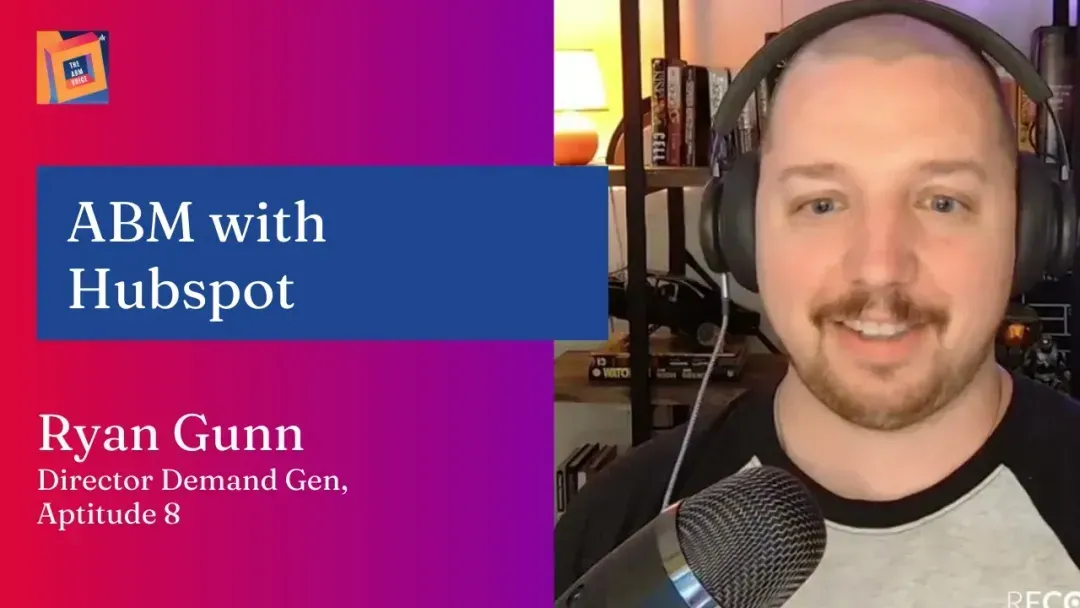
The conversation opens with an introduction to Ryan, who runs operations at Aptitude 8, an elite HubSpot Solutions partner. Unlike typical marketing-focused HubSpot agencies, Aptitude 8 specializes in Revenue Operations (RevOps) and Marketing Operations (Marketing Ops) within the HubSpot ecosystem, focusing on technical and operational alignment rather than creative marketing.
Ryan explains RevOps as a relatively new term coined around 2016, which serves as an umbrella for sales ops, marketing ops, and customer success ops. The core purpose of RevOps is to ensure alignment between these traditionally siloed operational teams, fostering collaboration and improving overall go-to-market efficiency. The discussion clarifies how RevOps differs from individual sales or marketing operations by emphasizing cross-functional integration.
00:03:51
RevOps Implementation and HubSpot’s Role
The dialogue shifts to practical implementation: Ryan describes typical scenarios where companies outgrow simple CRM setups and require RevOps to clean up data hygiene, optimize workflows, and manage automation complexity. He highlights challenges with enforcing data quality, especially compared to platforms like Salesforce, advocating for simple, user-friendly validation processes that respect sales teams’ workflows. Ryan emphasizes custom, non-template HubSpot implementations tailored to each company’s business needs rather than one-size-fits-all solutions.
00:08:56
Account-Based Marketing (ABM) Experience
Ryan shares his personal ABM journey, describing early “scrappy” ABM efforts using HubSpot and LinkedIn Ads to target specific financial advisor companies. He contrasts this with later experiences using Terminus for more complex target identification in regulated industries, integrating Salesforce and HubSpot for account scoring and automation. This section explains how ABM can be managed at various sophistication levels, from DIY approaches to platform-assisted programs.
00:15:38
Starting ABM with HubSpot
Ryan advises companies new to ABM on how to leverage HubSpot’s built-in tools like HubSpot Insights for firmographic data, account-level lead scoring, and dynamic content on landing pages and emails. He explains how to identify target accounts proportionate to sales capacity and use automation and segmentation to tailor messaging effectively — all without expensive external ABM platforms.
00:20:54
Integrating Advertising and Intent Data
This chapter covers integration of HubSpot with advertising platforms such as LinkedIn, Google, and Facebook through HubSpot’s ad management features. Ryan explains how dynamic audience lists sync automatically to ad platforms, enabling real-time targeting without manual list uploads. He also discusses the mixed reliability of third-party intent data providers like Bombora and advocates prioritizing first-party intent signals (website visits, content consumption, ad interactions) tracked directly in HubSpot.
00:24:48
Leveraging Social Media and LinkedIn Data
Ryan introduces a tool called HubLead that integrates LinkedIn data directly into HubSpot, enabling sales teams to capture decision-makers, sync LinkedIn conversations to contact records, and maintain visibility on social engagement within the CRM. This integration supports genuine account-based engagement by unifying marketing and sales activities and improving internal collaboration and warm introductions.
00:29:12
Common ABM Mistakes and Best Practices
He cautions against jumping prematurely into expensive ABM tools without first establishing clear target account lists, aligned processes, and measurable goals. Ryan stresses that technology should support well-defined processes rather than dictate them. Starting with low-budget, DIY ABM efforts helps validate the approach before scaling with dedicated platforms. He also highlights the importance of sales and marketing alignment and tracking penetration within target accounts as key success metrics.
00:32:24
ABM Dashboard and Reporting
Ryan describes how ABM metrics differ by focusing on account-level rather than individual contact-level measures. Typical dashboards track MQLs, deals, and engagement filtered by target accounts, sometimes using leaderboards showing account penetration. Account lifecycle stages mimic contact lifecycle stages but focus on account engagement progression over time, with attention to time-bound activity to ensure relevance. These reports are built using HubSpot’s custom properties and no-code funnel reporting tools.
00:38:40
Inbound and Demand Generation Integration
The conversation covers integrating inbound leads into ABM workflows. Ryan explains how demand generation can coexist with ABM by layering account-based targeting on top of broader inbound strategies. High-intent forms can move accounts directly into MQL or opportunity stages, while other inbound leads can be nurtured separately. This flexible setup allows combining ABM with traditional marketing tactics.
00:41:25
HubSpot CMS and Platform Scalability
Ryan praises HubSpot’s CMS and platform scalability, highlighting tiered pricing and upgrade/downgrade flexibility suited to changing business needs. He notes HubSpot’s rapid feature expansion including custom objects, advanced workflows, and a growing app ecosystem. This scalability supports everything from startups to enterprise-level ABM and RevOps implementations. He also addresses misconceptions about HubSpot’s capability around CPQ (Configure Price Quote), describing third-party integrations and new native features that now support CPQ workflows.
00:44:11
Use Cases for Custom Objects in HubSpot
Ryan details how Aptitude 8 uses custom objects to model complex business processes, such as projects and retainers in professional services, associating delivery teams and project leads within HubSpot. He also shares a product-led growth (PLG) use case where custom objects track free trial accounts and product usage data, triggering onboarding and feature adoption communications. Additionally, partner management is another key use case, with custom objects tracking partner commissions and deal contributions, referencing a company called Reveal that specializes in partnership management.
00:49:27
Closing Remarks
The conversation concludes with Ryan reflecting positively on the discussion, appreciating the opportunity to revisit ABM topics and share insights on RevOps and HubSpot’s evolving capabilities.
Ryan Gunn is a B2B marketing leader driving revenue through attribution and analytics as a key figure at the Attribution Academy. He empowers marketing teams to turn data into action—aligning spend, creative and channels to measurable business outcomes. Ryan is known for demystifying marketing measurement and building frameworks that make marketing accountable-to-revenue. He shares insights rooted in real execution, helping teams shift from guesswork to data-driven growth.
Show Notes-
In this conversation, we talk about how RevOps, HubSpot, and ABM actually work together in real B2B environments. Ryan shares how companies can start ABM without big tools, how revenue operations drives alignment across GTM teams, and how HubSpot can be used as the central system for targeting, reporting, and scale.
Key Learnings : -RevOps aligns sales, marketing, and CS around one revenue system. -You can start ABM using HubSpot + LinkedIn without expensive tools. -First-party intent and clean CRM data matter more than third-party tools. -Account-level reporting is the real unlock for ABM not leads.
00:00:02
Introduction and Background
The conversation opens with an introduction to Ryan, who runs operations at Aptitude 8, an elite HubSpot Solutions partner. Unlike typical marketing-focused HubSpot agencies, Aptitude 8 specializes in Revenue Operations (RevOps) and Marketing Operations (Marketing Ops) within the HubSpot ecosystem, focusing on technical and
Jun 28, 2023
00:00:03
The Role of Technology in ABM
The conversation opens with a discussion about technology being a significant challenge in Account-Based Marketing (ABM). The key point emphasized is that organizations often make the mistake of starting their ABM programs by purchasing technology first. This approach can be detrimental because it causes the ABM strategy to be dictated by the capabilities of the technology rather than the company’s actual goals and needs. Instead, the recommended approach is to initiate ABM programs manually—running one or two pilot programs without technology. Once these initial programs are successful, technology can be integrated to automate, scale, and improve efficiency. The emphasis is on technology as an enabler, not the driver, of ABM strategy.
00:01:23
Personalization Challenges and Budget Constraints
This section delves into the personalization myth in ABM. It stresses that while personalization is important, it comes with a significant cost in terms of budget and resources. Organizations new to ABM often believe every touchpoint must be highly personalized, which leads to over-extension and resource strain. The discussion highlights that personalization should be scaled according to budget and organizational capacity, starting at a broader level (account-level) before moving to individual-level personalization. Organizations also need to correctly define what ABM means for their context, considering factors like average deal size, which influences the level of personalization feasible.
00:03:03
ABM Adoption Across Different Organizational Sizes
The speaker compares how ABM programs mature in large enterprises versus smaller or mid-sized companies. Large organizations with high average deal values (e.g., Accenture, ServiceNow) naturally adopt ABM as it aligns well with their sales cycles and deal sizes. Smaller or fast-growing companies may adopt ABM faster due to less bureaucracy and greater agility, though budget constraints may pose challenges. The speed and success of ABM adoption depend more on company culture and organizational fluidity than merely on size. Both large and small companies can have slow or fast adoption depending on these internal factors.
00:06:48
Account Selection Strategy for ABM
For companies with large Ideal Customer Profiles (ICPs) consisting of thousands of potential accounts, the recommendation is to start by clarifying whether ABM is focused on new customer acquisition or account expansion. For smaller organizations, ABM should initially focus on new account acquisition rather than expansion, which can be handled by existing teams. The suggested approach is to avoid overly risky “one-to-one” ABM initially. Instead, start with “one-to-few” (clusters of 20-40 accounts) and “one-to-many” (targeting pools of 100+ accounts). The use of a prioritization matrix is recommended to objectively rank and score accounts based on factors such as intent data, company size, vertical fit, and internal intelligence. The best practice is to pilot ABM campaigns with second-tier targets before moving on to the highest-value accounts to minimize risk.
00:12:58
Multi-Channel ABM Execution and Channel Selection
The discussion moves to channel strategies for ABM, especially in budget-constrained environments. The key insight is that no single channel defines ABM success; rather, successful ABM programs deploy multi-channel campaigns including email, phone calls, LinkedIn outreach, direct mail, advertising, and website chat. The number of channels leveraged correlates with program success. The conversation also highlights that channel effectiveness varies by geography and cultural context—for example, phone calls work well in India but not in Southeast Asia, where WhatsApp is more effective. In the U.S., heavy prospecting makes outreach difficult. Cultural sensitivity is critical, as certain outreach methods (like unsolicited videos) may be perceived negatively in markets such as Japan.
00:17:26
Gaps and Challenges in ABM Technology Platforms
This chapter focuses on the limitations of current ABM technology platforms, especially regarding reporting and scaling. The biggest gap is in customizable reporting because organizations have diverse ABM definitions and needs. Most ABM tools offer templated reports that don’t fit every company’s unique sales environment. Organizations advanced in ABM often combine customer data platforms with visualization tools like Power BI to build tailored reporting dashboards. Additionally, context switching between multiple client accounts serviced by a single team creates productivity challenges. Despite these gaps, ABM platforms share many core features, and experience with one platform often translates to others, similar to CRM systems, though CRM technology itself is more mature.
00:22:59
Community Learning and Experience Sharing
The final segment touches on the value of community and shared learning in the ABM space. Platforms like Growth Colony enable marketers and agencies to exchange experiences, best practices, and insights. The conversation underscores the importance of ongoing learning through engagement with peers and thought leaders, which helps marketers refine their ABM strategies and implementation. The discussion ends with appreciation for the collaborative spirit of the ABM community and the practical knowledge gained from such dialogues.
Shahin Hoda is the Founder of xGrowth, where he helps B2B companies build predictable pipelines through account-based strategies. He specializes in aligning marketing, sales, and operations to execute revenue-driven ABM programs for enterprise and high-growth organisations. Known for his hands-on, data-informed approach, Shahin cuts through theory and focuses on measurable outcomes and repeatable execution. He hosts the podcast Growth Colony, sharing insights from industry leaders on how to scale B2B growth and pipeline generation.
Show Notes -
In this episode, we talk with Shahin about how companies should actually start ABM without rushing into tools or over-personalization. He shares why most teams overcomplicate ABM early on, how to scale personalization realistically, and why channel selection must match culture, region, and account context.
Key Learnings : -Don’t start ABM by buying tools, start with a pilot and manual programs. -Personalization should scale based on budget + deal size, not assumption. -Account selection matters more than channels, start with one-to-few. -Multi-channel ABM works best when aligned to regional buyer behavior.
00:00:03
The Role of Technology in ABM
The conversation opens with a discussion about technology being a significant challenge in Account-Based Marketing (ABM). The key point emphasized is that organizations often make the mistake of starting their ABM programs by purchasing technology first. This approach can be detrimental
Jun 28, 2023
00:00:00
Introduction and Background
The conversation begins with Daniel Littlebretson introducing himself as a career marketer specializing in demand generation. He shares his experience spanning large companies, startups, and founding his own company focused on helping others run demand generation and Account-Based Marketing (ABM) businesses. Daniel describes ABM as a natural progression from his sales and marketing background, emphasizing his early exposure to lead generation and sales alignment.
00:01:55
Journey into Account-Based Marketing
Daniel explains how ABM emerged naturally from his demand generation work, driven by the need to generate the right leads for sales teams. He highlights his early adoption of Terminus software and how ABM allowed him to build stronger relationships internally with sales, product marketing, and management. This relationship-driven alignment is foundational to ABM’s success.
00:04:45
Building Sales and Marketing Alignment
This section focuses on overcoming the cultural and operational silos between sales and marketing teams. Daniel stresses empathy—understanding sales’ quarterly goals and pressures—as key to building goodwill. He advises starting with a sales partner who is open to collaboration to pilot ABM efforts and gather actionable feedback. If no collaboration exists, Daniel recommends using data-driven pilots to demonstrate ABM’s value. He also discusses the importance of top-down alignment, especially in larger organizations, and identifies product owners or business unit leaders as pivotal stakeholders for ABM buy-in.
00:10:39
ABM Readiness and Ideal Customer Profiles
Daniel addresses which companies should consider ABM and when. He emphasizes that every company should define their vision, mission, and strategy around identifying ideal accounts and target personas before investing in ABM technology or scaling efforts. He warns against scaling demand generation without clarity on the best audience and encourages small pilots with sales and customer success teams to refine targeting and messaging. Scaling ABM is most effective once product-market fit and targeting are solidified.
00:17:35
Successful ABM Campaign Examples and Lessons
Daniel shares examples of effective ABM campaigns, including a case where a focused pilot with the business unit GM, product manager, and sales team led to 100% deal closure in target accounts within 10 months. Key lessons include collaboration at the highest level, narrow focus, iterative testing, and deep engagement with strategic account owners to understand their needs and tailor messaging accordingly.
00:21:07
ABM Program Development and Iterative Process
Here, Daniel outlines a typical ABM campaign playbook:
Define ideal customer profiles and personas
Conduct market research and build target account lists with known contacts
Develop targeted messaging and content (directionally accurate, not perfect)
Launch campaigns using multiple channels (ads, email, webinars) and track engagement signals
Harvest engagement signals, prioritize accounts, and assign dedicated roles (e.g., Business Development Reps) to follow up
Collect qualitative feedback on objections and refine targeting and messaging iteratively
Daniel emphasizes that ABM is fundamentally about building relationships rather than immediate deals and that sales cycles can be long.
00:29:05
Low-Cost One-to-One ABM Approach
Daniel discusses how to approach one-to-one ABM affordably:
Focus on a small number of high-value accounts critical to business success
Conduct manual or outsourced research on account specifics (e.g., sustainability goals) to personalize messaging
Use tailored landing pages with personalized videos from sales reps to enhance relevance
Employ low-cost tactics such as LinkedIn ads, emails, or social outreach
Focus on maximizing relevance rather than spending heavily, as generic messaging wastes budget
This approach suits startups or companies with limited budgets but critical target accounts.
00:37:33
The Role of AI and ChatGPT in ABM
Daniel dives into the impact of AI, specifically ChatGPT, on ABM:
ChatGPT is not a knowledge base but a language model predicting likely words; its usefulness depends on how specifically and contextually it is prompted
When combined with automation (e.g., Python scripts), ChatGPT can analyze large datasets, crawl websites, extract insights, and answer targeted questions at scale (e.g., validating ideal customer profiles by scanning 2,000 accounts)
It can automate routine, time-consuming tasks like lead qualification by reading inbound leads and scoring them based on custom criteria
Success with AI requires careful prompt engineering, iterative refinement, and clear processes—AI can replicate exactly what you teach it to do
Daniel points to resources such as OpenAI’s Prompt Engineering Cookbook to learn these skills.
00:48:21
Skills and Future of Prompt Engineering in Marketing
Daniel reflects on the emerging role of prompt engineering in marketing, linking it to traditional skills like A/B testing and iterative optimization that marketers already possess. Key points include:
Prompt engineering is about framing problems clearly to get desired AI outputs
The skill is evolving rapidly; foundational understanding of the technology and problem framing is more critical than specific tips that may become outdated
Marketers with experience in digital growth and testing are well-positioned to excel in this space
Continuous learning and curiosity are essential to leverage AI tools effectively.
00:52:40
Closing Thoughts and Contact Information
The conversation closes with Daniel encouraging marketers to stay curious and embrace test-and-learn mindsets. He invites listeners to connect with him on LinkedIn for further discussions. The overall message is that ABM, AI, and marketing success rely on continuous experimentation, data-driven insights, and relationship-building rather than shortcuts or one-size-fits-all solutions.
Daniel Englebretson is the CEO at Elynox, building AI-native engines that transform how organizations work. He specializes in bridging advanced AI with business operations, enabling teams to scale impact through intelligent systems. Daniel is recognized for his bold, product-first approach—moving fast from idea to execution and agency to ownership. A frequent contributor to the AI and B2B community, he shares insights on how generative intelligence and automation reshape today’s GTM models. His work equips leaders to move beyond buzzwords and implement practical, scalable AI solutions.
Show Notes -
In this episode, Daniel breaks down how ABM actually works when it’s done with sales, not to sales. We talk about building alignment, defining ICPs, running focused pilots, and using AI the right way to scale research and personalization without making ABM expensive or overly complex.
Key Learnings : -Start ABM by partnering with one sales leader, not the whole org. -ICP clarity and target focus matter more than messaging perfection. -One-to-one ABM can be done affordably with smart research and relevance. -AI is powerful when used for analysis + scaling, not copy-paste content.
Links & Resources -
Accelerate Pipeline - Support live deals with tailored ads & buying group engagement.
LinkedIn Marketing Blog - Insights and best practices straight from LinkedIn to help marketers optimise campaigns.
00:00:00
Introduction and Background
The conversation begins with Daniel Littlebretson introducing himself as a career marketer specializing in demand generation. He shares his experience spanning large companies, startups, and founding his own company focused on helping others run demand generation and Account-Based Marketing (ABM) businesses. Daniel describes ABM
Jun 26, 2023
00:00:00
Introduction and Guest Background
The video opens with a warm welcome and introduction of the guest, Fess, who is the Director of Sales and Strategic Accounts at a global B2B Tech marketing agency specializing in Account-Based Marketing (ABM). Fess describes his role as a liaison between customers and internal agency teams, including consultants, strategists, and creatives. He highlights the excitement around ABM in the current marketing landscape.
00:01:28
Fess’s ABM Experience and Industry Coverage
Fess shares his extensive experience, spanning over seven years at the agency, working across diverse B2B tech sectors such as hardware, software, SaaS, professional services, and pharmaceuticals. He emphasizes ABM’s sweet spot in simplifying complex messaging and aligning internal and external stakeholders. The conversation touches on how ABM has evolved and the importance of understanding different market contexts.
00:03:53
Typical Engagement Models and Industry Impact
Discussion shifts to how client engagements typically begin, often through self-education or referrals from the agency’s thought leadership content. Fess explains the importance of assessing a client’s ABM maturity and readiness, whether they are new to ABM or expanding into new markets. He also notes that ABM’s success is less about industry verticals and more about the complexity of the solution, buyer personas, and sales cycles, highlighting differences between traditional sectors like pharmaceuticals and digital-native markets like cybersecurity.
00:06:18
Workshops and Lunch & Learn Sessions
Fess describes the agency’s ABM lunch and learn workshops as informal, knowledge-sharing sessions that help teams at various stages of their ABM journey. These sessions foster honest dialogue about client objectives, challenges, and best practices gleaned from industry-wide learnings. They are primarily educational but can lead to deeper paid readiness workshops or consulting engagements tailored to client needs.
00:09:02
Consultancy vs. Orchestrated Support & Practical Learnings
The conversation explores different engagement models: some clients seek strategic consultancy and creative input, while others require hands-on execution support from the agency. Fess highlights the advantage of working with an agency actively running ABM campaigns, gaining real-time insights on data availability, tech stack challenges, and integrating sales and marketing efforts to transform ABM into a comprehensive customer engagement program.
00:11:08
Traditional vs. Digital-Native Industries in ABM
Fess contrasts traditional industries like pharmaceuticals, which often rely on face-to-face events and field marketing, with digital-native sectors like cybersecurity that favor digital engagement channels. He stresses the need for a blended approach that tailors ABM programs to the buyer’s persona, preferences, and maturity level. The discussion also underscores the importance of relationship-building and delivering a customized buying experience rather than purely transactional marketing.
00:17:01
Managing Expectations and the Kickstart Program
Acknowledging the pressure teams face to produce quick results, Fess introduces the agency’s Kickstart program—a rapid pilot designed to test messaging, content, and audience engagement within 6-8 weeks. This approach enables data-driven refinement before scaling full ABM programs, emphasizing that insights derived from early campaigns differentiate ABM from generic demand generation by focusing on customer needs and behavior, not just persona-based messaging.
00:23:36
Identifying the Right ABM Program and Readiness Workshops
Fess explains how clients are guided to select the most suitable ABM format—one-to-many, one-to-few, or one-to-one—based on objectives and maturity. Many require an ABM readiness workshop to align sales and marketing, analyze past pilot results, and build a nuanced understanding of their accounts. He stresses the importance of not rushing into campaign execution without foundational work like account insights and targeted messaging to avoid program failure.
A robust, collaborative account selection process is identified as the single most critical factor in ABM success. Fess highlights that involving multiple internal stakeholders and incorporating customer insights ensures alignment and realistic expectations. Selecting accounts based on strategic fit—such as technology compatibility and trust—rather than superficial criteria drives better outcomes and sets the foundation for effective messaging and engagement.
00:29:27
Personalization in ABM—Three Pillars
Fess outlines three pillars of personalization: relevancy (right message at the right time), customization (tailored value propositions addressing specific account contexts), and personalization (individualized communication based on detailed stakeholder profiles). He cautions against superficial personalization, such as merely inserting company logos, advocating for deeper, meaningful engagement that reflects the unique pain points and buying roles within accounts across regions.
00:35:52
The ABM vs. ABX Debate
The discussion turns to ABX (Account-Based Experience), a term gaining traction as an evolution or complement to ABM. Fess views ABX as emphasizing the end-to-end customer experience, integrating marketing, sales, and service touchpoints to deliver consistent and orchestrated engagement from the buyer’s perspective. While terminology is still evolving, the focus should remain on delivering seamless, personalized experiences that unify internal teams around customer needs.
00:39:26
Closing Thoughts and Advice
The video concludes with Fess encouraging continuous learning, peer networking, and leveraging industry insights to navigate the fast-evolving ABM landscape effectively. The host thanks Fess for sharing valuable perspectives, reinforcing the importance of practical experience, alignment, and customer-centricity in designing successful ABM programs.
Fes AskariDirector of Sales, CS & Strategic AccountsLinkedIn
Fes Askari is an ABM strategist and founder of Strategic ABM, helping B2B sales and marketing teams win, grow, and retain high-value accounts. With over 15 years of experience in B2B and account-based marketing, Fes brings an international, results-driven perspective to complex go-to-market challenges. He specializes in turning ABM strategy into scalable programs that align teams around key accounts and measurable outcomes. Fes is known for his hands-on, operational approach—building frameworks that shift teams from campaign-driven to account-driven growth.
Show Notes -
In this episode, we sit down with Fes Askari, Director of Sales & Strategic Accounts at strategic abm, where he has helped B2B tech companies around the world run high-impact ABM programs. We talk about what actually makes ABM work from picking the right accounts, aligning sales & marketing, and setting realistic expectations, to running rapid 6–8 week ABM pilots that prove value before scaling.
If you’re trying to start ABM but worried about budget, bandwidth, or tech complexity - this conversation gives you a clear, practical starting point.
Key Takeaways: -Why ABM success starts with aligned account selection, not tech tools -How to run ABM pilots that generate insights fast (without overbuilding) -The 3 levels of personalization and how to avoid “logo-swap” ABM -How to adapt ABM in different industries (pharma vs cybersecurity vs SaaS) -Why relationship-building, not campaigns, is the real differentiator in ABM
Links & Resources: -Generate Pipeline-Turn your engaged accounts into actual pipeline, not just impressions. See how leading B2B teams build revenue momentum with LinkedIn ABM: https://www.recotap.com/use-cases/generate-pipeline/
-Turtl: Ultimate Guide to ABM Strategy & Scaling Covers ABM types (one-to-many, one-to-few, one-to-one), when to use what, plus tactical advice on content mapping, personalization, engagement, and building scalable ABM programs. https://turtl.co/blog/account-based-marketing-strategy/
00:00:00
Introduction and Guest Background
The video opens with a warm welcome and introduction of the guest, Fess, who is the Director of Sales and Strategic Accounts at a global B2B Tech marketing agency specializing in Account-Based Marketing (ABM). Fess describes his role as a liaison between customers
Jun 22, 2023
00:00:00
Introduction and Background
Abhishek introduces Sam Dunning, co-owner of Web Choice UK, a UK-based agency specializing in SEO, web design, and marketing for B2B tech and service companies. Sam’s career journey is highlighted—from business development executive in 2012 to co-owner by 2020. Sam also hosts the Business Growth podcast focusing on B2B marketing insights.
00:01:20
Unique Approach to B2B SEO and Marketing
Sam explains Web Choice’s philosophy: focusing on SEO that drives revenue, not just vanity metrics like traffic. Their target clients are B2B tech/service firms frustrated by competitors outranking them on Google and stealing leads. He stresses understanding the sales funnel and creating highly specific niche content that addresses real customer pain points at every stage—from discovery to purchase—to become the go-to industry resource.
00:04:30
Identifying Customer Problems and Content Creation
Sam details methods for uncovering client “juicy” problems, emphasizing insights from sales and customer success calls. He suggests interviewing top customers to discover pain points, tipping points, and decision drivers. This information helps create targeted content that directly addresses prospects’ challenges, facilitating stronger resonance and conversions. He highlights three common problems clients face such as losing organic traffic to competitors, poor website conversion, and underperforming agencies.
00:08:50
Collaboration Between Marketing, Sales, and Customer Success
Sam discusses the importance of continuous alignment and communication across sales, marketing, and customer success teams. He recommends regular meetings to share frontline feedback, identify recurring problems, and map out impacts on business goals using tools like “problem identification charts.” This collaborative approach ensures content marketing efforts are relevant and effective, helping marketers create messaging that resonates with real customer language.
00:12:00
Messaging and Avoiding Jargon
Sam warns against jargon-heavy messaging that confuses prospects. He advocates for crystal-clear headlines and copy using simple, customer-centric language based on real words customers use to describe their challenges and the solutions they seek. Clear, straightforward messaging increases engagement, reduces bounce rates, and improves conversion rates on websites and ads.
00:15:00
Effective Content Types for Conversion
Sam explains content that works best for bottom and middle funnel prospects, such as SEO-optimized landing pages targeting high-intent search queries (e.g., “best payroll company for finance”). He also highlights the importance of review and aggregator sites like G2 and Capterra, which prospects commonly check during evaluation stages. Relevant landing pages with case studies, FAQs, pricing, and strong calls to action help convert these visitors.
00:18:00
Account-Based Marketing (ABM) Strategy
Although relatively new to ABM, Sam shares his simple yet effective ABM approach using his Business Growth podcast. He targets ideal accounts by identifying decision-makers, invites them to the show, and builds warm relationships through meaningful conversations. He repurposes these interviews across multiple platforms and keeps in touch, nurturing prospects until they are ready to engage commercially. Remarkably, he notes a 99% acceptance rate for podcast invitations from targeted leads.
00:21:30
SEO in the Age of AI and Changing Search Landscape
Sam addresses the common narrative that “SEO is dead” in light of AI, generative search, and evolving Google features. He believes SEO will evolve but remain crucial, especially for high-intent, bottom-funnel searches. AI-powered search enhancements like “perspectives” will improve content discovery for early-funnel queries but won’t eliminate the need for strong organic presence and expert content that builds trust and authority.
00:25:00
Content Repurposing Playbook
Sam shares his practical system for maximizing content value. He captures insights from sales calls, interviews, and personal learnings in notes, transforms them into podcast episodes, then repurposes those into YouTube shorts, blog articles, LinkedIn posts, and more. He emphasizes consistency and leveraging tools like Opus AI to automate content slicing for broader reach and engagement.
00:27:45
Advice for Aspiring B2B Marketers
Sam advises focusing relentlessly on activities that drive revenue impact. He encourages hands-on learning through side projects like podcasts, blogs, or e-commerce ventures to gain practical experience beyond the 9-to-5 job. He shares his own journey of growth from sales roles to co-ownership by continuous learning, experimentation, and owning his professional education.
00:30:40
Closing Remarks and Contact Information
Sam invites listeners to connect with him on LinkedIn for daily B2B marketing and SEO tips, promotes his Business Growth podcast, and offers Web Choice’s services to help businesses improve Google rankings and website conversions. Abhishek thanks Sam for his valuable insights and closes the episode.
Sam Dunning is the founder of Breaking B2B, specializing in B2B SEO that drives organic pipeline for SaaS and enterprise companies. He focuses on revenue-driven search strategies rather than vanity metrics, helping marketing teams scale sustainably. Sam regularly experiments with unconventional tactics—linking SEO, AI and growth to move beyond traditional ABM. He shares actionable insights and frameworks that help B2B teams align content, SEO and demand generation for measurable impact.
Show Notes
S02E06 | Guest: Sam Dunning
In this episode, we chat with Sam Dunning, Co-Owner at Web Choice UK and host of The Business Growth Show where we deep dive into SEO that drives pipeline, not vanity traffic. Sam explains how to uncover real customer language, create clarity-focused messaging, and use a podcast as a relationship-first ABM engine to warm high-value accounts.
🔑 Key Learnings: -Why SEO must serve revenue, not impressions -How to find "juicy" high-intent problems from sales & CS calls -How to use podcasts as ABM for high-ticket accounts -Why SEO is evolving, not dying in the age of AI
00:00:00
Introduction and Background
Abhishek introduces Sam Dunning, co-owner of Web Choice UK, a UK-based agency specializing in SEO, web design, and marketing for B2B tech and service companies. Sam’s career journey is highlighted—from business development executive in 2012 to co-owner by 2020. Sam also hosts
Jun 14, 2023
00:00:03
Introduction and Guest Background
The podcast opens with host Abhishek introducing Nick Bennett, co-founder of Club PF and host of the Anonymous Marketer podcast. Nick shares his decade-long marketing experience, primarily in field marketing for tech startups in series B to D stages. He explains his transition from field marketing to building ABM programs from scratch, customer marketing, and event-led growth strategies. Nick also introduces his recent venture, Club PF, a community-driven platform co-founded with Mark Killens.
00:01:44
People-First Marketing Model Explained
Nick elaborates on the “people-first” approach, contrasting it with traditional company-first marketing. He stresses prioritizing people internally (employees) and externally (prospects/customers) over just promoting the company brand. He introduces a three-pillar framework—Create Demand (content-led, community-driven), Capture Demand (member/audience-led growth), and Convert Demand (customer-led growth emphasizing retention). Nick highlights the importance of event-led growth and product-led growth strategies, all supported by partner-led growth, focusing on ecosystem collaboration. This model fundamentally centers on authentic person-to-person connections rather than impersonal company messaging.
00:05:27
People-Based Marketing vs. Account-Based Marketing
Nick compares people-based marketing with traditional ABM, describing ABM simply as targeted marketing to a subset of accounts. He argues that people-first thinking complements ABM by focusing deeply on individual stakeholders within target accounts rather than just the company as an entity. He highlights that personalization isn’t just changing a few words in emails but building genuine relationships over time through meaningful content and engagement, especially on platforms like LinkedIn. Nick stresses that marketing is ultimately human-to-human (H2H).
00:09:04
Common Mistakes and Mindset for B2B Marketers
Nick discusses common pitfalls such as superficial personalization and reliance on outdated playbooks. He debunks myths like “email is dead” or “webinars are dead,” emphasizing that channels remain effective if used creatively and thoughtfully. He advocates for experimentation, learning from failures, and leadership that supports innovation. Nick underscores the importance of video content and encourages marketers to embrace change rather than cling to old methods.
00:14:46
Creator Economy and Its Role in B2B Marketing
The conversation shifts to the creator economy’s impact on B2B marketing. Nick explains how B2B brands can leverage creators and influencers by giving them creative freedom to authentically communicate the brand message in their own voice. This two-way partnership approach contrasts with traditional, one-sided influencer marketing. He predicts increasing adoption of this model, especially in Martech and SalesTech, and highlights how borrowing trust and authority from creators can be more effective than traditional paid ads.
00:19:55
Differences Between B2B and B2C Influencer Marketing
Nick compares B2B influencer marketing with B2C, noting that in B2B, long-term value creation and community engagement build trust over time. He shares personal examples of how consistent content creation for over three years has established credibility and support from his audience. He also references creative campaigns like unboxing videos to illustrate how B2B brands can innovate with minimal cost yet high engagement.
00:22:35
Building Content and Community Presence
Nick advises marketers starting today to show up consistently by engaging with relevant communities on LinkedIn or other platforms before investing heavily in content production. He recommends engaging on peers’ posts, adding value through comments, and gradually building a follower base before increasing content frequency. The emphasis is on persistence and meaningful interaction rather than instant results.
00:25:23
Deep Dive into People-First ABM Strategy
Nick explains how a focused ABM strategy involves selecting 50-100 accounts for personalized engagement. This includes website personalization, gifting, VIP events, and constant interaction to stay top of mind without aggressively pitching. He stresses aligning marketing, sales, and revenue operations to collaboratively build the account list based on data, not just logo appeal. Personalization at scale and meeting buyers where they are—such as niche platforms like Reddit—are crucial.
00:28:34
Breaking Internal Silos for Better Alignment
Addressing the challenge of organizational silos, Nick emphasizes communication as the key to alignment across marketing, sales, and operations. He advises marketers to understand salespeople’s goals and demonstrate how marketing efforts help sales achieve quotas and revenue targets. Building internal relationships and regular check-ins are vital to breaking down silos and fostering collaboration.
00:29:59
Launch and Purpose of Club PF
Nick introduces Club PF as an exclusive community platform offering daily go-to-market tips, weekly masterclasses, and monthly events focused on ABM, PLG, and customer-led growth strategies. The community fosters networking, learning, and mutual support, especially valuable in a volatile economy where job security is uncertain. Club PF also offers VIP tiers with personalized coaching from Nick and Mark.
00:31:22
Role of Podcasting in B2B Marketing
Nick discusses his experience with podcasting as a tool for B2B marketing. Podcasts provide a unique channel to engage key prospects, understand their pain points, and showcase customer success stories, offering authentic social proof. He underlines that people buy from people, and hearing real conversations builds trust more effectively than traditional marketing collateral.
00:32:49
Conclusion
The episode wraps up with Abhishek thanking Nick for sharing deep insights on people-first marketing, ABM, the creator economy, and community-building strategies. The conversation provides actionable frameworks and mindset shifts essential for modern B2B marketers aiming to build meaningful relationships and drive sustained growth.
Nick Bennett is a B2B marketing strategist and founder of NB Marketing, helping companies turn their content and demand generation into reliable growth engines. He focuses on human-centred B2B marketing—moving beyond channels and metrics to engage real people in target accounts. Nick is known for creating repeatable growth systems that align sales, marketing and operations around measurable outcomes. He regularly publishes insights on LinkedIn, sharing frameworks and tactics that help teams scale their marketing impact with less noise.
Show Notes -
In this episode, we sit down with Nick Bennett - Co-founder of Club PF and host of The Anonymous Marketer. Nick breaks down People-First Marketing: a simple approach where relationships, conversations, and real connection matter more than hyper-polished campaigns. Instead of chasing trends, Nick shows how to build trust, community, and demand by being human - online and offline.
Key Takeaways: -Marketing works best when it starts with people, not channels. -Personal brands → community → pipeline (in that order). -Content doesn’t need to be perfect, it needs to be consistent. -You don’t need huge budgets to start, you need conversations.
Links & Resources:
Generate Demand: Build awareness + nurture your target accounts across marketing, sales, and CS.
00:00:03
Introduction and Guest Background
The podcast opens with host Abhishek introducing Nick Bennett, co-founder of Club PF and host of the Anonymous Marketer podcast. Nick shares his decade-long marketing experience, primarily in field marketing for tech startups in series B to D stages. He explains his transition
Jun 09, 2023
00:00:00
Introduction and Speaker Background
The podcast opens with introductions. Dean McGinnis introduces himself as an ABM strategist working with xGrowth, an agency specializing in ABM campaigns for B2B SaaS companies in the APAC region. He elaborates on his role, which involves end-to-end ABM campaign management—from strategy and account selection to messaging and asset creation.
00:01:30
ABM Market Maturity in ANZ
Dean compares the ANZ market with the US, noting that ABM maturity and technology adoption are less advanced in ANZ. Resources are limited—often a single marketing lead manages ABM alongside other duties. Awareness of ABM is growing, but actual adoption and execution remain in early stages. He highlights that sectors like SaaS and IT services are leading ABM adoption, especially companies with high-value sales deals.
00:03:30
Types of ABM Engagements and Account Sizes
Dean explains that ABM strategies vary based on company size, maturity, and contract values. Most clients have annual contract values ranging between $10K and $200K. A “one-to-few” ABM approach often works well at this scale, balancing personalization with scalability. This approach also helps build alignment with sales teams and sets the stage for more advanced, programmatic ABM efforts.
00:05:50
Starting ABM for Startups
Dean advises startups to start ABM simply and pragmatically, avoiding the trap of waiting for a perfect ABM model. He recommends beginning with a small list of 20-100 target accounts, collaborating closely with sales, and running simple campaigns like outreach, advertising, or events. The key is to learn iteratively and build on initial campaigns without needing large budgets or complex setups.
00:08:30
Measuring ABM Success
Success measurement should focus on the “three R’s”: Reputation, Relationships, and Revenue. Dean suggests setting tangible KPIs like account engagement with ads, meetings booked, and pipeline opportunities created. Both quantitative data and qualitative feedback from sales teams are critical to assess campaign effectiveness and inform adjustments.
00:10:30
Integrating ABM and Demand Generation
Dean discusses how traditional demand generation and ABM programs can coexist. Demand gen covers the broad total addressable market, while ABM targets high-value segments with personalized tactics. For example, targeted campaigns (like direct mail or personalized outreach) can be layered on top of broader lead gen efforts to increase impact and sales engagement.
00:14:30
ABM in Large Enterprises and Regional Customization
In large global organizations, the head office often manages broad programmatic ABM campaigns, while regional teams customize one-to-few or one-to-one efforts to suit local cultures, languages, and market nuances—especially important in the diverse APAC region. Regional teams also contribute account lists and insights to support global strategies and ensure integration with CRM and marketing platforms.
00:17:30
Overcoming Sales and Marketing Silos
Dean emphasizes that alignment between sales and marketing is the cornerstone of successful ABM. Sales teams must be engaged and see value in marketing efforts. Agencies often facilitate collaboration by helping both teams communicate effectively and align on goals, metrics, and language—focusing on outcomes sales care about, such as meetings and pipeline, rather than vanity metrics like impressions.
00:20:15
ABM Activation Tactics for One-to-Few Campaigns
For one-to-few ABM campaigns targeting 10-20 accounts, Dean describes various activation tactics, including targeted advertising, events, direct mail, and personalized outreach. Content should be highly relevant—industry-specific, pain-point-focused, or technology-related—to resonate with account clusters. Creative storytelling and campaign themes help communicate value propositions effectively.
00:23:00
Direct Mail Strategies and Measurement
Direct mail can range from simple thought leadership articles to elaborate gift packages tailored to customers’ interests or industries. Dean shares an example of a cybersecurity backup kit with customized items. Direct mail is typically one touchpoint within a multi-step campaign, followed by sales outreach to convert engagement into conversations and opportunities. Measurement relies on sales feedback and tracking subsequent interactions.
00:25:00
Attribution Challenges and Data Integration
Dean acknowledges the complexity of attributing success across disconnected channels like direct mail, events, and digital ads. Early-stage companies may rely on qualitative feedback and sales input rather than sophisticated data integration. As ABM programs mature, agencies and clients can adopt integrated platforms and gifting tools with better tracking to create a fuller view of account engagement.
00:27:40
Managing Technology Diversity and Tools
Due to client diversity, agencies must be technology-agnostic and adept with multiple ABM tools. Ideal tools would be affordable, easy to use, and capable of integrating data across channels, but cost remains a significant barrier, especially for startups. Dean recommends focusing first on foundational elements like sales-marketing alignment before investing heavily in ABM technology.
00:29:40
Final Thoughts and Contact Information
Dean concludes by encouraging marketers to start ABM small and simple, emphasizing the importance of patience and continuous learning. He invites listeners to connect with him on LinkedIn for further discussion and sharing of insights.
Dean McGuinnessStrategy & Product Lead at xGrowthLinkedIn
Dean McGuinness is a B2B SaaS growth leader who helps companies stop chasing leads and start winning the right accounts. He specializes in aligning marketing, sales and operations around account-based growth strategies to drive sustainable revenue. Known for his hands-on, pragmatic execution style, Dean focuses on making ABM programs measurable and repeatable, not just theoretical. He actively coaches teams on how to build pipeline, close key accounts and scale beyond first wins.
Show Notes -
In this episode, we speak with Dean McGuinness, ABM Strategist at xGrowth, where he helps B2B SaaS companies across APAC run practical, effective ABM programs. Dean breaks down what ABM really looks like when you don’t have huge budgets, fancy platforms, or a large marketing team and why starting simple is the best way to start strong. This conversation is especially useful for marketers in small teams, startups, or companies just beginning their ABM journey.
Key Takeaways: -ABM maturity in APAC is growing but most teams are still early-stage. -One-to-few ABM (10–50 accounts) is the most practical entry point. -Success = Reputation + Relationships + Revenue (not just leads). -Start with sales alignment before worrying about tools or tech. -You don’t need a big budget to get ABM moving, you need clarity and consistency.
Links & Resources -
Accelerate Pipeline - Recotap Use Case Support sales with targeted LinkedIn + account journey plays to move deals faster:
Buyer Persona Guide - HubSpot Blog A simple guide for researching and building accurate B2B buyer personas.
00:00:00
Introduction and Speaker Background
The podcast opens with introductions. Dean McGinnis introduces himself as an ABM strategist working with xGrowth, an agency specializing in ABM campaigns for B2B SaaS companies in the APAC region. He elaborates on his role, which involves end-to-end ABM campaign management—from strategy
Jun 05, 2023
00:00:03
Introduction and Background
Christina Daroca introduces herself as the Senior Director of Global Demand and Americas Marketing at Riverbed Technology, a company focused on IT solutions for optimizing digital employee and customer experiences. She shares her 12-13 years of marketing experience, primarily in demand generation and ABM, and briefly describes Riverbed’s product scope.
00:01:37
ABM Approach and Journey
Christina explains Riverbed’s multi-tiered ABM strategy involving one-to-many, one-to-few, and one-to-one approaches. She recounts her ABM journey starting around 2015, initially rudimentary with basic email sequences before the advent of ABM technology platforms. She emphasizes fundamentals such as account targeting, sales alignment, and tailored engagement tactics.
00:03:19
Favorite ABM Campaign Example
Christina describes a successful virtual roundtable ABM campaign where they gathered executive-level CIOs from key accounts to discuss cloud management challenges. The insights were then converted into a thought leadership ebook shared back with participants to extend engagement and deepen relationships—highlighting the importance of making accounts feel valued and heard.
00:05:23
Account Warm-Up and Executive Engagement
She explains that while Riverbed had prior technical-level contacts in accounts, this roundtable helped engage executives using a third-party vendor to facilitate participation. The motivation for executives was peer learning and open discussion, with absolutely no sales pitch during the session, underscoring ABM’s consultative approach.
00:07:44
How to Start ABM Today
Christina advises beginners to start by grouping 30-50 accounts based on industry or shared challenges rather than jumping into one-to-one ABM. She recommends beginning with digital content or events rather than cold emails, tracking engagement carefully, and then focusing one-to-one efforts on accounts showing interest, always aligning closely with sales.
00:10:44
Riverbed’s ABM Program Structure
She details how Riverbed integrates one-to-many (hundreds of accounts), one-to-few (40-50 accounts), and one-to-one (a handful of accounts per quarter) ABM programs. The one-to-many approach focuses on broader demand generation tactics, one-to-few tightly aligns with sales territory and industry, and one-to-one involves highly customized outreach including content personalization and exclusive experiences.
00:15:33
Sales and Marketing Alignment
Christina stresses the importance of clear expectations and regular weekly syncs between sales, marketing, and BDR teams to review account plans and engagement data. She highlights that measuring ABM success differs from typical demand gen metrics, focusing on account engagement and quality conversations rather than just leads or MQLs.
00:23:13
ABM for Smaller or Startup Companies
She recommends that even smaller or resource-constrained companies can start ABM with basic technology like CRM and marketing automation. Budget-conscious approaches such as hosting webinars or digital events with internal or customer speakers are encouraged over heavy advertising. Christina advises companies to have a demand generation foundation before launching ABM, especially when lacking content or clear ICP.
00:29:36
Integrating ABM with Existing Marketing
For companies with inbound motion and demand gen programs, Christina suggests running ABM as a parallel effort with dedicated focus or teams. The content and tactics from demand gen should be adapted and targeted for ABM accounts rather than trying to do everything at once.
00:31:34
ABM Technologies and Tools
Christina discusses how no single ABM platform meets all needs, so successful ABM uses a combination of tools integrated with CRM (like Salesforce). Critical capabilities include tracking account-level engagement across multiple touchpoints, intent data as an additional insight, and digital targeting via custom ads or landing pages.
00:35:10
Budgeting for ABM Programs
She advises starting small by leveraging existing demand gen activities but focused on target accounts. Budgets should be allocated at the account list level (bucket) rather than per account to manage risk. Success metrics should emphasize engagement and pipeline conversations, not just lead volume, to justify future budget increases.
00:38:13
Demonstrating Marketing’s Impact on Pipeline
Christina recommends using conversion rates from accounts targeted via ABM versus non-ABM accounts to demonstrate marketing’s contribution to pipeline. Even if lead volume is lower, higher quality engagements and meetings with buying committees validate ABM’s value.
00:40:13
ABM Program Maturity and Timeframe
She emphasizes ABM is a long-term play, often taking a year or more to show results. Managing expectations with sales is critical, breaking the program into phases—starting broad with one-to-few then narrowing to one-to-one based on engagement. She also stresses being agile to replace accounts that show no activity.
00:42:08
Lessons from Less Successful ABM Campaigns
Christina shares that even campaigns without direct pipeline impact are valuable learning experiences. She advocates for quick pivots when things don’t work, using insights to refine future efforts rather than blindly persisting with failing tactics.
00:43:37
Key Success Factor in ABM
She identifies account selection as the single most critical factor for ABM success. Selecting the right accounts based on ICP, past successes, and sales-marketing collaboration is fundamental. Avoid launching ABM into unknown industries or personas without prior demand gen insights.
00:45:06
Closing and Contact Information
The conversation concludes with Christina inviting viewers to connect with her on LinkedIn for further discussion and sharing of insights, expressing appreciation for the opportunity to share her ABM expertise.
Cristina DarocaSenior Director of Global Demand & Americas Marketing at Riverbed TechnologyLinkedIn
Cristina Daroca is Global Demand Leader at Riverbed Technology, driving high-impact B2B marketing and demand-generation programs. She specializes in scaling cross-channel campaigns and aligning sales and marketing to convert targeted accounts into revenue. Cristina brings a data-informed, operational mindset to ABM, focusing on practical execution over conceptual theory. She regularly shares insights and frameworks that help enterprise teams structure repeatable demand-generation strategies. A results-oriented marketing leader, Cristina empowers teams to deliver measurable pipeline growth and close rates.
Show Notes
S02E05 | Guest: Cristina Daroca In this episode, we sit down with Cristina Daroca, Senior Director of Global Demand & Americas Marketing at Riverbed Technology, to uncover what it really takes to run ABM at scale even when your team is small or your budget is tight. Cristina shares actionable frameworks for one-to-many, one-to-few, and one-to-one ABM, how to create executive-level engagement without pitching, and why account selection and sales alignment will make or break your ABM program.
🔑 Key Learnings: -Why ABM isn’t one strategy - it’s three (1:Many, 1:Few, 1:One) -How to run executive roundtables that deepen relationships (not “webinars in disguise”) -Why demand gen foundations must exist before ABM -How small teams can start ABM using existing content & channels -How to measure success beyond leads: Reputation → Relationships → Revenue
Links & Resources:
→ LinkedIn ABM Campaigns – Launch full-funnel LinkedIn ABM campaigns that adapt to real-time account signals. https://www.recotap.com/features/link... → Riverbed Technology – Learn more about Riverbed’s IT solutions and ABM-led go-to-market approach https://www.riverbed.com →Bombora (Intent Data) – Referenced as an example of intent data used to enhance account-level insights in ABM https://www.bombora.com
00:00:03
Introduction and Background
Christina Daroca introduces herself as the Senior Director of Global Demand and Americas Marketing at Riverbed Technology, a company focused on IT solutions for optimizing digital employee and customer experiences. She shares her 12-13 years of marketing experience, primarily in demand generation and ABM,
Jun 02, 2023
00:00:00
Introduction and Guest Background
The host welcomes Andre, co-founder of Fullfunnel.io, a consulting company that assists tech companies with long and complex sales cycles to implement blended account-based marketing (ABM) and demand generation models. Andre shares his career journey starting as an SDR, transitioning to marketing, and gaining deep insights into sales challenges which shaped his ABM expertise. He emphasizes that ABM is a strategic, manual, and highly personalized approach, predating modern ABM software tools, focusing on tiered account targeting and tailored campaigns rather than programmatic advertising alone.
00:4:52
Sales-Marketing Integration and LinkedIn Power
Andre discusses the critical importance of collaboration between sales and marketing for successful ABM, coining it a shared experience or “account-based experience.” The conversation then shifts to LinkedIn, where Andre attributes over 85% of his leads to organic LinkedIn activity. He recounts how he initially experimented with Facebook but found LinkedIn far more effective for reaching his ideal customer profile (ICP). Despite LinkedIn’s early image as a CV platform, Andre leveraged it to build a highly engaged community and viral posts, leading to significant business growth.
00:11:40
Fullfunnel’s Consulting Approach vs. Agency Model
Andre explains why Fullfunnel positions itself as a consulting company rather than an agency. He stresses that ABM cannot be fully outsourced because it requires deep product knowledge, market understanding, and ongoing in-house team involvement. Their model focuses on training and coaching clients to build internal ABM capabilities, with clear project timelines aimed at knowledge transfer, contrasting with agencies that prefer perpetual retainers.
00:16:11
Common LinkedIn Mistakes and Content Strategy
Andre identifies two major pitfalls companies face on LinkedIn: impatience for immediate results and a lack of holistic understanding of content and engagement strategy. He stresses the need to build relationships by first engaging with others, contributing value, and then nurturing conversations beyond surface-level posts. He outlines structuring content according to buyer journey stages—awareness, consideration, and decision—and creating comprehensive, actionable, how-to guides that address real buyer questions derived from CRM data, sales calls, and industry communities
00:25:43
Content Production, Distribution, and Repurposing
The discussion highlights the importance of not just content creation but also smart distribution and repurposing. Andre shares how Fullfunnel analyzes analytics to identify high-engagement topics, then repurposes content into different formats (blog posts, carousel slides, etc.) to sustain audience interest and reach varied LinkedIn users, thereby maximizing the content’s lifecycle and impact.
00:30:19
Views on ChatGPT and Generative AI
Andre offers a balanced but cautious perspective on generative AI like ChatGPT. While acknowledging its power to accelerate research and content ideation, he warns against over-reliance that substitutes genuine expertise and manual research. He criticizes the widespread use of AI-generated generic content, which risks commoditizing marketing efforts and diminishing differentiation. Andre advocates for AI as a tool embedded within a rigorous content process rather than a replacement for human creativity and market knowledge.
00:35:55
The Current State and Challenges of ABM
Andre observes that although ABM has gained popularity and traction, many companies misunderstand it as merely programmatic advertising or uploading target accounts into software. He shares survey data showing that 90-95% of ABM practitioners are frustrated with their results, citing poor engagement and lack of ROI. He emphasizes that ABM is a strategic process, not just technology-driven, and warns against over-reliance on programmatic ads due to “banner blindness” among B2B buyers.
00:41:26
One-to-One and One-to-Few ABM vs. One-to-Many ABM
Andre advocates for one-to-one and one-to-few ABM approaches, especially for companies with high average contract values (ACV). He explains that programmatic or one-to-many ABM often fails because it doesn’t build real relationships with buying committees, which is essential in complex sales. He illustrates how to qualify and nurture engaged accounts through personalized outreach and relationship building, rather than mass outreach or automated ads, emphasizing quality over quantity in lead generation.
00:51:04
Balancing ABM with Demand Generation and Scaling
The conversation explores the practicalities of scaling ABM efforts for SaaS companies targeting significant revenue goals. Andre suggests a blended approach combining inbound demand generation with targeted ABM campaigns. He details how to segment accounts by tiers and ACV and how sales reps can maintain meaningful relationships with a manageable number of high-potential accounts. He shares examples of nurturing engaged prospects over time, using personalized content and interaction to map out revenue opportunities along a timeline.
00:59:39
Closing Thoughts and Contact Information
In closing, Andre encourages viewers to connect with him on LinkedIn or Twitter for further questions about ABM and B2B marketing. He reiterates the value of a strategic, patient, and relationship-driven approach to ABM, emphasizing ongoing learning and community engagement.
Andrei ZinkevichCo-Founder at FullFunnel.ioLinkedIn
Andrei Zinkevich is a B2B marketing strategist and co-founder of Full-Funnel.io. He helps SaaS and tech companies design full-funnel ABM programs that drive consistent pipeline and revenue. Andrei is known for his practical, operational approach—turning strategy into repeatable, scalable execution. He regularly shares playbooks and frameworks that help teams move beyond top-of-funnel marketing toward true revenue impact.
Show Notes
S02E04 | Guest: Andrei Zinkevich
In this episode, Andrei breaks down what most teams get wrong about ABM and why so many programs stall, despite having the “best tech stack.” He shares how ABM was originally manual, strategic, and relationship-led long before platforms existed and why the fundamentals still haven’t changed.
If you're running ABM today (or planning to), this is the clarity you wish you had earlier.
Key Takeaways: -ABM is not a media-buying tactic, it’s a relationship play. -One-to-few ABM drives higher revenue impact than broad “programmatic ABM.” -Sales and marketing must drive the account experience together. -Content must follow the buyer journey — awareness → consideration → decision. -Consistency than virality, when building influence on LinkedIn. -AI assists strategy — it does not replace ICP-level insight or POV.
00:00:00
Introduction and Guest Background
The host welcomes Andre, co-founder of Fullfunnel.io, a consulting company that assists tech companies with long and complex sales cycles to implement blended account-based marketing (ABM) and demand generation models. Andre shares his career journey starting as an SDR, transitioning to marketing,
Jun 01, 2023
00:00:00
Introduction and Background
The episode begins with a warm welcome and introduction of Jim, an Account Executive at Terminus, an Account-Based Marketing (ABM) platform. Jim shares his career journey across sales development, hybrid sales and marketing roles, and marketing leadership where he launched ABM initiatives. He also mentions starting his own podcast, “Account Based Beverages,” reflecting his passion for ABM and storytelling.
00:01:30
Why ABM? The Power of Storytelling and Influence
Jim explains his fascination with human behavior and the ability to influence decision-making through compelling storytelling. ABM appeals to him because it enables marketers to illuminate pain points that prospects may not even be aware of, positioning buyers as heroes in their companies by solving critical problems.
00:02:50
Favorite ABM Campaigns and Their Strategic Goals
Jim shares a standout campaign from a Terminus customer, CRM Next, which creatively parodied the reality TV show “The Bachelorette” to engage financial services accounts. This campaign cleverly combined brand awareness with competitive intelligence by capturing which competitors interested prospects were researching, enabling highly targeted follow-up messaging and pipeline building.
00:04:10
Defining Lead Generation, Demand Creation, and Demand Capture in ABM
Jim clarifies common misconceptions around lead generation and demand capture in ABM. Demand capture focuses on accounts actively researching solutions (typically 5% or less of the market), while demand creation involves educating and illuminating pain points for the larger market not yet “in-market.” He stresses the importance of starting with demand creation to build awareness and move accounts toward intent signals, supported by aligning marketing and sales messaging.
00:07:40
Responding to Lead Generation Expectations in ABM
Addressing common executive questions about lead volume from ABM, Jim emphasizes that ABM is not a quick lead gen switch but a strategic, phased approach starting with engagement metrics and pipeline conversations before deal closure. He advises organizations to focus on lead quality and conversion rates rather than volume alone, distinguishing true ABM from “checkbox marketing” that prioritizes quantity over quality.
00:11:10
Cultural Shifts and Organizational Buy-In
Jim discusses the cultural challenges in shifting from high-volume demand gen to ABM’s more targeted, quality-driven approach. He highlights the need for internal education and managing expectations, particularly where legacy tactics still “work” but with diminishing returns. He stresses the importance of executive and sales buy-in, noting that these are critical battles to win for ABM success.
00:14:00
Making the Business Case for ABM and Budget Considerations
Jim outlines a pragmatic approach to gaining executive support by comparing costs and ROI of existing outbound sales efforts versus ABM programs. He advocates for demonstrating how ABM can deliver better pipeline and revenue efficiency. He also acknowledges the risk executives face when shifting budget from proven channels to new ABM efforts and suggests starting with low-cost pilot programs to mitigate risk.
00:18:30
Pilot Programs and Sales Alignment
Jim recommends starting ABM pilots with a small number of top or open-minded salespeople targeting a handful of accounts. By aligning marketing campaigns with sales outreach and messaging, these pilots can prove ABM’s effectiveness, create internal champions, and provide evidence to scale programs confidently.
00:20:30
Ideal Candidates for ABM
Jim describes the kinds of companies best suited for ABM: those with longer sales cycles, multiple stakeholders in buying groups, and larger deal sizes. He warns that transactional businesses with small deal values or simple buying processes may not benefit from the investment required for ABM. He also stresses the importance of having foundational elements like a defined target account list, content assets, and executive buy-in before scaling.
00:24:00
Team Structure and Execution
Discussing ABM team composition, Jim emphasizes the need for a dedicated ABM practitioner to manage campaigns and platforms, creative resources for personalized content, marketing automation support, and a sales counterpart to ensure alignment and shared metrics. Executive sponsorship is essential to maintain support during the longer ramp-up period typical of ABM.
00:28:00
In-House vs. Agency-Delivered ABM
Jim weighs the pros and cons of running ABM programs in-house versus outsourcing to agencies. Agencies can accelerate time-to-value with expertise and scale but may reduce control. In-house programs offer greater control but require investment in talent and learning. He suggests agencies can serve as a safety net or faster path for companies new to ABM.
00:30:30
Personal Journey and Transition from Marketing to Sales
Jim shares his personal story of transitioning from marketing and sales hybrid roles at a startup to leading ABM efforts at a client company, culminating in joining Terminus in a sales role where he leverages his marketing background. He highlights the fulfillment he finds in advising clients and advocating for helpful, customer-first approaches.
Jim discusses the critical but challenging goal of aligning sales and marketing teams around ABM. He describes three stages:
“Us vs. Them” with conflict over credit and lack of collaboration,
Service Level Agreement (SLA)-driven alignment with agreed roles and processes, and
“Engineering Serendipity” where both teams co-create seamless, data-driven campaigns delivering relevant messaging in real time. Sharing budgets and goals fosters true partnership and a unified buyer experience.
00:39:40
Budgeting for ABM Campaigns
Jim addresses common questions about ad budgets for ABM, recommending a minimum spend of $2,000 to $3,000 per month for effectiveness. He stresses the importance of understanding the target account list size, campaign objectives (top, middle, or bottom funnel), and matching budget to platform reach and cost-per-thousand impressions (CPM). He warns against treating ABM as purely paid advertising.
00:43:00
Misconceptions and Best Practices in ABM
Jim highlights two common misconceptions:
ABM is not just for massive enterprises spending heavily on ultra-personalized campaigns; it can be scaled appropriately.
ABM is not merely demand gen 2.0 with large lists and generic messaging.
He shares an example of a successful ABM campaign involving roundtables that create peer-to-peer value and position the company as a trusted advisor, emphasizing the importance of meaningful engagement over volume.
00:46:30
The Role of Intent Data in ABM
Jim discusses the critical but nuanced role of intent data in ABM. He advises using multiple intent sources, including website behavior, third-party data providers, and keyword/topic tracking, to gain insights into prospects’ interests. He shares a practical exercise of analyzing top target accounts’ intent signals to create highly relevant campaigns that significantly improved engagement.
00:50:30
The Origin and Purpose of the Podcast
Jim explains his motivation for creating the “Account Based Beverages” podcast: to provide concise, practical ABM advice in under five minutes. The podcast also incorporates a human element by featuring guests’ favorite beverages, helping build emotional connections and making ABM more relatable and accessible.
00:52:30
Conclusion
The host thanks Jim for the insightful conversation, noting the wealth of actionable takeaways for listeners interested in ABM. Jim’s expertise and candid sharing of experiences provide valuable guidance for marketers and sales professionals navigating the complex but rewarding world of account-based marketing.
Jim Gilkey is Senior Account Executive at Terminus and host of Account Based Beverages, helping B2B teams build revenue-focused account programs. He specializes in aligning sales and marketing to drive measurable pipeline impact and deal expansion. Jim is known for his practical, actionable approach to ABM avoiding complexity and focusing on what actually works. He actively shares frameworks, playbooks, and insights with the ABM community to help teams scale with confidence. A recognized voice in modern B2B marketing, Jim brings clarity, structure, and execution discipline to account-based growth.
Show Notes
S02E02 | Guest: Jim Gilkey In this episode, Jim breaks down one of the biggest mindset shifts in modern B2B: ABM isn’t a lead-gen switch, it’s a cultural shift. Jim shares how storytelling, emotional resonance, and internal alignment shape whether ABM thrives or fails. We unpack how to build demand, not just capture it and how to move organizations away from volume-based thinking toward revenue-driven clarity. We also get into what ABM looks like inside real sales teams, how to run pilot programs that actually earn executive buy-in, and how to align marketing + sales around meaningful buyer conversations (not just MQL counts).
Key Learnings: -Storytelling is core to ABM - buyers need to see themselves in the story -ABM isn’t about vanity metrics, it’s about quality conversations and revenue -Start with pilot programs and early champions, not full-scale deployment -Demand creation → engagement → pipeline → revenue (in that order) -Alignment between marketing and sales is a behavior system, not a meeting cadence
00:00:00
Introduction and Background
The episode begins with a warm welcome and introduction of Jim, an Account Executive at Terminus, an Account-Based Marketing (ABM) platform. Jim shares his career journey across sales development, hybrid sales and marketing roles, and marketing leadership where he launched ABM initiatives. He also